These ideas run from a hammock stand you can build from pipe fittings to an LED pool light install that takes a Saturday and a licensed electrician, and the one that belongs in your yard depends on whether you own the dirt or sign a lease.
A renter snapping polypropylene rugs over compacted dirt gets an outdoor room that works the same way as a homeowner pouring a stone bar base, just without the permit.
[link-whisper-related-posts]1. Create an Outdoor Living Zone
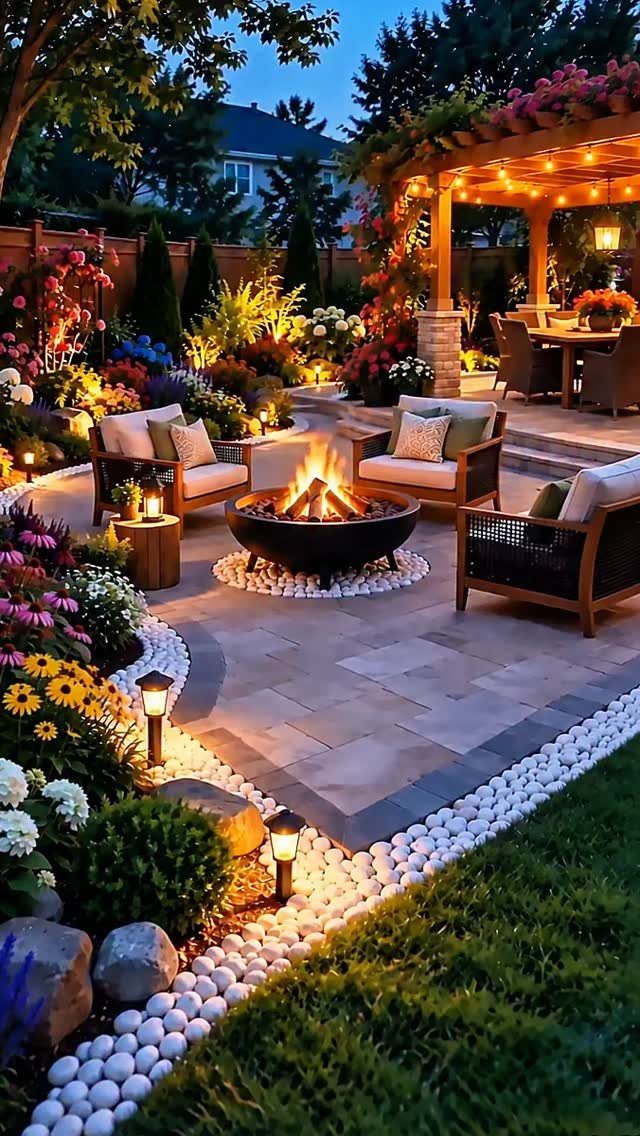
A fire pit with real seating changes how many nights you actually spend outside.
I built mine around a cheap metal bowl from a hardware store end-of-season sale, but the idea works with any focal point: a grill, a string-light canopy, even a good picnic table.
A pergola does the heavy lifting of defining the space, turning open yard into something that feels like a room. Without a permanent structure, an outdoor rug and a few potted plants do the same job for renters.
Lay the rug on grass or bare patio, cluster seating around it, and add one light source you can turn on without going back inside.
The mistake I made was sizing for the crowd I imagined, not the few people who usually show up. Start smaller; expand once you know how you actually use it.

【ALL-WEATHER DURABLE PE WICKER】Crafted with premium handwoven PE rattan, this outdoor patio furniture set offers a refined natural texture with excellent UV and fade resistance. Built with a reinforced powder-coated steel frame, it delivers long-lasting durability and stability for outdoor use in patios, backyards, and garden spaces

Quality and Durable: delicate composite weaving with 3-stand all-weather HDPE wicker material handwoven over fully-welded powder-coated steel framing makes patio furniture with fire pit 7 PCS very durable and sturdy; breathable 250G polyester Anti-UV and water-repellent fabric are the complete performance standard, with long-lasting comfort, color retention, cleanability, and strength

2. Outdoor Rugs
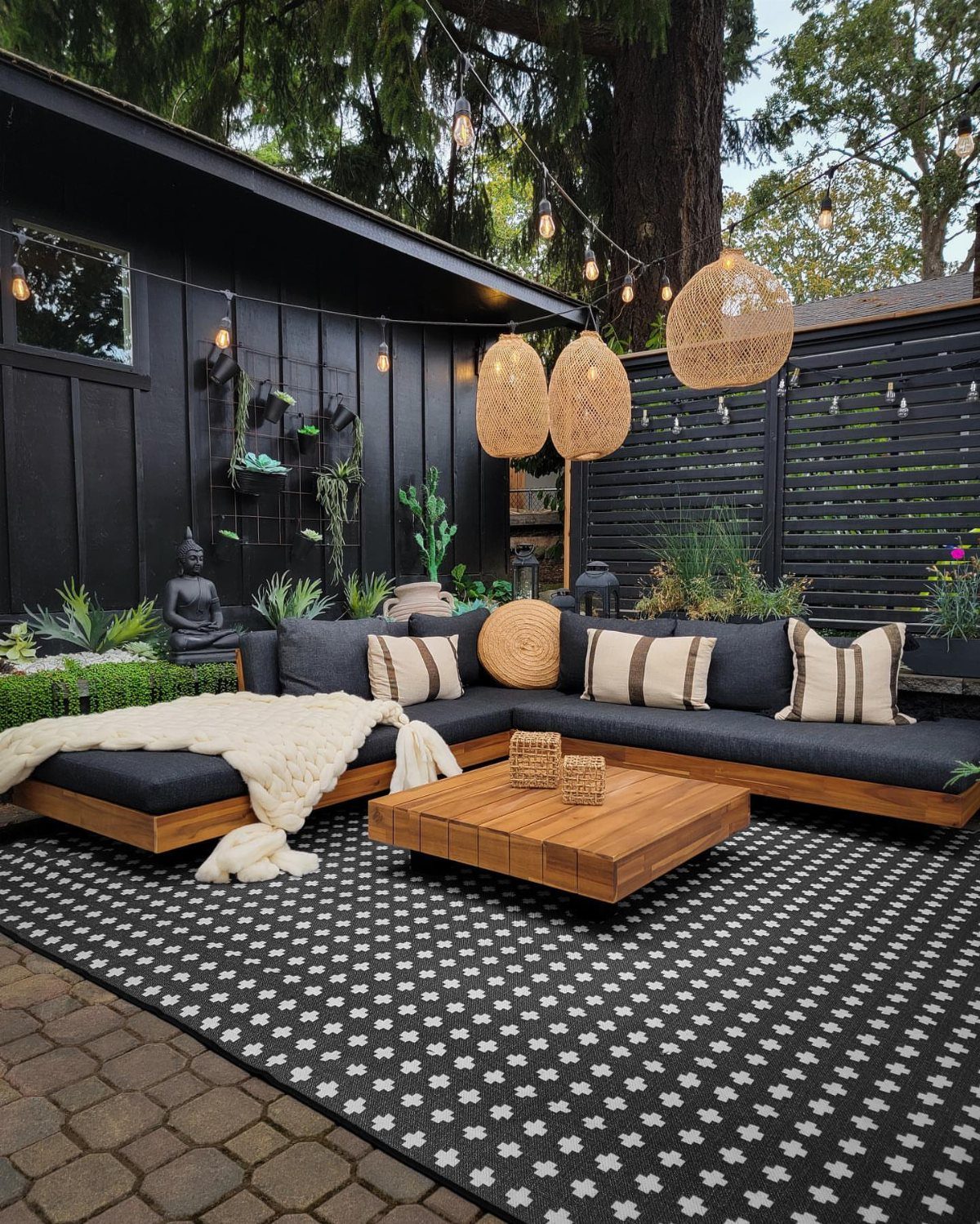
Outdoor rugs do what a poured patio does for about 2% of the cost and zero permits.
A black-and-white pattern on a finished deck works the same way on grass, concrete, or compacted dirt if the rug is rated for all-weather use.
I have used polypropylene rugs on lawn for single-season setups; they mildew if left wet too long, but they hose clean and store flat.
For something more permanent, composite deck tiles snap together in 30 minutes over concrete or level ground. Peruvian teak deck tiles use interlocking planks with edge trim, no tools beyond a rubber mallet.
Check the backing before you order. A rug meant for covered porches will slide and rot in open yard; look for "mold and mildew resistant" in the specs, not just the marketing.

All-in-One Sun Shade Sail Hardware Kit: Our complete sunshade hanging kit includes everything you need for easy installation: 2 turnbuckles, 2 snap hooks, 4 pad eyes, 16 screws, and 16 expansion anchors. Ideal for sun shades outdoor patio, pergolas, awnings for patio, and outdoor sails for shade waterproof.
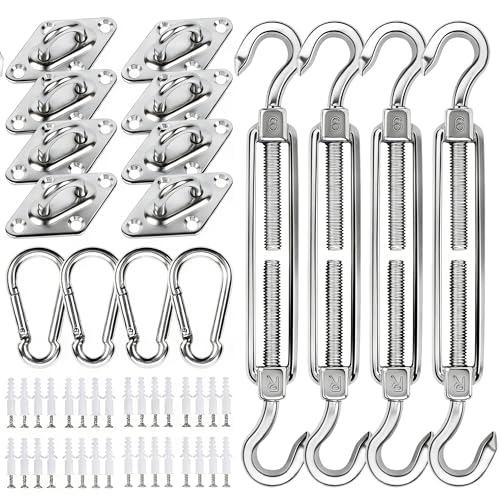
[One Kit for Any Design]: Conquer any shade sail project—rectangle, triangle, hexagon, or custom shapes—with one comprehensive 80-piece kit. Ditch the confusion of piecing together multiple sets. Plus, when installing common square or triangle sails, the extra hardware acts as your instant backup plan, saving you time and hassle if a replacement is ever needed.
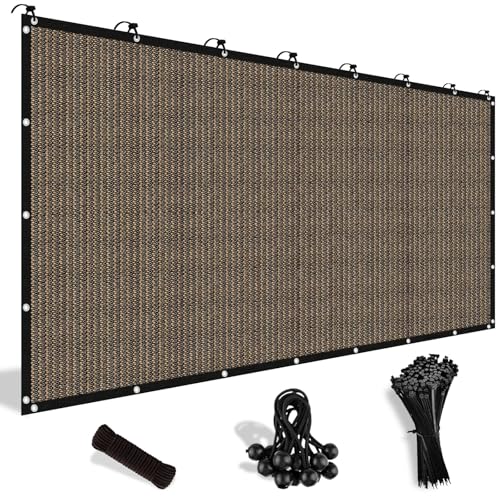
90% Sun Block: Shade&Beyond shade cloth with grommets provides 90% UV protection and resists UV fading. With excellent shading and heat insulation, you can get a shady retreat and keep your belongings away from the sun's harsh effects. By lowering the temperature under its shelter, these sunshades for patio always allow you to enjoy a cool and refreshing outdoor experience, making them ideal for patios, gardens, and more
3. Pool Wall Murals
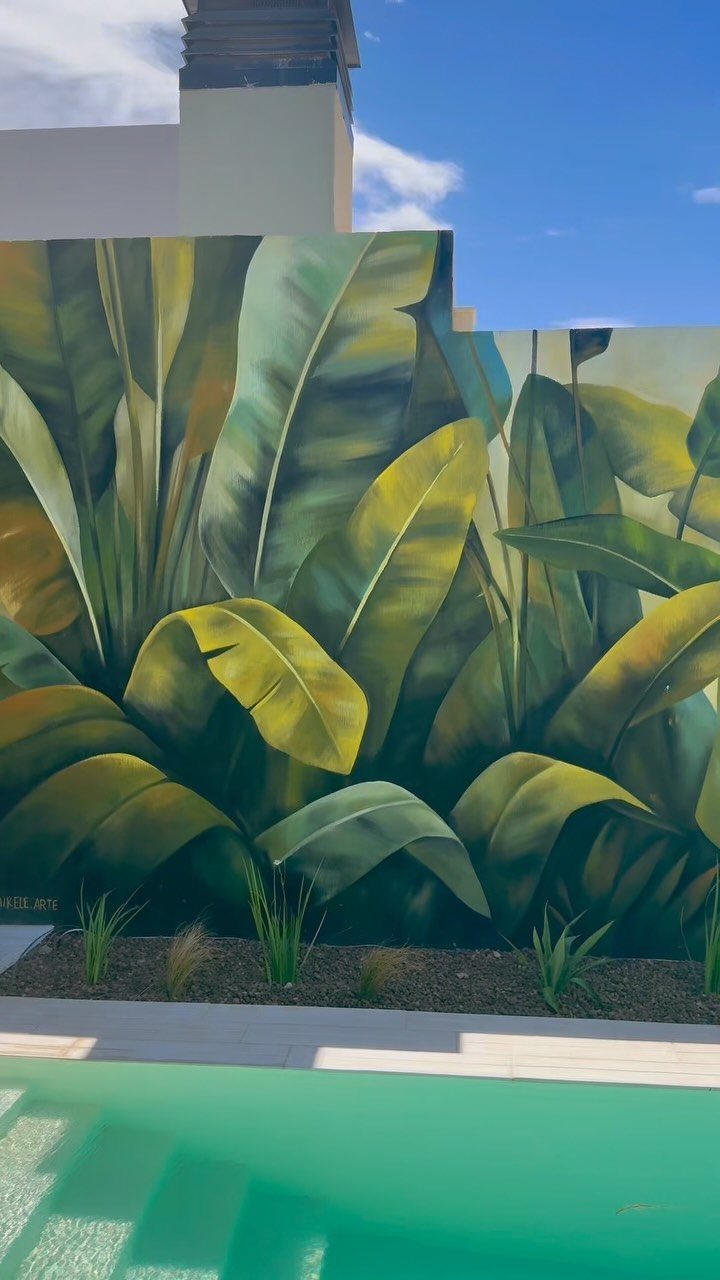
A painted wall behind your pool beats staring at grey block.
Before you commit, check whether your wall is bare block, painted already, or sealed. Fresh block sucks paint; you will need masonry primer first.
Existing paint in good condition might just need scuffing. A sealed or glazed surface is a different job entirely, and mural paint on top will flake.
An artist’s signature means permission and probably a contract about who maintains it.
Fading happens fast on south-facing walls; ask about UV-resistant clear coat or plan to repaint every few years. If you share a property line, the neighbor’s view matters too.
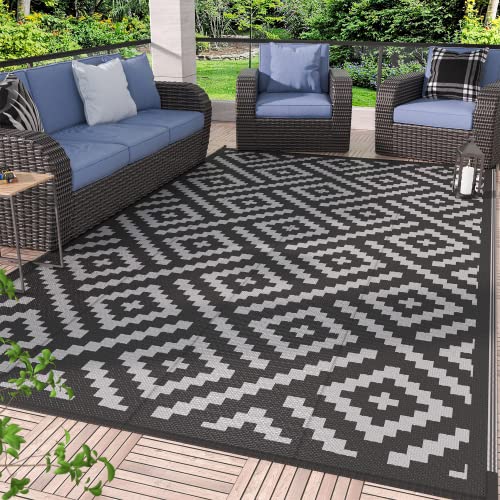
Extended Lifespan · Dual-Sided Wear Resistance: The GENIMO outdoor rug features a reversible design with two classic geometric patterns, doubling its lifespan through alternating use. The dark-toned surface effectively conceals dirt and stains, maintaining a pristine appearance even in rugged environments. Perfect outdoor patio rugs, rv mats and camping rugs for indoor-outdoor transition zones—effortlessly switch sides for practicality and timeless elegance

Reversible Design: Pauwer outdoor rugs feature classic floral pattern on both sides, allowing you to refresh your patio with a simple flip. Perfect outdoor patio balcony decor adds charm and elegance to your outdoor space

[KID APPROVED AND PET-FRIENDLY]: Safe for everyday indoor or outdoor high foot traffic and areas more prone to life’s unpredictable messes from kid or pet activity
4. A Rolling Wooden Deck Cover
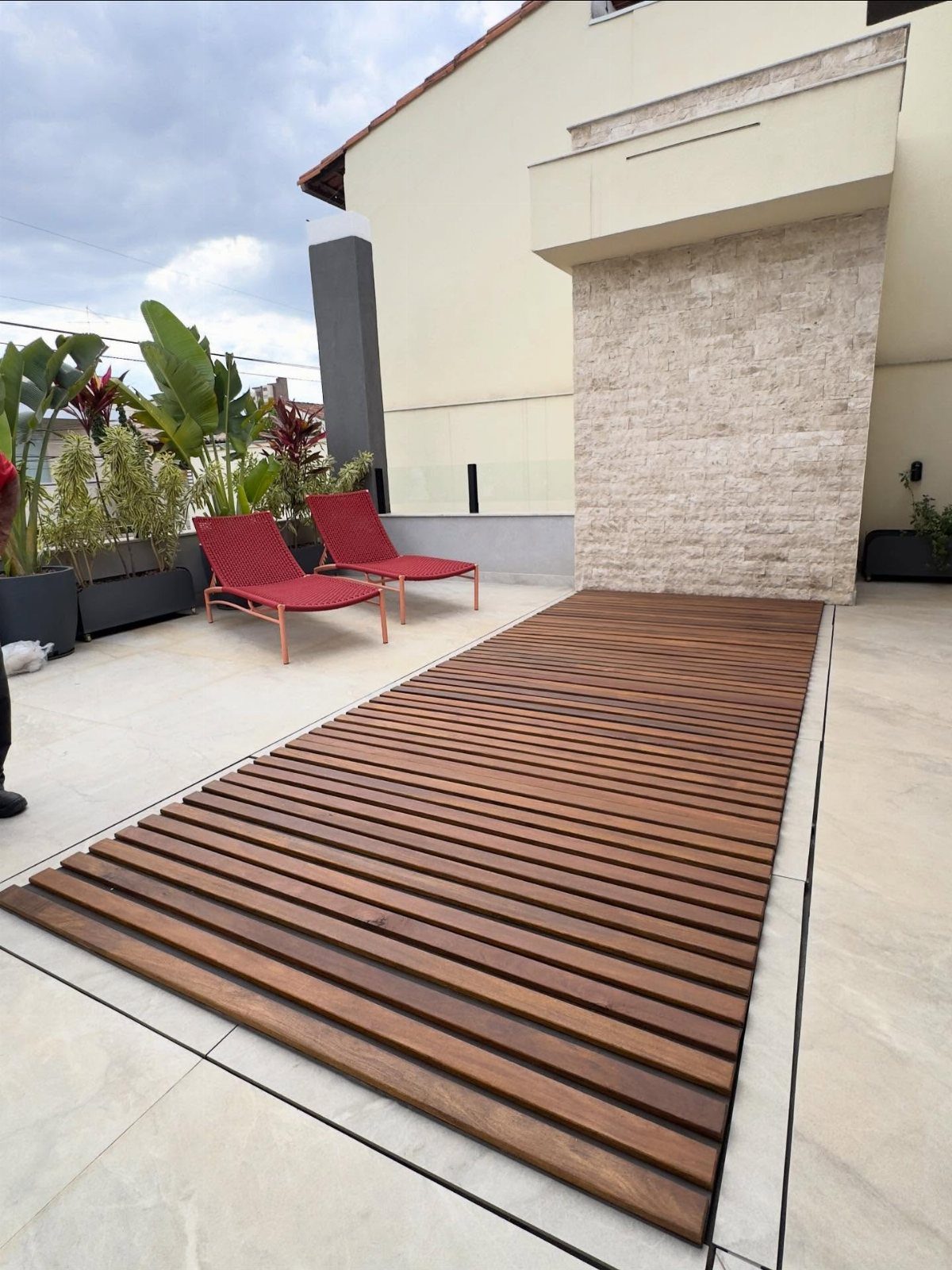
A rolling deck cover that slides on tracks turns your pool into usable patio when you are not swimming. Slatted wood that looks like standard decking boards laid across a frame stays light enough to move without a motor.
The tracks are the part you cannot improvise. They need to be level, drain properly, and carry the load of people walking across.
DIY versions of rolling deck covers fail when the frame warps or grit jams the rollers. If you are hiring this out, ask how the cover handles rain weight and whether the wood is treated for constant moisture cycling.
For a budget approach, plastic pallets with decking boards on top give a semi-permanent surface over concrete. It will not roll, but it lifts off when you need access below.
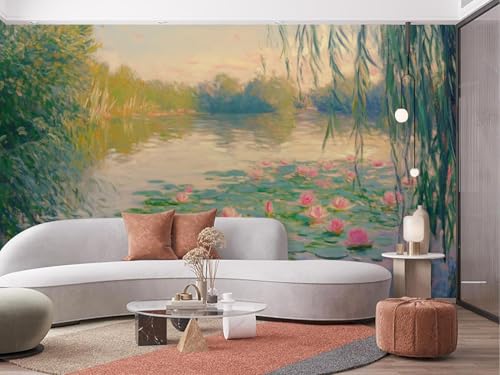
【Size】: VistaPalette Wall Murals wallpaper is 75"x108" and cut into 5 strips,each in 15"x108",You need to put it in sequential order before you install it.

MURAL SIZE: The total dimensions of this mural wallpaper are 59"Wx39.4"H/150x100cm (W x H). If you require custom sizes, please contact us and we will help you solve it!

The wall mural is cut into 3 pieces for easy installation, each in 48"x24",total size is 48"x72" (Height x Width)
5. Outdoor Workspace
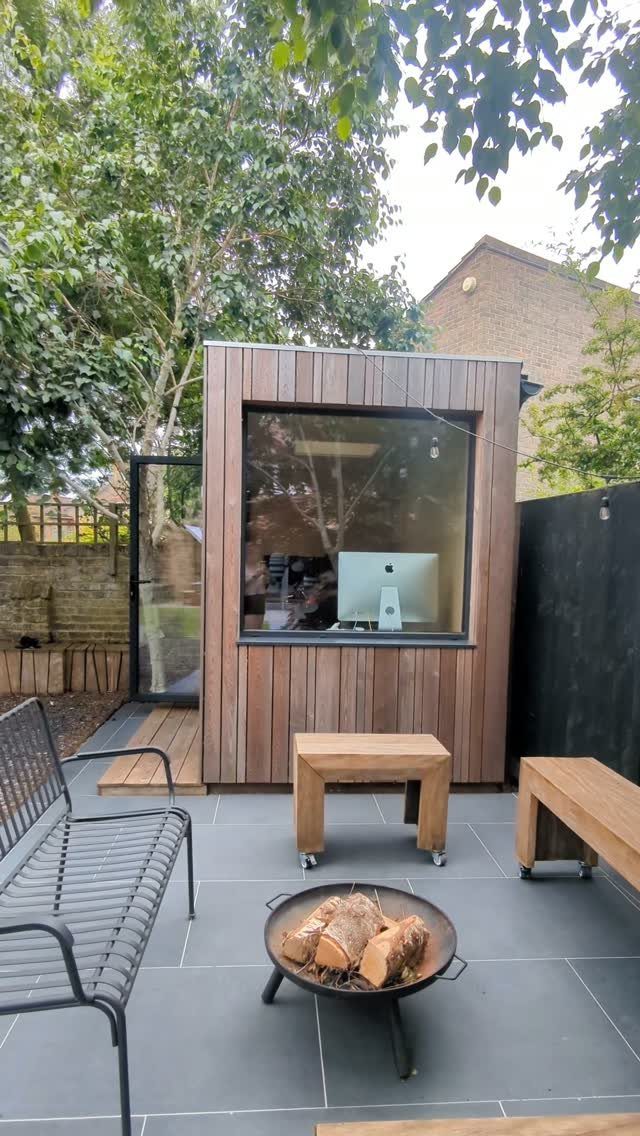
A backyard office only works if the WiFi reaches and the sun does not glare the screen.
Laptop-only outside is harder than it looks. The battery dies, the glare wins, and you carry everything back in within an hour.
Now I run an extension cord through a window with a door seal gap, and I face west so morning light hits my back, not the monitor. Afternoon sessions need a tilted umbrella or a spot under tree cover.
Rolling benches let a space shift between work and evening use without rebuilding anything. That flexibility matters more than the walls do.

ULTRA-BRIGHT 6000K DAYLIGHT & CRYSTAL CLARITY: Transform your backyard into a luxury premium resort. Engineered with high-intensity, daylight-white (6000K) LED arrays, this 10-inch inground pool light provides unmatched light dispersion. It eliminates dark spots and shadows across your entire pool floor, enhancing night-swimming safety while giving your water a crystal-clear, professionally-maintained aesthetic

♒♒♒【PREPARATION】One transformer: 120v, ≥ 60w * N. eg: 5 pool lights, 120V, ≥ 300W. Additionally, if don't connect the transformer to the light or if it is too low, the light may burn out and can't turn on. One battery for remote control: 23A 12V valkaline battery. We strongly recommend using the provided parts and drill again. Installing in place or using own parts may not be compatible.
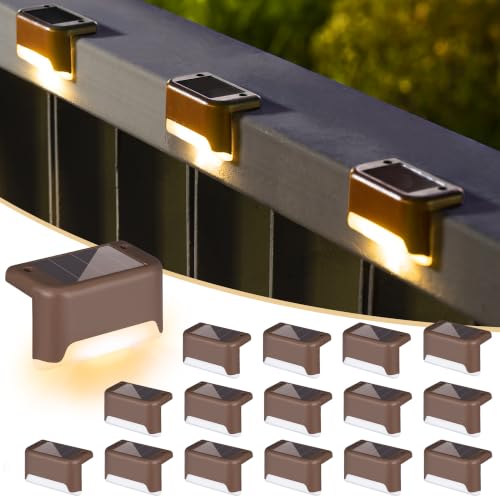
【Warm Light without Dazzling】This deck light features a 𝐁𝐫𝐨𝐰𝐧 𝐬𝐡𝐞𝐥𝐥 and warm white LED, decorate and illuminate your fence, deck, stairs, patio, balcony, yard, or garden. It ensures safer nighttime navigation for the whole family when going downstairs
6. Add a Hammock
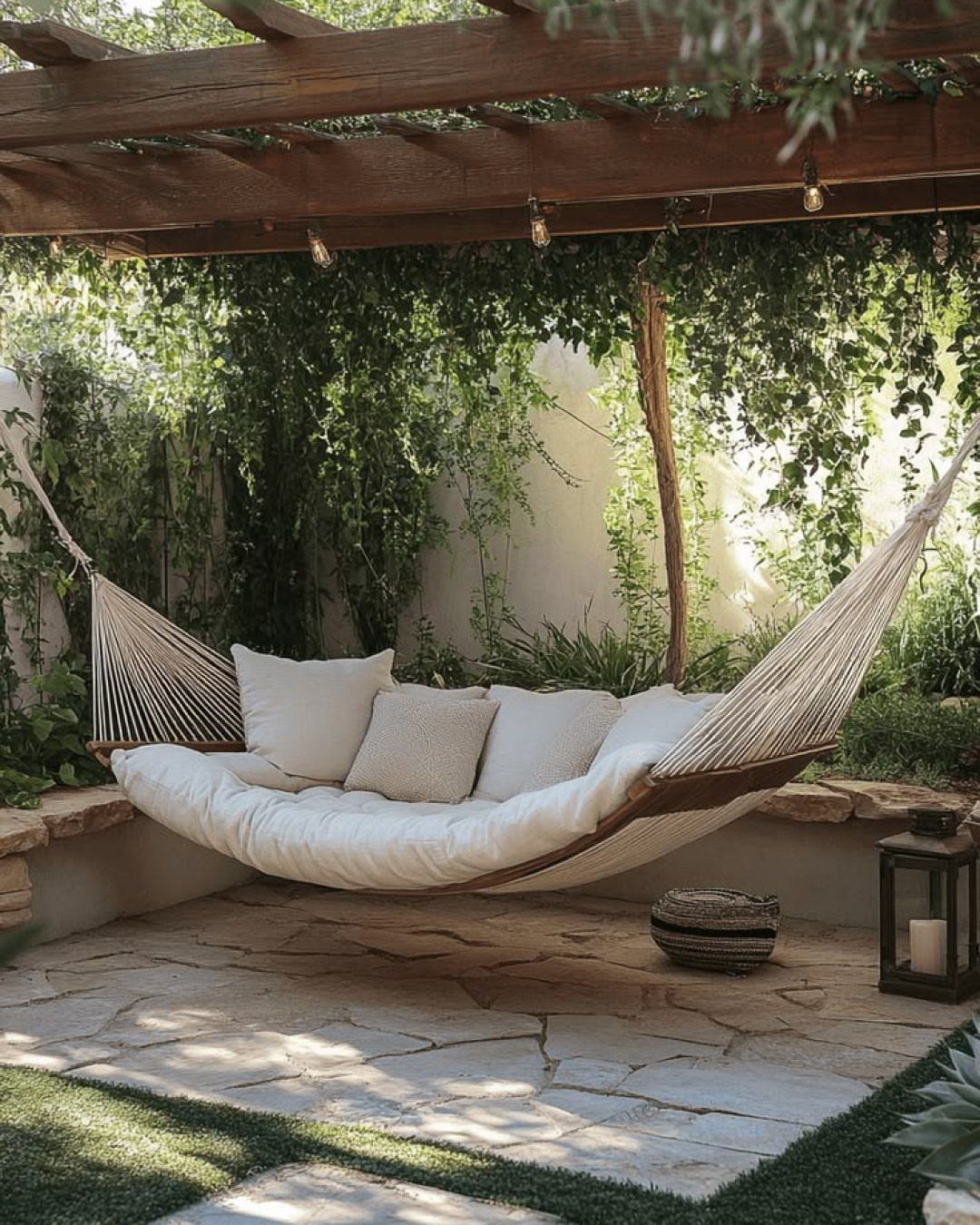
A hammock looks like the easiest win, and it is, until you hang it wrong and dump yourself out. A cream rope hammock under a pergola with solid overhead beams is the most forgiving setup.
Tree straps work if your trees are far enough apart and healthy enough to hold weight.
The standard spacing is wider than most people guess; too close and you hang too curved, too far and the ropes strain at the wrong angle.
I use a stand now because the only 2 trees in my yard are half-rotten, and stands fold flat for winter.
Add a cheap waterproof speaker and you have a reading spot that costs less than one patio chair.
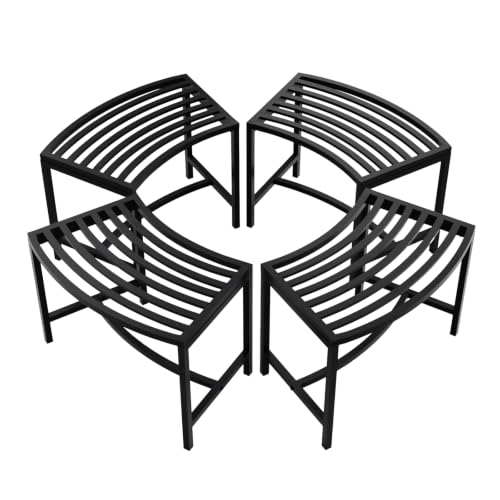
Built to Last: Crafted from heavy-duty iron, our backless patio benches feature a durable, smooth non-toxic finish. The reinforced T-shaped base design provides exceptional stability, safely supporting up to 300 lbs per bench.

5-Pieces Outdoor Furniture Set: 60" gas fire pit table allows seating up to 4-6 person, suitable for parties and family gatherings. With lid covered on, the firepit table converted into a standard dining table while 4 textilene patio chairs providing a comfortable seating experience, bringing endless cosy atmosphere

【STURDY & STABLE】 : Plus thick and durable solid wood frame, stable 4-leg struction is stronger and safer. Heavy-duty material simulates the density of natural wood while protecting against splinters, peel or rot.
7. Build a Playhouse
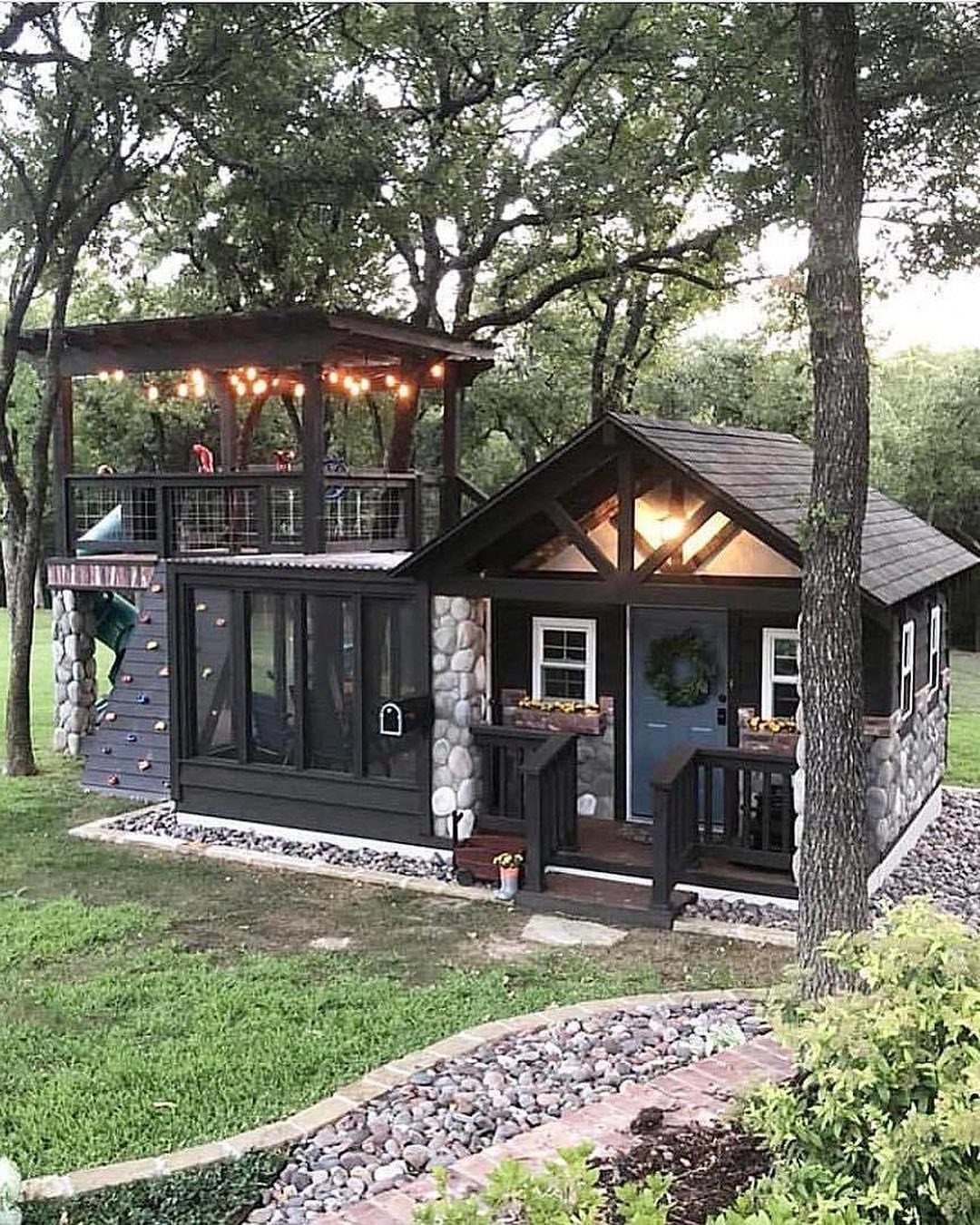
A playhouse that holds up to real weather needs the same details as your own house, just smaller.
The stone veneer on the lower walls keeps splash-back from rotting the sill, and the climbing wall panel bolts on so you can swap it for a regular wall section later.
I would build the frame from pressure-treated lumber rated for ground contact, not the cheaper above-ground stuff that warps in 2 seasons.
The upper deck needs a real railing; standard code height is what matters, and kids lean harder than adults expect. String lights look festive, but a single fixture with a switch inside the house is what actually gets used.
Half-rotten trees nearby mean checking what could fall on it before you set the footprint.
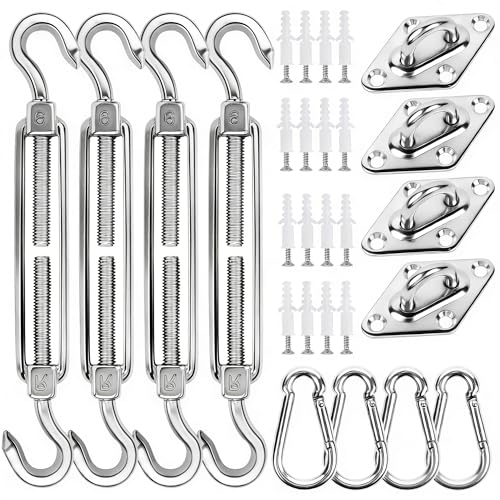
All-in-One Sun Shade Sail Hardware Kit: Our complete shade sail hardware kit includes everything you need for easy installation: 4 turnbuckles, 4 snap hooks, 4 pad eyes, 16 screws, and 16 expansion anchors. Ideal for sun shades outdoor patio, pergolas, awnings for patio, and outdoor sails for shade waterproof.
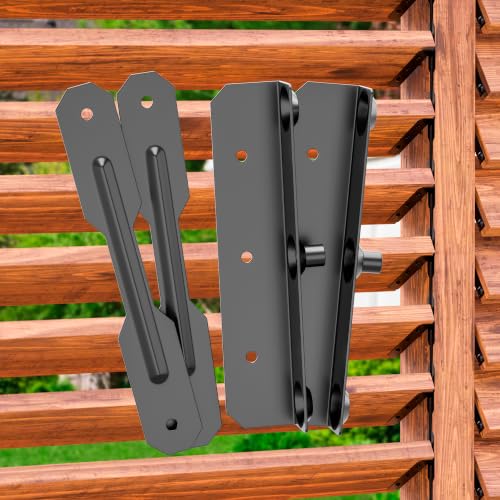
Are you looking for an idea for the wall of your deck or patio to block the sun & rain? Create clean, adjustable privacy experience with our deck sunblind system, designed to provide adjustable shade and UV protection, privacy when you want, sun or shade when you want, easier than installing windows.

All-in-One Sun Shade Sail Hardware Kit: Our complete sunshade hanging kit includes everything you need for easy installation: 4 turnbuckles, 4 snap hooks, 4 pad eyes, 16 screws, and 16 expansion anchors. Ideal for sun shades outdoor patio, pergolas, awnings for patio, and outdoor sails for shade waterproof.
8. Build a Vertical Garden
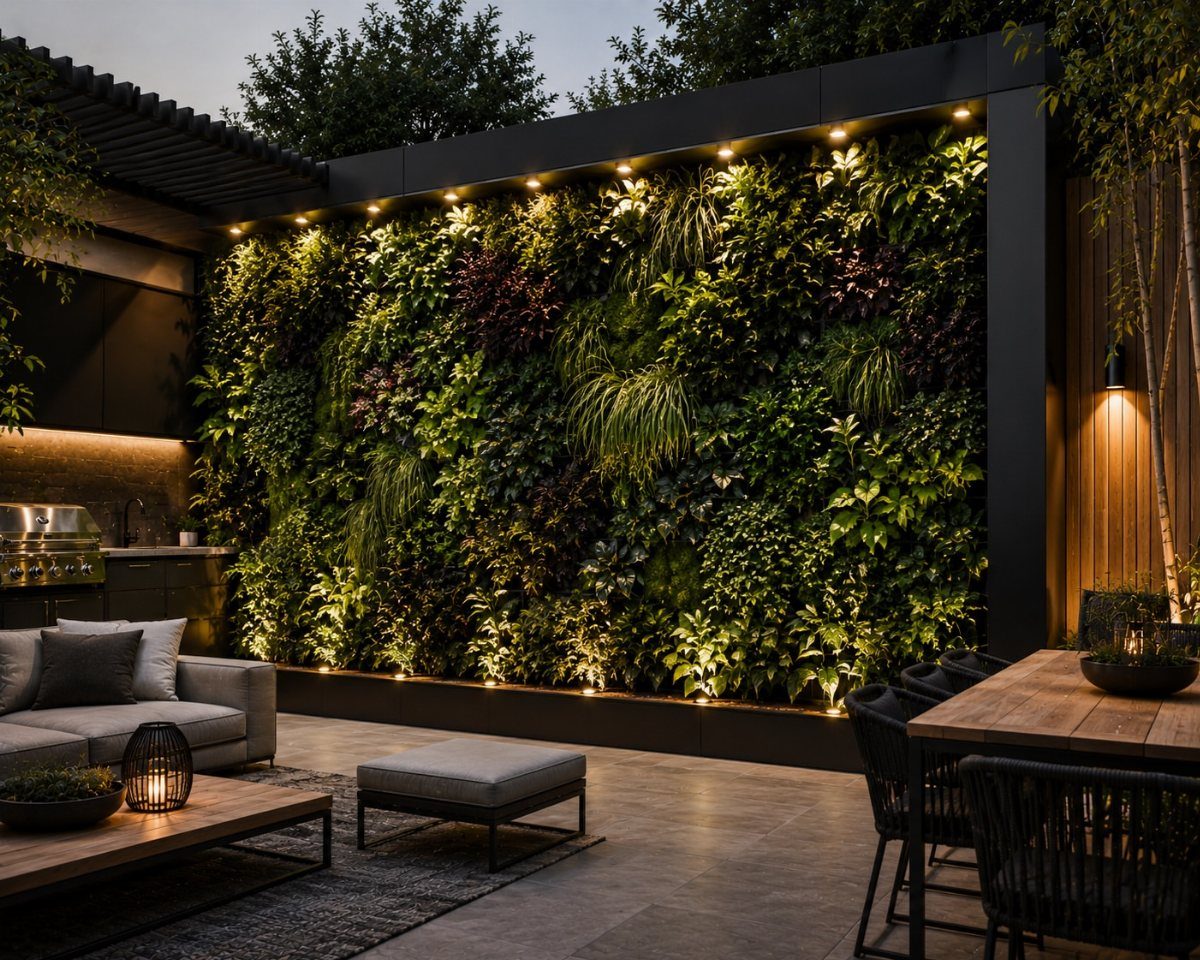
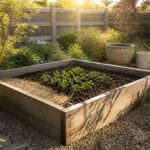
Vertical gardens suit renters and small lots because the footprint stays at zero. Felt pockets or modular trays both work for vertical gardens, but trays hold more soil volume and dry out slower.
Irrigation is the part nobody plans for. Hand-watering a living wall is a daily task that gets skipped the week you are busy.
A simple drip line run from a hose timer costs pocket change and saves the whole installation. Spotlights from below look dramatic but also show every gap where a plant died; budget for replacements.
Ferns and pothos handle shade under overhead cover.
Full-sun walls need succulents or herbs, which want more drainage and less frequent water. Match the plant list to your light, not the photo you liked.

[STAIN, WEATHER, & UV-RESISTANT]: Expertly machine-woven from enhanced synthetic durable fibers that are stain, weather, and UV-resistant and have a non-shedding pile

Geometric Elegance Reimagined: Elevate your outdoor spaces with GENIMO's remarkable geometric outdoor rug! Merging the allure of modern art with the practicality of an all-weather accessory. Its striking diamond frame encases a sleek rectangular center, exuding a timeless charm that captivates onlookers. From patio to garden beach deck backyard porch garage rv camping, etc. A stylish touch that pairs beautifully with your outdoor patio furniture set

ELEGANT SWITCH MAT TRAY: dress up your front door with our sassafras mat tray. Effortless and delightful switch mat designs that perfectly pair with our Sassafras collection (sold separately - explore our store to shop unique designs at your choice).
9. Bar Area
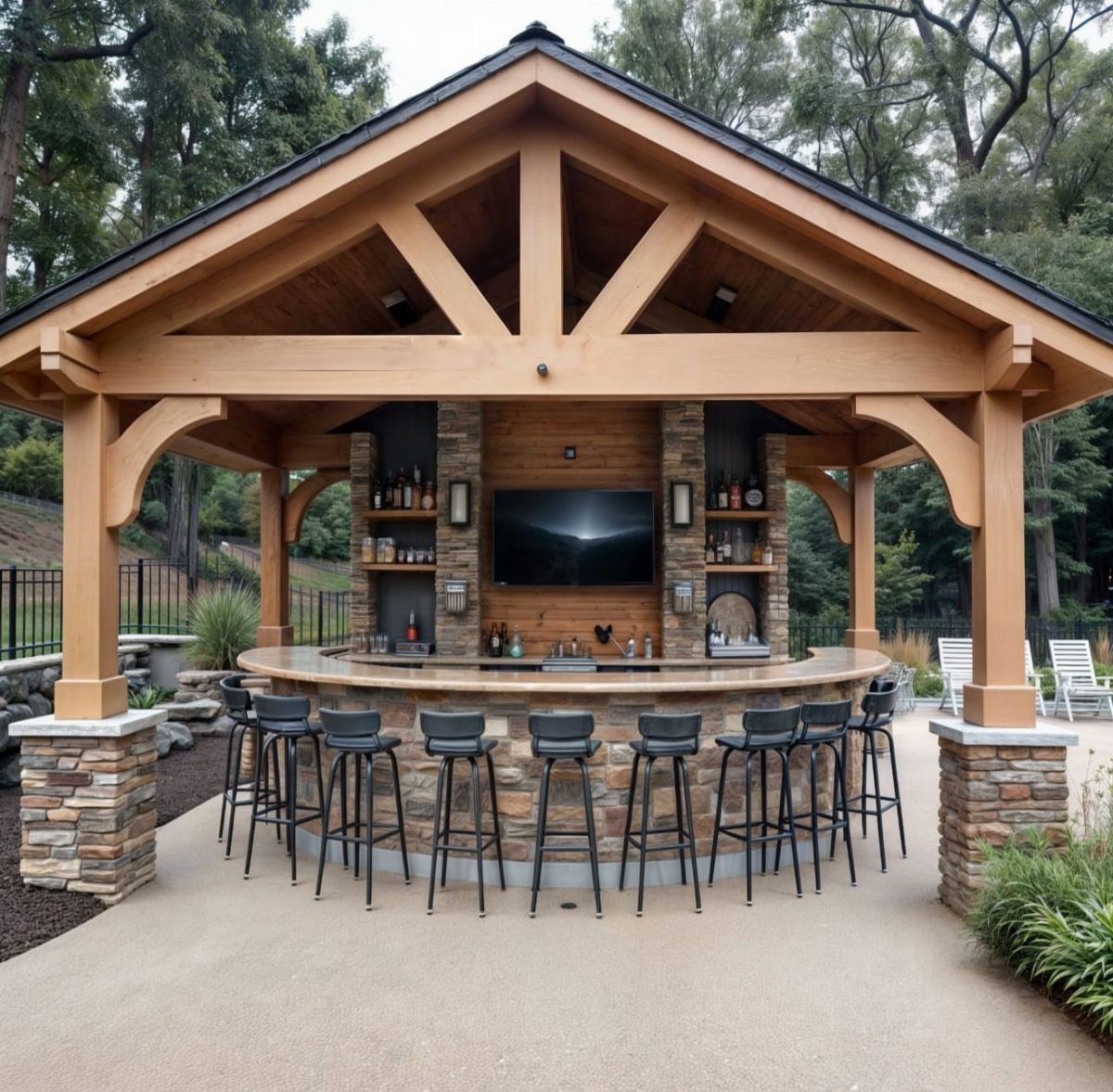
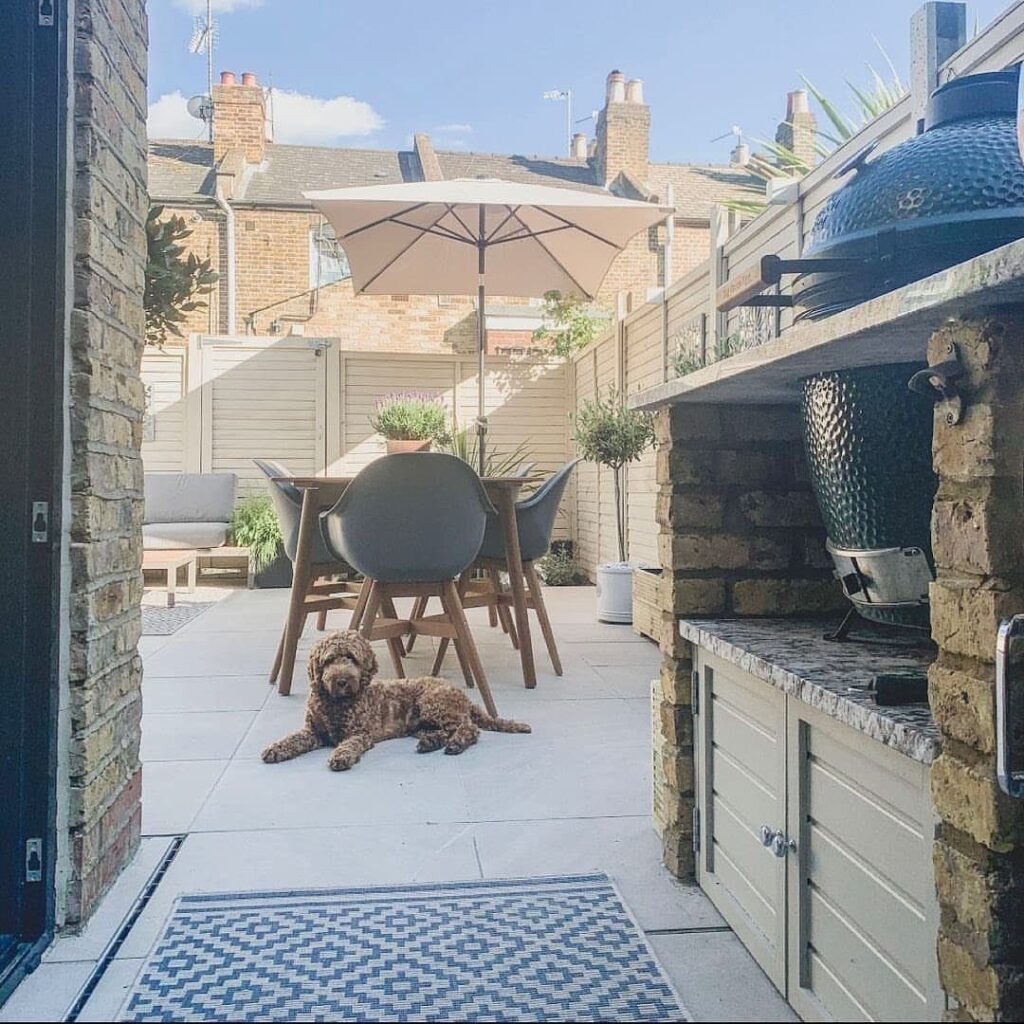
A bar area works best when it faces the people, not the wall. The curved stone base here wraps toward the yard so whoever is pouring still talks to whoever is sitting.
Stone masonry on the base is real work; concrete blocks faced with veneer stone gets the same look for a weekend instead of a week.
Wood shelving above a bar area needs to be cedar or another rot-resistant species, or it greens over in one humid summer.
A mounted TV sounds essential until you realize you are outside to not watch television; I would skip the wiring and spend it on a small fridge drawer instead.
Bean bags as extra seating store dry, but they are a mildew risk anywhere uncovered. Stackable resin stools live outside year-round and wipe clean.


Overall Size: Approximately 135x101 inches (343x256 cm WxH) seven strips; self-adhesive wallpaper provides a seamless finish; image is scaled to match the chosen size, enhancing any room's decor

【SHOW YOUR PERSONALITY】 Are bare walls turning your rooms into stuffy studies, dreary dens, and boring hallways? Then liven up your office bedroom living room with a piece of Nature Landscape Picture wall art decor. A piece like this also makes a heart-warming and powerful gift for your friends and family. Explore our store for more Landscape wall art.
10. Shower Corner
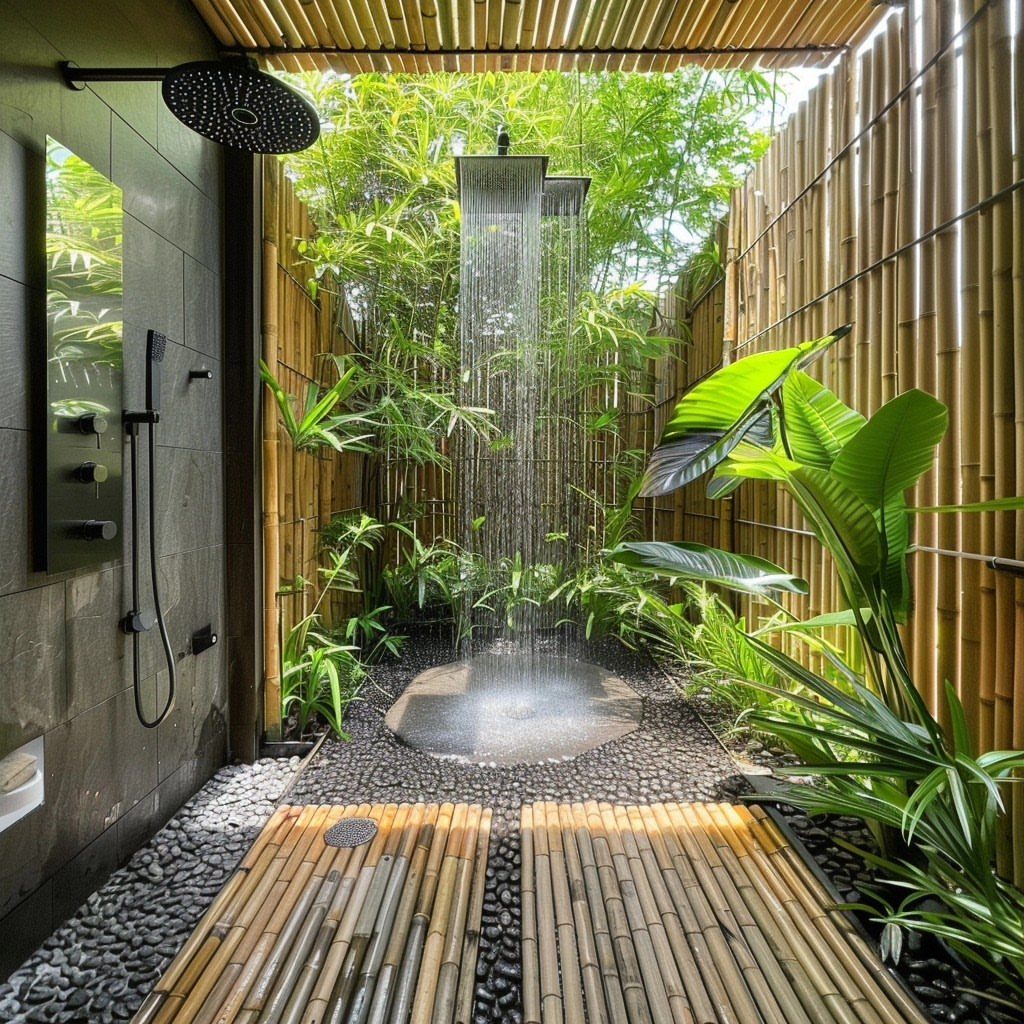
An outdoor shower only needs 2 things to feel right: enough privacy that you relax, and enough drainage that you are not standing in a puddle.
Bamboo walls give the privacy fast; they are just poles strapped together, so you replace individual splits as they happen.
The stone base with slatted bamboo decking over it is the detail that matters.
Water falls through to the pebble layer below, which drains to daylight or a dry well you dig in an afternoon. Without that gap, the floor stays slick and grows algae in a month.
A rain showerhead looks great in photos; a standard head with a shutoff valve at the handle is what you actually use when you are trying to rinse off and not soak your hair.
Hot plumbing is a separate project. Cold-only is a garden hose and a shut-off valve from the plumbing aisle.

NEWEST Rechargeable Submersible Lights: Our LED floating pool lights come with built-in Li-polymer batteries that can be conveniently recharged via any power source with a USB port (USB cable included). You'll never need to buy batteries again! With a full charge time of just 2.5 hours, these lights can continuously last up to 24 hours at their brightest setting and up to 100 hours at their dimmest setting. Plus, they're five times brighter than the AA version!

► [Newest Submersible Lights with Magnets and Suction Cups]: IP68 waterproof submersible lights with strong magnets and suction cups, and upgraded full waterproof weatherproof structure, it works well in both wet and dry places, such as swimming pool light, pond light, boat, foundation, aquarium, fish tank, vase, flower pot, waterfall, bathtub, hot tub, hallway, basement, garage, state, wedding, event, party as decor light, ambience light, or night light indoor and outdoor decoration.

Fits Most 10" Standard Pool Niches: Designed for standard 10-inch inground pool niches and compatible with many Pentair, Hayward, and Jandy style housings; the 120V LED pool light is suitable for swimming pools, landscape pools, and water features; an easy upgrade for aging pool lighting systems
Design Considerations
Walk the yard before you draw anything. The beaten path where grass already dies is your natural traffic line; fighting it with a new walkway costs more and looks wrong.
Morning sun hits the east fence, afternoon bakes the west, and that difference decides whether your workspace goes under the pergola or the tree.
Existing concrete, old pavers, or even a slab from a torn-down shed can become the base for deck tiles or a bar footing. Reusing what is already flat saves a weekend of leveling.
Geometric pavers and a tight planting palette keep the hardscape from fighting a house with clean lines.
A classic home needs warmer textures and layered edges. Mixing the two rarely works unless you pick one direction and carry it through every material choice.
Budget-friendly Upgrades
Lighting gives the highest visual return for the lowest cost. LED pool lights cost $700 to $2,500 installed, sip 75% less power than old incandescents, and survive about 25 times longer.
That is a Department of Energy figure, not a sales claim. Waterline tile refresh runs $1,500 to $7,000, which is not cheap, but it reframes how the whole pool reads at night.
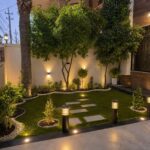
For yards without pools, string lights on a fence or a single switched fixture inside the house beat a dozen solar stakes that fade by 10 PM.
Artificial grass strips can define a yoga zone or a seating area without the cost of a full patio pour. Size the upgrade to the space you actually use, not the one you imagine filling.
Sustainability in Design
Reusing it costs only labor, keeps material out of a landfill, and ties the finished yard to whatever was there before.
Old patio pavers can be flipped and relayed as a path edge; the weathered face looks intentional after one season.
Plant choice is the other half. Local climate means local nurseries stock what survives; the exotic mail-order specimen usually does not.
Frequently Asked Questions
What is the average cost of a backyard makeover?
A full backyard remodel typically runs $12,000 to $60,000. Where the yard has a pool, resurfacing the interior runs $6,000 to $15,000, new waterline tile lands at $1,500 to $7,000, and LED pool lighting installed costs $700 to $2,500.
My own projects stay under a thousand dollars by focusing on one zone at a time rather than the whole yard at once.
What are some cheap ways to upgrade my backyard?
A strand of bulbs along the fence line or a single hardwired fixture on the porch puts out real light after dark, unlike those solar spikes that go dim before the night is half over.
An outdoor rug defines a seating area for about 2% of what a poured patio costs.
Swapping an old incandescent pool bulb for an LED one cuts the wattage by about three-quarters, and the Department of Energy says the new one will outlast it by 25 years of typical use.
What are some new backyard ideas for 2026?
A desk or workbench set to face east keeps the morning sun behind you so the screen stays readable without drawing curtains.
Vertical gardens with drip irrigation on a timer so hand-watering does not get skipped. Some builds now use wooden covers on tracks that roll across the pool, turning the water into floor space for a few hours.
Modern pool design has moved away from electric-blue finishes and faux rock walls toward natural textures, clean lines, and integrated water elements.
How to get a free backyard makeover?
There is no program or method covered here for a free backyard makeover.
The cheapest square footage is the flat stuff already there: turn the pavers over for a cleaner face, lay tiles right on the old concrete, or stand a bar on the slab where a shed used to sit.
Labor is the only cost when you reuse material that is already on-site.