These tool shed storage ideas run from a PVC pipe cut at the hardware store to a motorized ceiling rack that costs a few hundred, and the one that belongs to you depends on whether you touch tools every weekend or haul out the shop vacuum twice a year.
A smaller shed still has room for a full garden corner with wall brackets, corner shelves, and pegboard on the third wall.
[link-whisper-related-posts]1. Lawn and Garden Corner
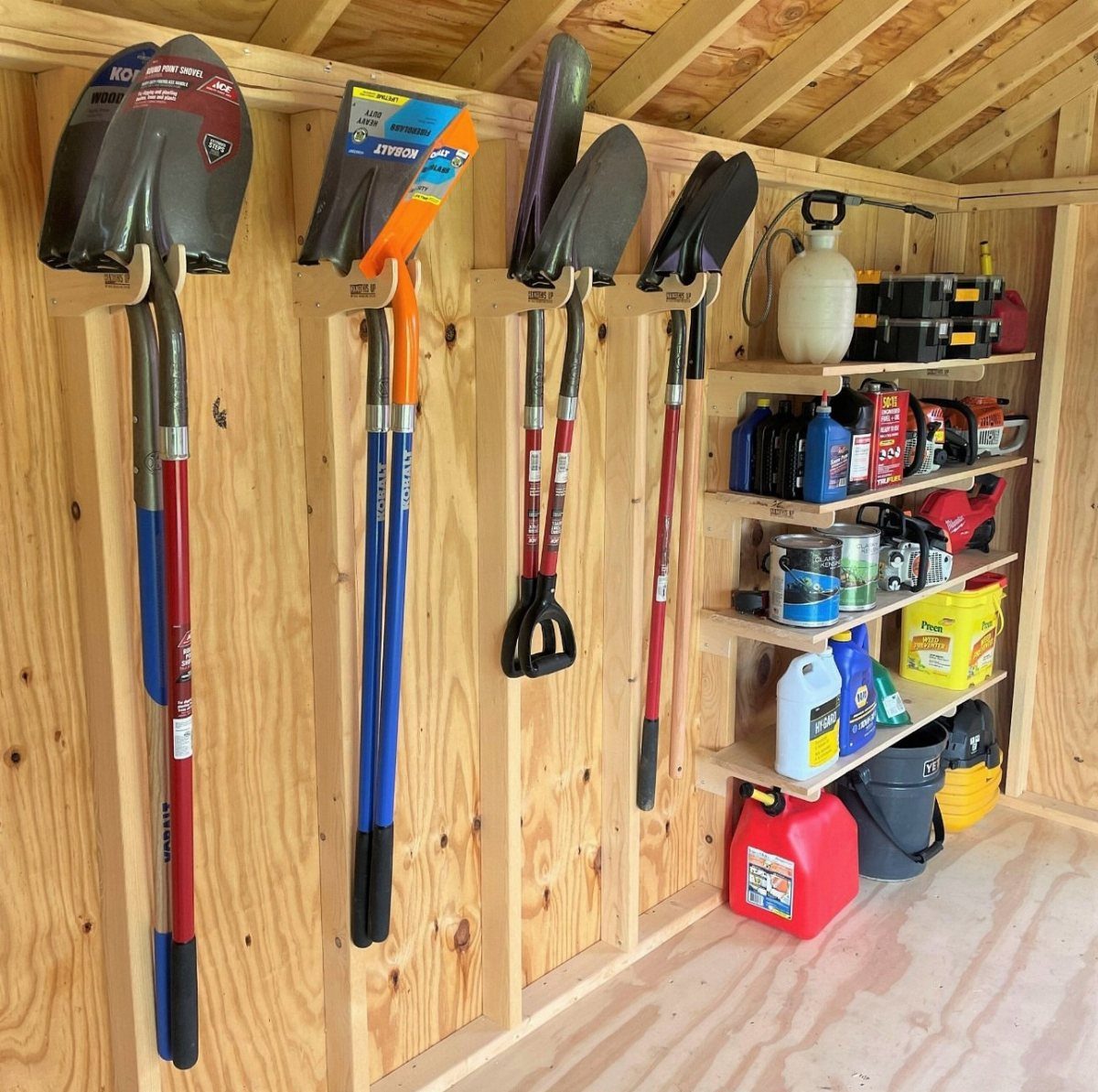
Corner space in a shed tends to collect whatever got dropped last, which is why giving one corner a real job changes how the whole building feels.
A 6×4 shed, the size that fits most smaller yards, still has room for this: wall brackets hung vertically for shovels and rakes, with corner shelves above for fuel cans, motor oil, and the sprayer you use twice a month.
I would put the chainsaw on the shelf too, not the floor where sawdust gathers.
Sturdy hooks keep long-handled tools from the leaning pile that scratches fiberglass handles.
Stackable shelves work better than one fixed unit; you can lift out the yellow tub of Preen when the weeds come in early, or drop in a tray of seedling pots without rearranging everything else.
A pegboard on the back wall turns the corner into a full station, and you can move hooks as your tool collection shifts.
Giving up that corner for garden gear only makes sense if you touch these tools more than once a week through spring and fall.
2. Overhead Storage Racks
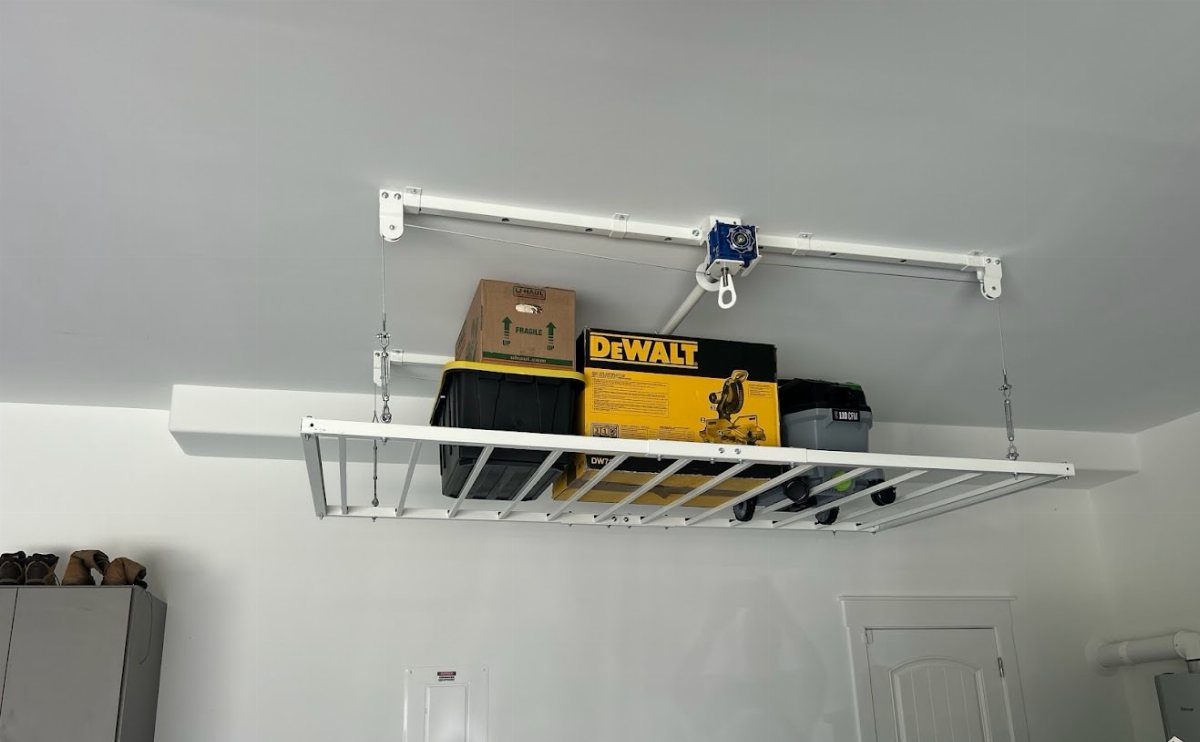
Ceiling space is the last place most shed owners look, which is exactly why it works for the stuff you need but not often.
A motorized rack drops to loading height with a remote, then climbs back up out of your way; the cheaper route is fixed racks bolted to joists with heavy-duty hooks and a stepladder for access.
Either version holds the shop vacuum you haul out for leaves, the DeWalt box for the project you keep putting off, and the U-Haul box of holiday decorations that sits untouched most of the year.
The weight limit is the number to check before you buy; most joists handle standard storage loads, but a rack full of power tools adds up fast.
I would stick to seasonal and bulky rather than daily-use items, since even a motorized drop takes a minute. The real gain is walking into a shed where the floor and walls belong to what you actually do.
3. Dedicated Workbench Area
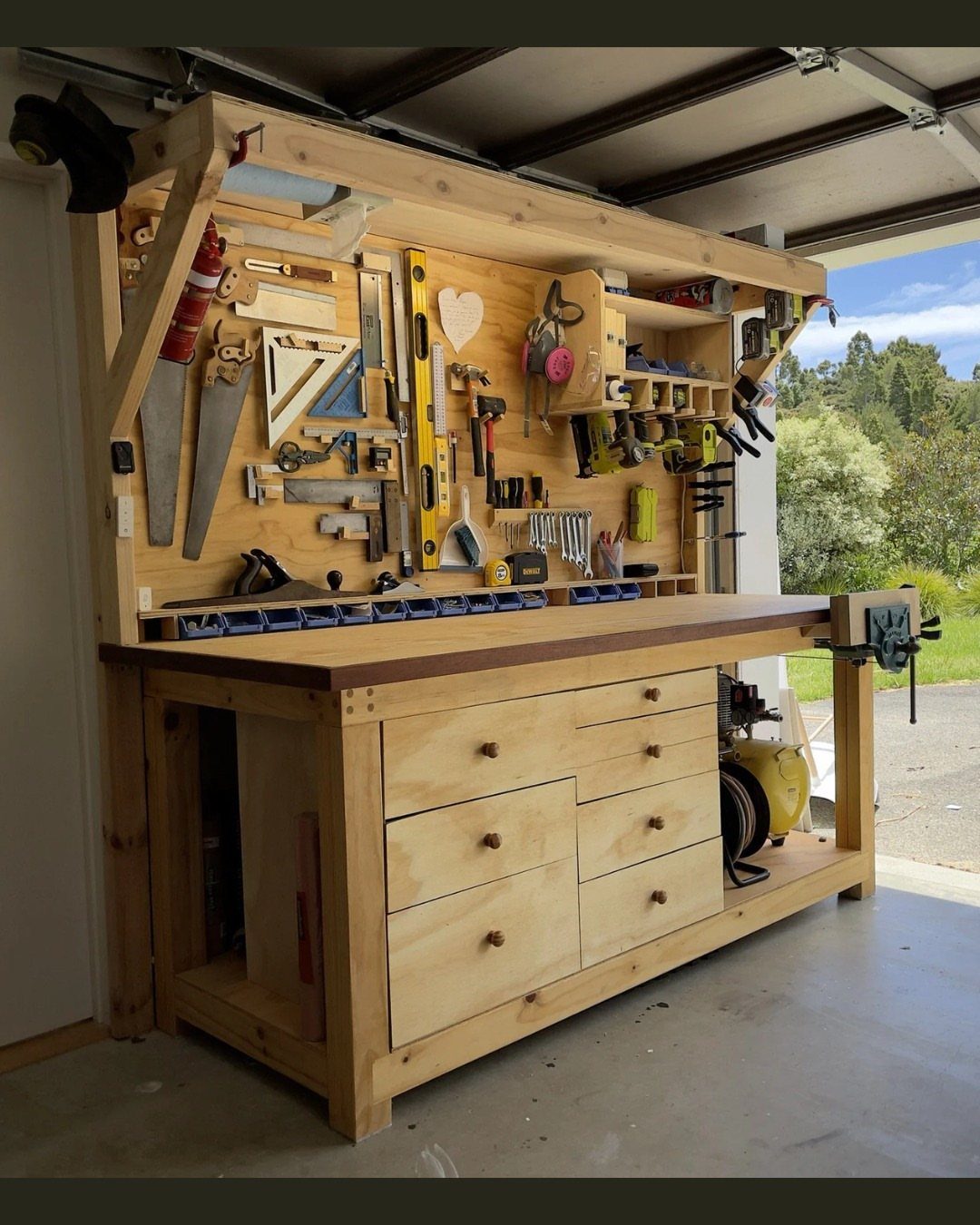
A workbench that stays ready beats one you have to clear off before you can use it.
A large wooden bench with built-in drawers below and a backboard above is the setup I would copy: drawers for the tools you reach for without thinking, the backboard for pliers, screwdrivers, and the hammer that otherwise walks off to live in a garden bed.
Hanging storage above the work surface keeps your eyes up and your hands moving.
Magnetic strips work for the metal stuff; small bins or a short pegboard section handle what does not stick. Every frequent tool needs a spot that is faster to return it to than to set it down somewhere else.
Lower shelf storage beside the bench takes the overflow: the drill case, the box of screws, the thing you bought for one job and will need again someday.
This setup needs wall, so it suits sheds with a clear long side more than narrow buildings where every wall carries shelving already.
4. Adjustable Rack Shelving
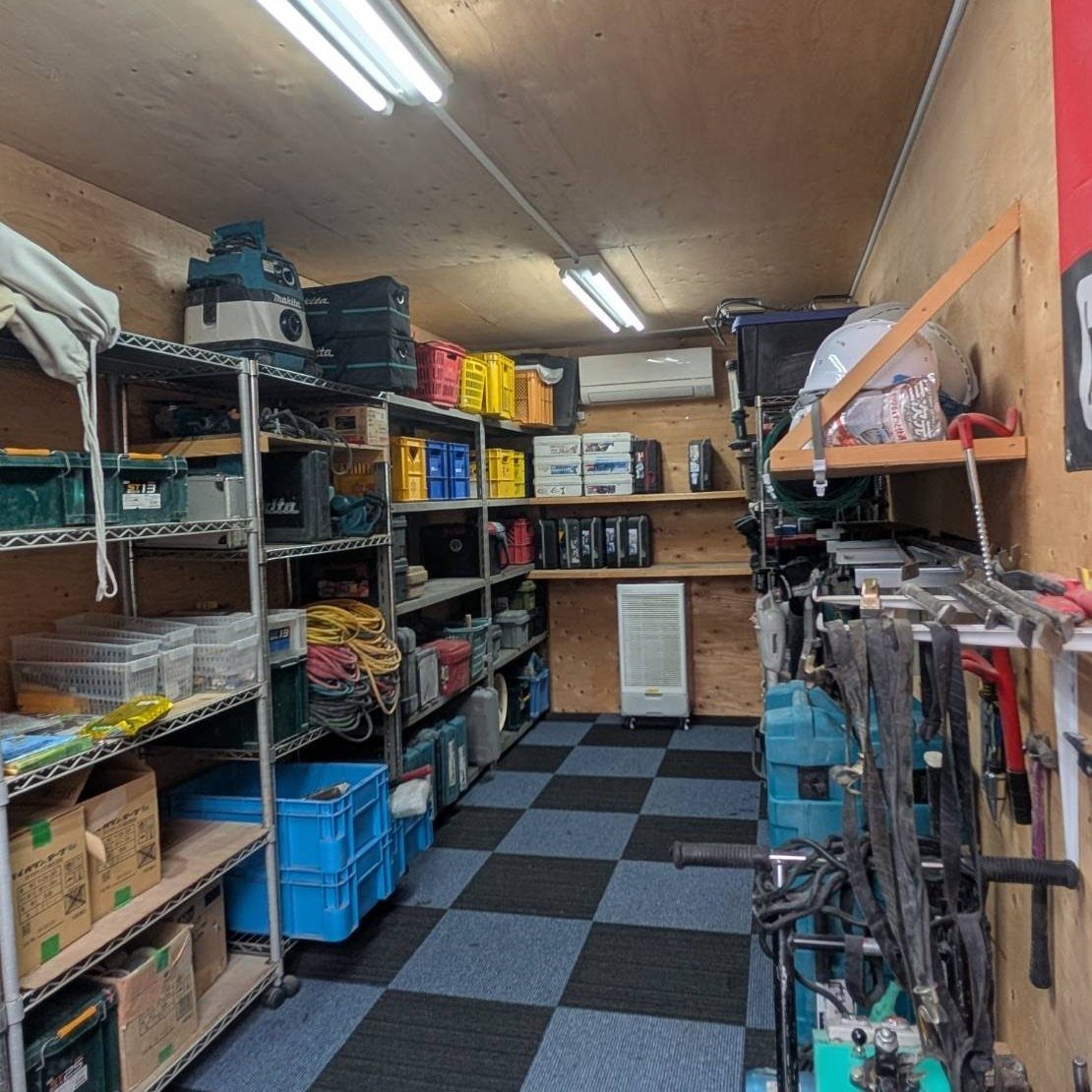
Metal shelving with adjustable shelves handles what fixed units cannot: the miter saw you bought last fall, the tote of plumbing parts, the hand tools in a tray that slides out as one piece.
Wire rack construction keeps everything visible, which matters more than it sounds when you are standing in a doorway at dusk trying to remember which bin holds the tile spacers.
I would set the first shelf low for the heavy stuff, the power tools and the full toolboxes, and let the upper shelves rise to whatever fits.
The shelving itself bolts together in an unfinished shed just as well as in a finished room.
The open design costs you some dust protection; plastic bins solve that for the items that need it. Reconfiguring takes a wrench and little enough time that this is the choice if your tool collection still grows.

Installs in seconds - no tools required

NEVER WORRY ABOUT SNAPPING — 150 LBS ULTRA-DUTY STEEL: Unlike flimsy racks with spot welds that can snap and drop your gear on your car, this overhead hanger is built with a pass-through joint design and double-sided welded reinforcements. Hold up to 150 lbs — two extension ladders, a loaded kayak, or heavy lumber — with zero fear of failure. Your Car stays dent-free, your family stays safe.
5. Labeled Toolboxes and Bins
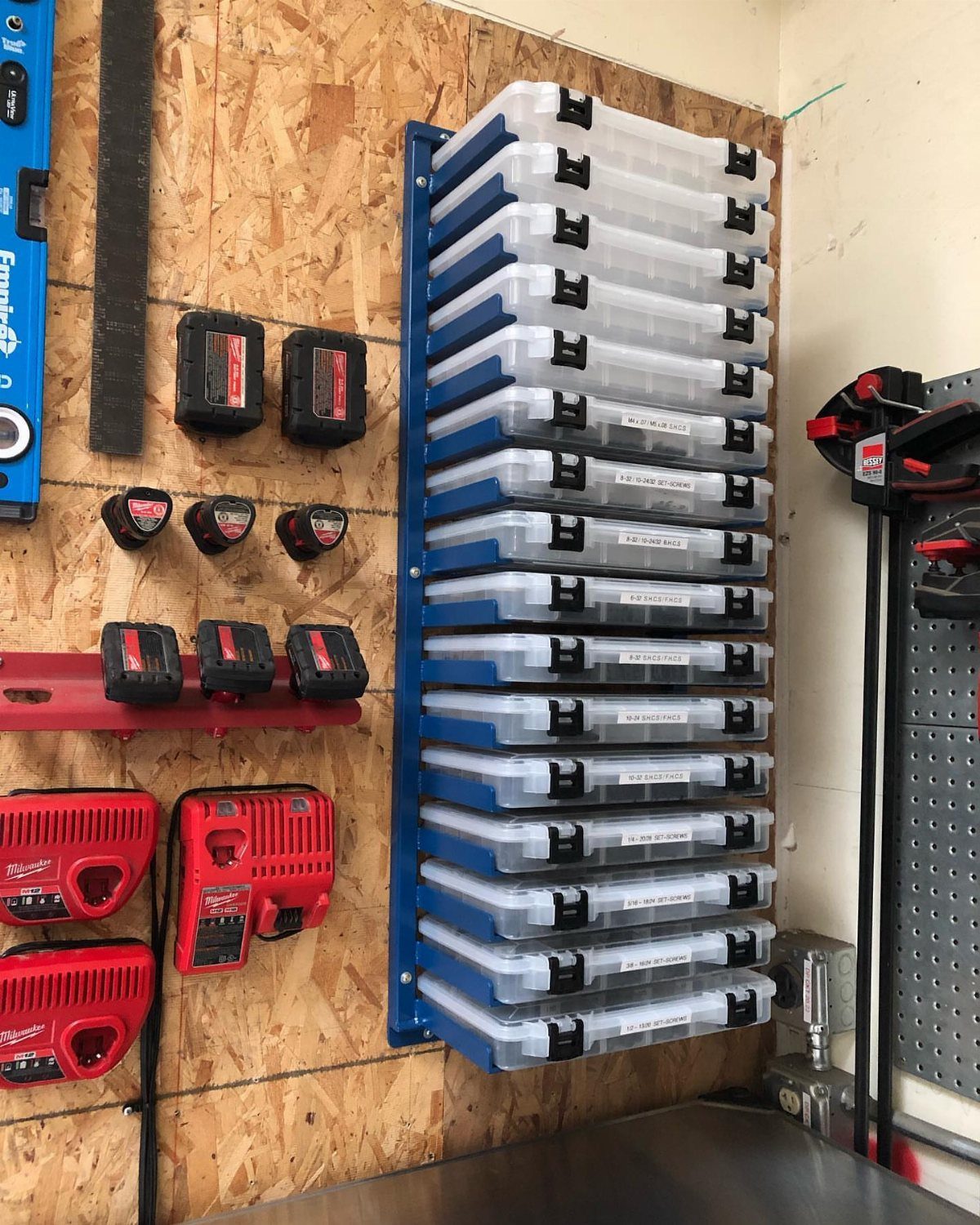
Typed labels like "M4 x .07" and "SET-SCREWS" on translucent cases are the kind of specificity that saves a Saturday afternoon.
Stacked on a wall rack beside Milwaukee battery chargers, these tell you who this suits: someone with enough fasteners and fittings that memory is not a storage system.
A label maker is the tool here, not a marker that smears or tape that curls. I would sort by function rather than size alone, "DECK SCREWS" and "DRYWALL" instead of a cryptic code you forget by March.
The same logic scales down to hand tools in a drawer or up to bins on a shelf; the name faces out and the name means something to the person who put it there.
Chargers and batteries in the same zone is the other half, keeping the powered tools and their power source in one stop rather than two searches.

ULTIMATE STORAGE SYSTEM:Industrial workbench for garage revolutionizes workspace efficiency.Workbench with 2 deep drawers for small tool organization.3-sided heavy-gauge pegboard for hanging pliers/screwdrivers.Workbench with lockable magnetic cabinets to storage power tools.23.6" vertical pegboard workbench backer maximizes wall storage without sacrificing bench space.Workbench with storage 4"x6" top extension shelf holds frequently used lubricants or measuring tools.

Heavy-Duty 2000 LBS Load Capacity: Built with a all-steel frame, this workbench confidently supports up to 2000 lbs, so you can place heavy tools, vises, and equipment on it without worrying about wobbling or flexing during real work

【Sturdy and Durable】The overall dimensions of the product are: 24"D x 48"W x 65"H.Made of high-quality cold-rolled steel, the workbench redefines durability with an impressive 2,500 lbs. total weight capacity, and the bottom storage cabinets provide added stability and weight capacity, making this garage workbench a work table with storage that stays stable.
6. Drawer Units
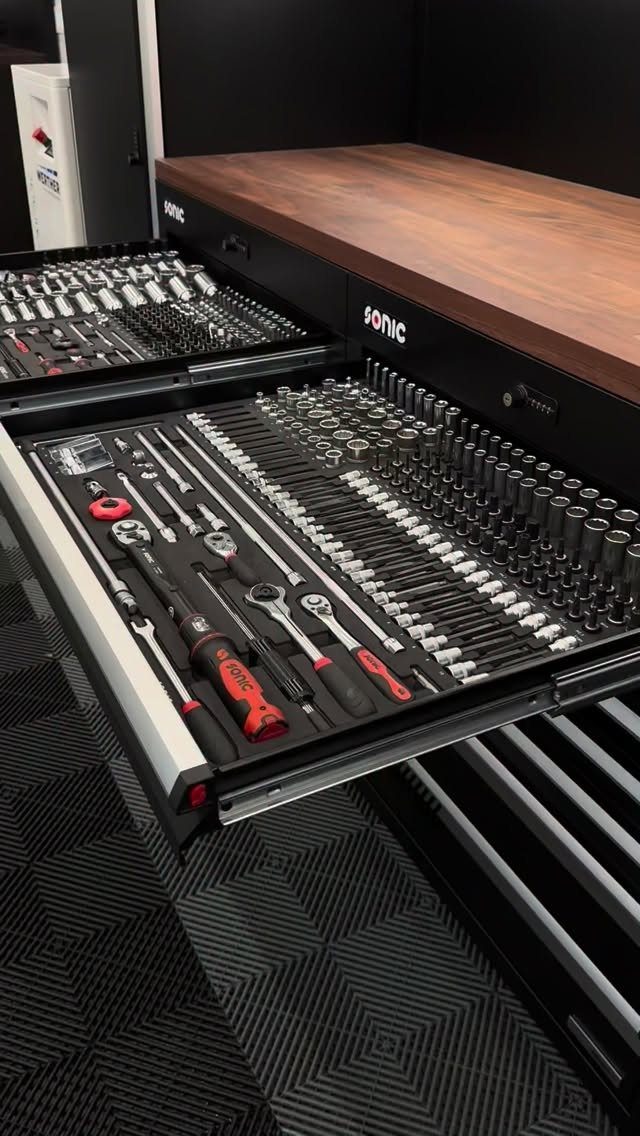
Drawers hide what wall storage cannot: the socket set that rusts in open air, the ratchets that roll off a shelf, the bits and adapters that multiply in darkness.
Foam organizers cut to fit keep each tool in its pocket so you see what is missing before you need it.
I am partial to drawers for most hand tools, especially in a hobby space where you handle small pieces often and the weather seal matters.
Wall hooks work for clamps and long items that will not fit, but the drawer habit comes from boats and tight quarters, where everything must stow secure.
A chest with fitted foam runs more than pegboard and hooks, and you lose the at-a-glance view of every tool you own.
For the tools you use weekly, though, opening a drawer to exactly the socket you need is faster than scanning a wall.
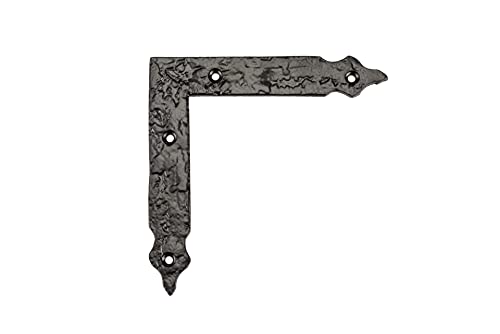

Each bracket has 6 staggered countersunk screw holes

【Beautiful and Powerful】 Our reinforced triangular bracket is easy to hide, making the furniture more durable and durable. It is beautiful, it can make the structure stronger when it needs reinforcement, and the structural fasteners are easy to install.
7. Custom Tool Holders
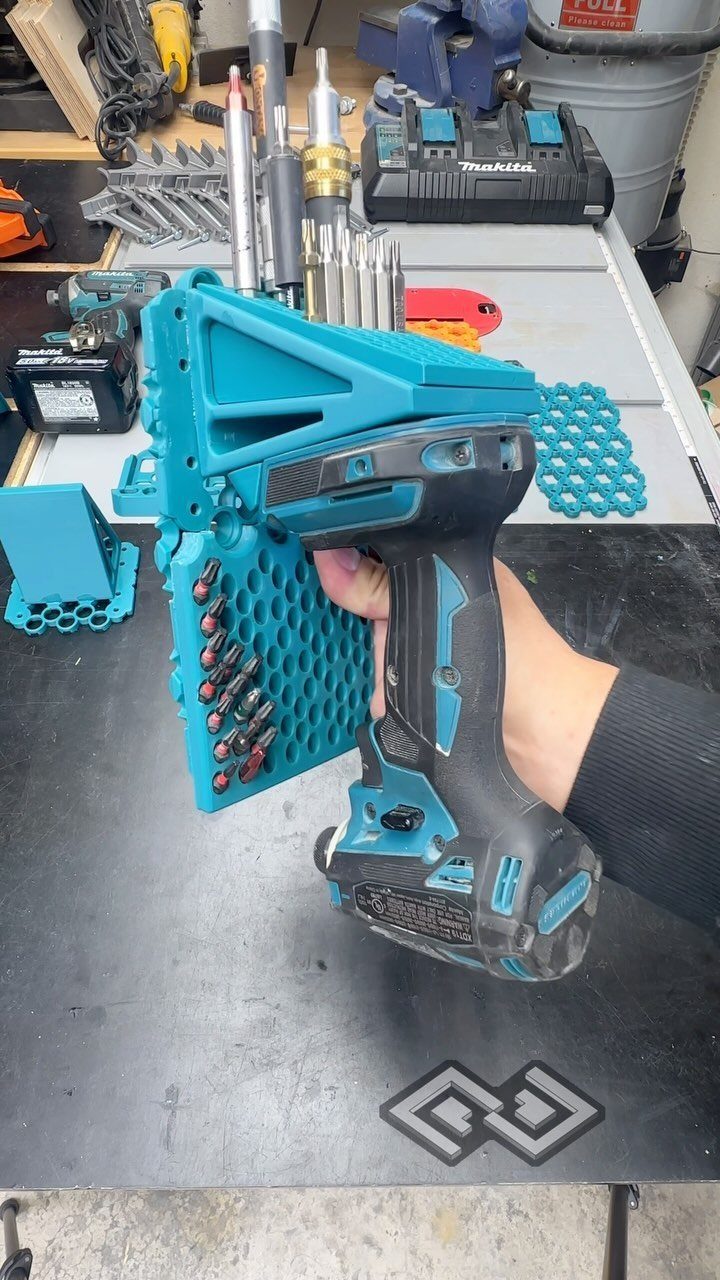
A 3D-printed holder clipped to a teal Makita drill keeps bits indexed by size and ready to pull, no fumbling through a case while the work waits.
Custom work like this is for the person who owns one drill and uses it hard enough that the factory case became clutter months ago.
The teal match is deliberate; one maker noted you can print to your brand color so the holder and tool read as one piece.
That kind of fit is what you are buying time for, since designing around a specific tool body takes a measuring session and probably a first draft that sits wrong.
ABS or PETG handle shed heat and the odd drop better than PLA. A basic printer is a real investment if you do not own one already, and the filament is cheap after that.
I would only go this route for the two or three tools you grab daily; the rest still live fine on a pegboard.
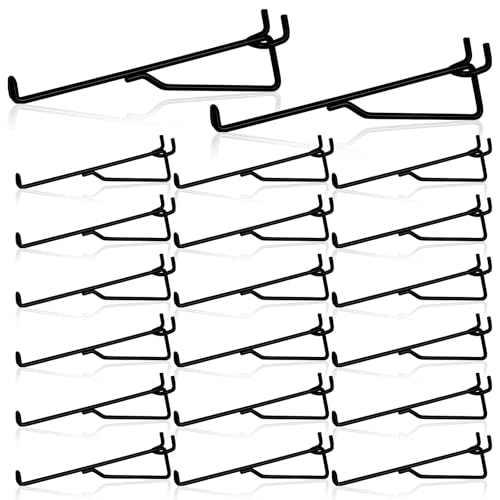
【Compatibility Notice】 8" pegboard shelf hooks do not directly fit 8" shelf board. Please consider the thickness of both shelves and pegboard. To ensure shelves lay flat, the compatible width = 7.9" - pegboard thickness.

Complete Garage Storage System Specification: This comprehensive garage storage system includes corner wall cabinet x 1, corner base cabinet x 1, wall cabinet x 2, 1-drawer cabinet x 2, 4-drawer cabinet x 1, workbench x 3, pegboard x 4, and metal garage storage cabinet x 1. Item Weight: 402 lbs; Package Size: 55.1 x 36.2 x 75.6 in; Item Color: Black, Grey and Grey

This product is of multi-function design, which can be installed on the wall of your garage separately, or on the standard pegboard with the special fastening screws provided by us.
8. Glass Containers

Glass jars screwed to the underside of a stair tread turn the dead space beneath steps into a hardware library you can read from across the room.
Coffee cans hide what is inside until you open four of them; a jar shows the brass from the zinc, the drywall screw from the deck screw, while your hands stay free.
Fix the mason jar lid to the wood and the jar spins off when you need it; a stair stringer or any solid backing works.
That detail matters because a dropped jar of lag bolts is a jar of shards and scattered steel.
I would keep the heavy stuff low, the light fasteners high, and skip this entirely if the stair is where you carry long stock through.
The yard tools on the blue wall behind remind you this is a mixed space; glass keeps the hardware visible and the floor clear for what moves.

900 lbs Tested, 450 lbs Rated Weight Capacity: Our overhead garage storage rack undergoes rigorous double load testing (900 lbs) to ensure unmatched safety and durability, supporting up to 450 lbs for your tools and equipment.
9. Wall Mounted Garden Tool Hooks
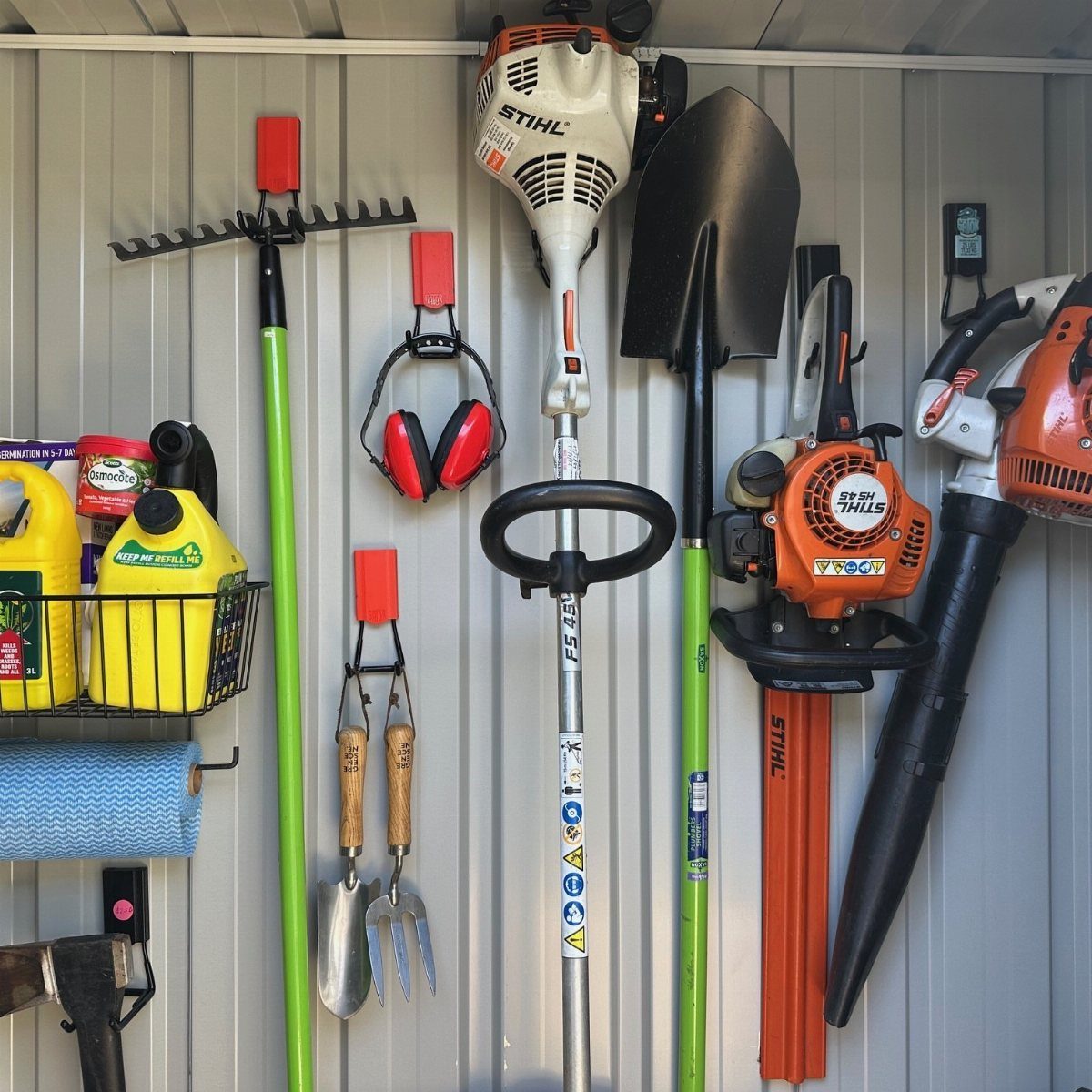
A Stihl string trimmer, hedge trimmer, shovel and rake share a grey corrugated wall on paired hooks that keep each tool vertical and spaced so the handles do not knock.
Corrugated metal is the surface here, not drywall, which means the mount is either self-tapping metal screws or a plywood backer bolted through the ribs.
The printed "Osmocote" bag on a lower hook is the detail that dates this shed: the owner gardens enough to buy slow-release fertilizer by the sack, not the handful.
That density of long-handled and powered tools is what wall hooks solve; the floor would be a forest of leaning handles and tangled cords inside a week.
I would check hook spacing against your widest tool head before drilling; a hedge trimmer needs more room than a rake, and the power tools want their battery end up to keep weight on the wall, not the motor.
The grey metal shows grease and dust less than white paint would, which is worth remembering if you are choosing a wall finish.
10. Wire Basket Wall Storage
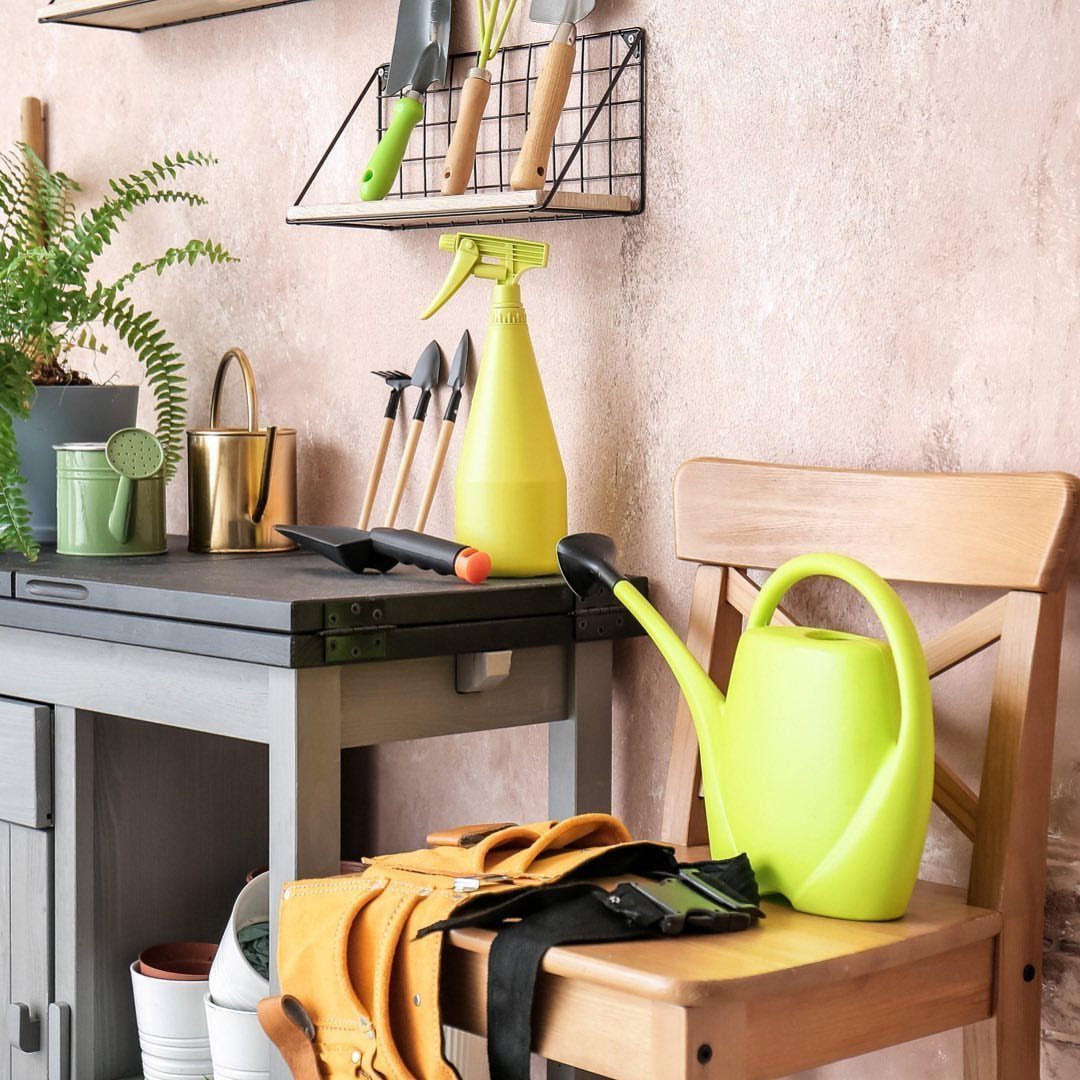
A black wire wall basket above a potting bench keeps trowels and hand forks where you reach without looking, the open weave letting soil fall through instead of packing into corners.
Mount high enough that a watering can and spray bottle still fit on the bench below; that clearance is the first thing to measure on your own wall.
Wire storage trades protection for speed.
Rain or shed humidity will surface-rust cheap basket coating over a season, so I would check for vinyl or epoxy dip before buying, or accept that this is a short-term item, not a lifetime one.
The tools visible are all short-handled; a long cultivator would catch on the basket rim and annoy you every time.
Mount with the bench use in mind: over a potting surface, not over a chair you sit in, or the basket becomes a head hazard.
11. PVC Tube Tool Organizers
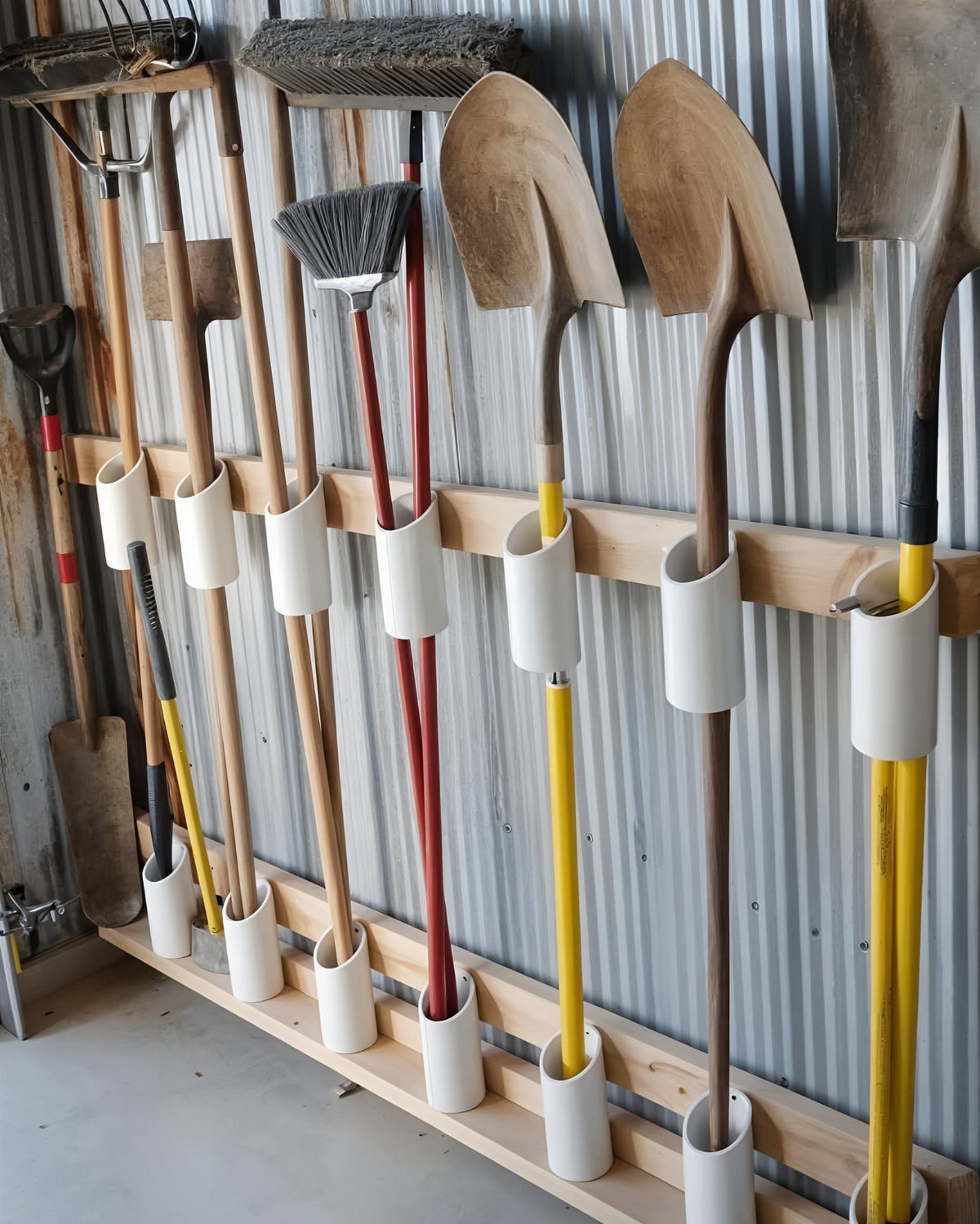
White PVC pipe cut to short cylinders and screwed to a two-tier wooden rack holds brooms, rakes and shovels upright against corrugated metal siding.
The angle is slight, enough that handles lean back and stay put without a front lip, not so much that the tools list sideways into each other.
PVC is cheap at any hardware store; the work is in the rack that carries it.
Two horizontal rows in a wooden frame tells me the builder sized pipe diameter to the tool handles they owned rather than buying one size and hoping.
A spade handle and a broom handle are different animals; I would lay out the tools on the garage floor and measure before cutting.
The corrugated wall behind means this rack is likely screwed to a backer board, not directly to the ribs, or the uneven surface would torque the frame loose.
Check that your shed wall has the flat run this needs, or build the backer into the rack itself.
12. Metal Cubby Shelving for Hardware
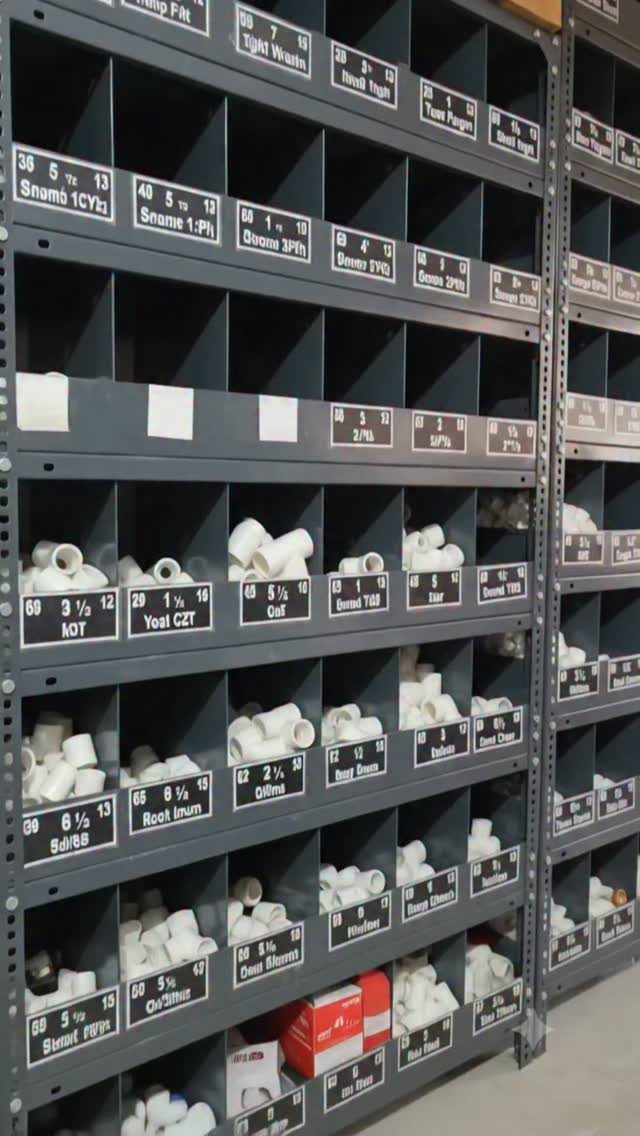
A grey metal cubby shelf with dozens of small compartments turns PVC fittings and hardware into a parts store where every bin has a label and a number.
The white fittings against grey metal is the contrast that makes scanning fast; your eye finds the elbow or the coupling without reading every tag.
Industrial cubby units like this come from workshop suppliers and cost more than plastic drawer stacks, but they survive being bumped by lumber and do not sag under weight.
Measurement tags instead of handwritten tape suggest either a printed system or the discipline to rewrite labels when stock changes.
I would decide that before buying: a fixed label holder rewards a system you stick to, and punishes the person who dumps mixed leftovers into the nearest open bin.
The unit stands on the floor, not wall-mounted, so it needs square footage more than height; a narrow shed with wall space already claimed is not the place for it.
Importance of Organization
A disorganized shed costs more than patience. The time spent shifting a leaning rake to reach the shovel behind it, or opening 4 coffee cans to find the right screw, is time borrowed from the project itself.
What the list does not say is how this compounds.
A socket that rolls off an open shelf and rusts by spring is a replacement cost. A drill with a dead battery because the charger lived in a different zone is a trip to the store.
The overhead rack idea works partly because it removes the temptation to let bulky items colonize floor space that should stay clear.
The discipline matters most for the person who touches tools weekly.
If your shed holds only holiday decorations and the occasional paint can, organization is aesthetic. For the homeowner running a project every few weekends, it is the difference between finishing Saturday and losing Sunday to searching.
Choosing the Right Shed
The list assumes you already have a shed. If you are choosing one, the decision that shapes every idea after it is size against footprint.
Material matters for what you can bolt to it. Corrugated metal siding, shown in the PVC tube and garden hook entries, needs a backer board or self-tapping screws; a wood-framed wall takes any mount directly.
Grey metal hides grease, blue paint brightens a mixed space: the finishes that matter are the ones that match what you actually do out there.
Ceiling height determines whether overhead racks are worth the effort.
A low shed roof puts the motorized rack in your hair; a pitched roof with exposed joists is built for it. Check this before you buy, not after the assembly.
Space Optimization
Vertical space is the theme the list returns to most often. Ceiling racks, wall brackets, pegboard, and the jar mount beneath stair treads all reach upward so the floor stays for what must move.
The garden corner entry makes this explicit: wall brackets for long tools, corner shelves above, pegboard on the wall facing out. Three surfaces in one corner, none of them the floor.
What the list does not emphasize is the trade between access and protection.
Wire baskets let soil fall through but surface-rust in shed humidity. Glass jars show contents but shatter if dropped.
Open wire rack shelving leaves everything visible to dusk light but exposed to dust. The closed drawer with foam organizer protects and hides; the pegboard displays and collects dirt.
Zoning is the other vertical idea.
Lawn and garden tools in one corner, hardware in labeled bins, chargers beside batteries, workbench tools in their drawers. The list never puts these in the same sentence because they should not live in the same reach.
A shed organized by task keeps the sprayer near the Preen and the deck screws away from the drywall ones, even if both are technically fasteners.