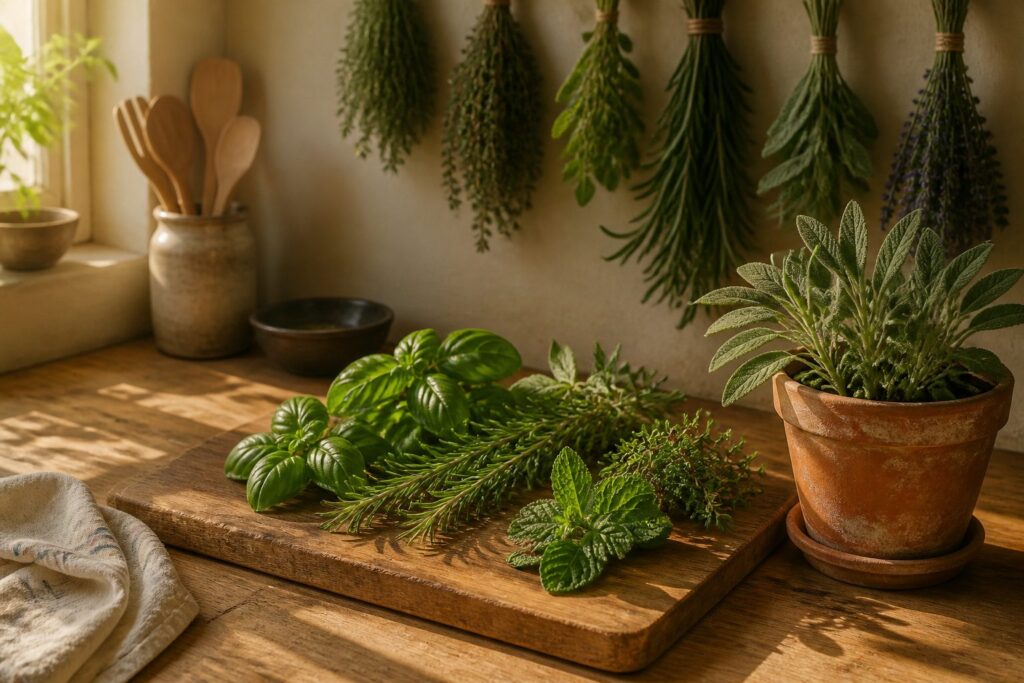
A herb companion planting guide matches herbs to vegetables and other herbs so they protect each other from pests or improve growth, but the pairings only work if you also know which combinations fight.
Basil repels aphids, spider mites, and flies from tomatoes, yet rue and sage planted too close will stunt it.
[link-whisper-related-posts]Basil
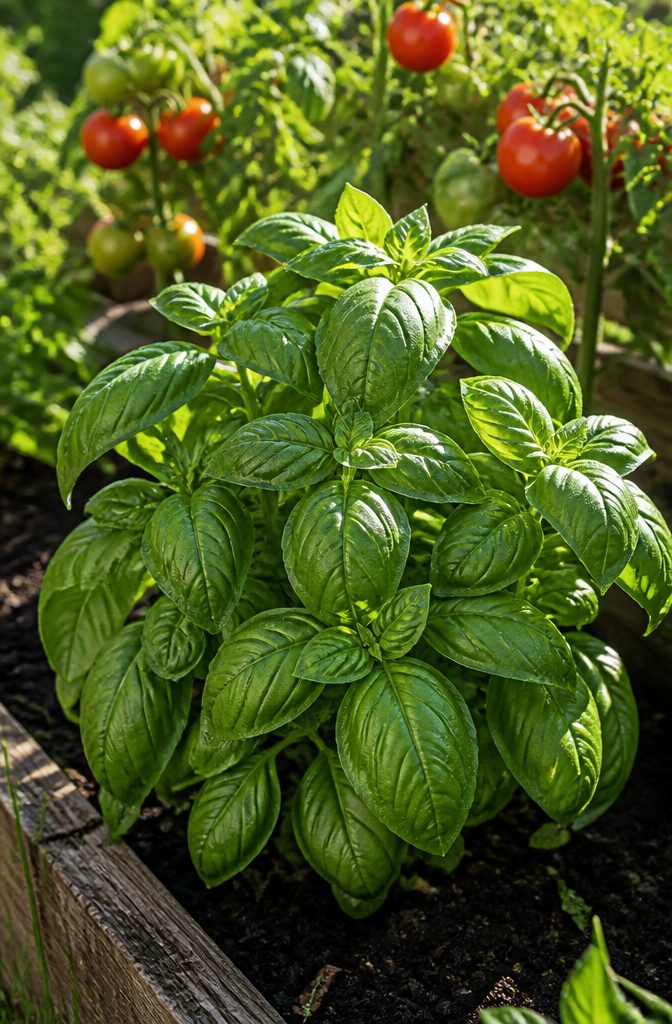
Basil earns its spot in any herb companion planting guide by doing real work above and below the soil. Six separate sources name it as the classic tomato companion, which tells you this pairing has been tested enough to trust.
The leaves release oils that help repel mosquitoes, flies, aphids, and spider mites, so the tomato plants spend less energy fighting off pests and more on fruit.
Peppers and oregano get the same benefit, and the basil seems to improve their growth and flavor in the bargain. Asparagus and petunias also sit well nearby.
Basil needs space from a short list of herbs.
Rue and sage both inhibit basil’s growth, so even in a crowded pot or small raised bed, give those two their own corner. Otherwise, basil asks for little: full sun, regular water, and the company of a few productive neighbors.
I tuck a row between my tomatoes every season and rarely lose a plant to the usual summer bugs. The basil gets tall enough to harvest by July, and the tomatoes taste like they had help.

5 COMPANION PLANTS - This five-pack includes heirloom seeds for growing Large Leaf Basil (Ocimum basilicum), Borage (Borago officinalis), Compact Dill (Anethum graveolens), Crackerjack Marigold (Tagetes erecta), and Tip Top Mix Nasturtium (Tropaeolum majus)

Reliable Germination: Genovese basil seeds sprout in 5-10 days. Genovese sweet basil seeds can be started directly at 65°F soil. For early start plant 6-8 weeks before last frost 4-6 seeds per cell, sow 1/2 inch deep in moist, well-drained soil.

Reliable Germination: Genovese basil seeds sprout in 5-10 days. Genovese sweet basil seeds can be started directly at 65°F soil. For early start plant 6-8 weeks before last frost 4-6 seeds per cell, sow 1/2 inch deep in moist, well-drained soil.
Chives
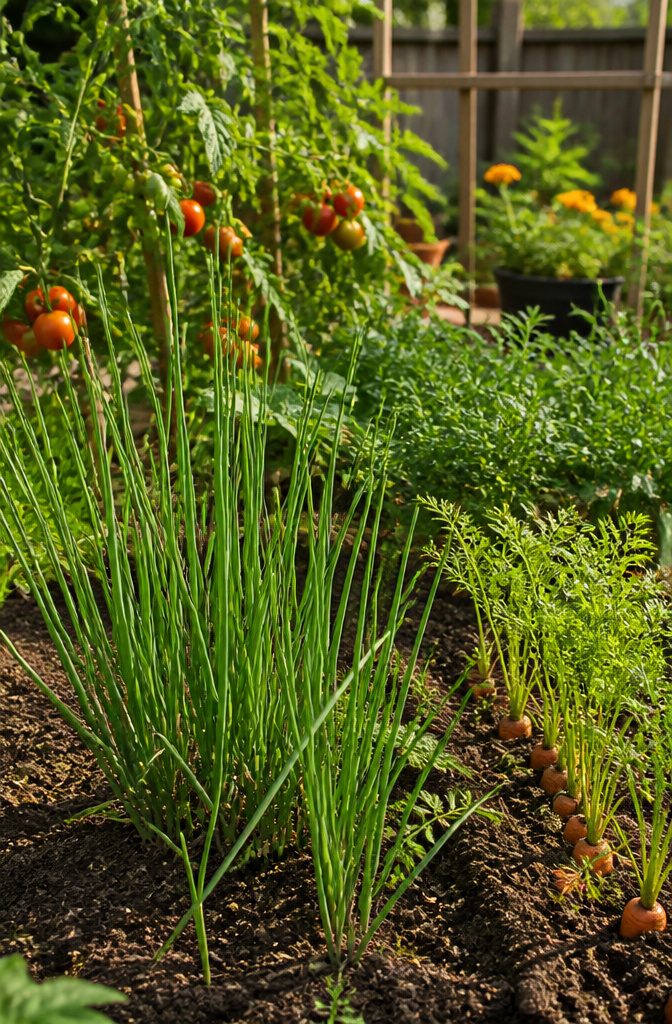
Chives earn their keep in a companion planting setup mostly by what they keep away. Aphids detest them, and that alone justifies a clump tucked near anything prone to the soft green infestation.
Carrots, tomatoes, and broccoli all benefit from the pairing: the chive roots leak sulfur compounds that sharpen the neighboring plant’s flavor while the leafy tops confuse pests that would otherwise settle in.
The Old Farmer’s Almanac adds sunflowers to the list, and most guides agree the onion-scented foliage repels beetles, cabbageworms, slugs, and carrot flies along with the aphids.
Alliums like chives stunt legumes.
Beans and peas lose vigor anywhere near chive roots, so keep a bed’s width between them. Dill, marjoram, parsley, and tarragon make friendlier neighbors, and the chive clump itself asks for little beyond decent sun and an occasional haircut.
I keep mine in a pot sunk into the vegetable bed so I can lift it out when I rotate crops; the stems snip clean at the base and regrow fast enough that I rarely buy fresh alliums from June through September.


PERFECT FOR SMALL SPACES – Tiny Tim’s compact plants thrive on patios, balconies, or sunny windowsills, giving you fresh cherry tomatoes even without a traditional vegetable garden plot
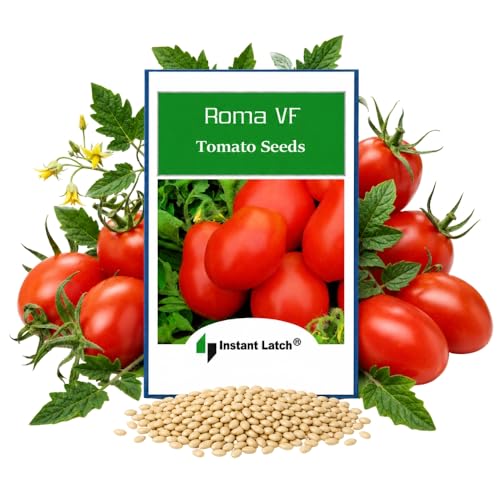
Name: Roma VF Tomato | Type: Heirloom
Dill
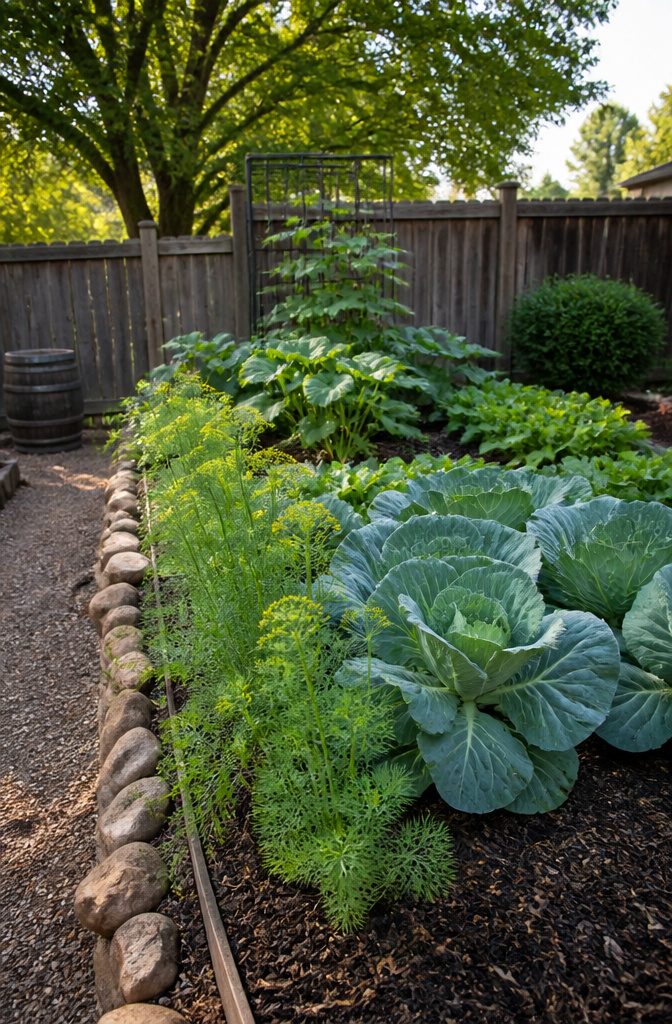
Dill’s feathery tops do more than look pretty in a kitchen window box. The plant pulls in ladybugs, honeybees, and butterflies when it’s young, which helps cucumbers set fruit and keeps cabbage healthier through the season.
I’ve tucked dill along the edge of raised beds where it can wave at passing pollinators without shading shorter neighbors.
The pairing with cabbage works because dill improves growth and overall vigor, and cucumbers benefit from the same insect traffic. Onions, lettuce, and sweet corn also tolerate dill nearby.
Keep dill away from carrots. The two plants cross-pollinate easily, which ruins the seed if you’re saving any, and mature dill stunts carrot growth.
Tomatoes get the same warning, and cilantro or lavender make poor neighbors too. If your garden plan already has carrots in the ground, slide your dill to the opposite end of the bed or into its own container.

Beautiful – Large premium packet of Jersey Wakefield Cabbage (Brassica oleracea) seed. This heirloom from 1840 is a reliable and early producer. Jersey Wakefield plants can be planted closely together, producing compact pointed heads that reach 2-5 pounds apiece. The pale green leaves are tender with a mild, sweet flavor. Minimum of 750 mg per packet (about 225 seeds).

Compact Green Heads - Golden Acre is an early, open-pollinated cabbage with tender, round green heads for fresh slaw, salads and cooked dishes; plan a cool spring or fall crop in full sun.

Copenhagen Cabbage Seeds for Planting - Copenhagen Cabbage (brassica oleracea var. capitata) produces medium-sized, green heads with a sweet, delicate flavor, perfect for enhancing any dish.
Mint
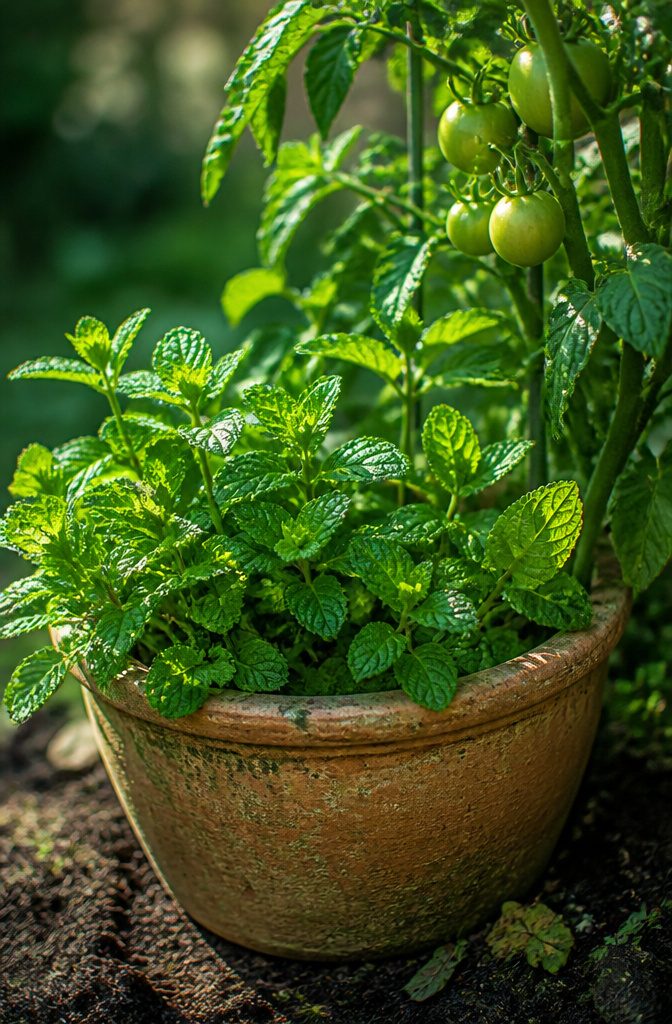
Mint’s reputation as a pest deterrent comes with fine print that can swallow your whole bed if you ignore it.
The same volatile oils that repel cabbage moths, aphids, and flea beetles from tomatoes, cabbage, broccoli, Brussels sprouts, and peas will also suppress anything growing within arm’s reach.
I learned to treat mint less like a companion and more like a neighbor you borrow tools from through the fence.
Grow it in its own pot or a bottomless bucket sunk into the soil.
Even then, check for runners twice a season. Spearmint may enhance nearby vegetables’ flavor or simply mask their scent from pests; either way, the benefit only holds if the mint doesn’t choke them out first.
Oregano can handle the competition. Parsley cannot, and should be planted elsewhere entirely.
Hardy growers like tomatoes and peas tolerate mint’s aggression better than tender herbs, but tolerance is not the same as thriving.
Container walls are the only boundary mint respects. Skip this step and you will spend next spring digging rhizomes out of soil you meant for basil.

HERBS ESSENTIAL SEED VARIETY PACK: Fresh flavors at your fingertips! This pack includes 5 kitchen essentials, from classic Genovese Basil to fragrant English Thyme and Italian Oregano. Perfect for sauces, soups, and homemade meals!


Beautiful - Large color packet of the popular culinary herb Genovese Basil (Ocimum Basilicum), a wonderful gift for the gourmet cook and gardener. Can easily be grown indoors in your kitchen or outdoors in the garden. There is actually enough seed to do both. Minimum of 400mg (about 400 seeds).
Oregano
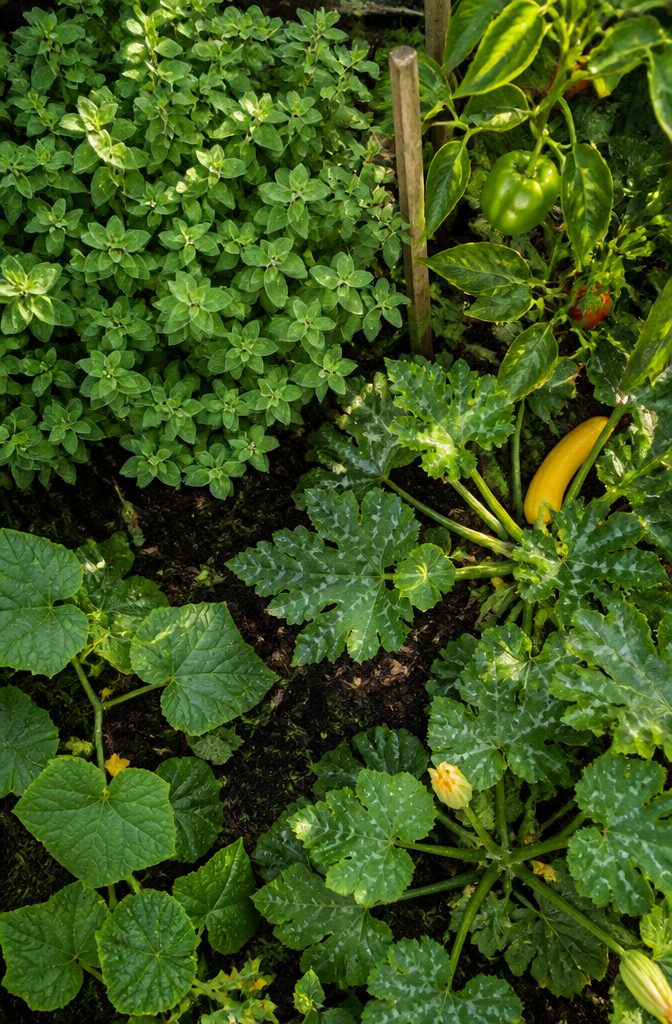
Oregano is the herb I plant first when I want coverage without complications. Its strong aroma confuses pests across the board, making it a general repellent that works with nearly everything in a vegetable bed.
Peppers, eggplant, squash, beans, cabbage, broccoli, brussels sprouts, cauliflower, kohlrabi, turnips, and strawberries all benefit from having it nearby, especially the ones aphids favor.
The herb side plays just as nicely.
Basil, chives, parsley, rosemary, sage, savory, and thyme all grow well alongside it. I’ve tucked oregano at the edges of pumpkin and squash patches too, where it provides that same broad pest protection without demanding much space or water.
The only real decision is where not to bother: there isn’t one. Nothing in the standard vegetable or herb lineup suffers from oregano’s presence.
That kind of blanket compatibility is rare in companion planting, and it’s why a single established clump can anchor a whole garden’s defense strategy. Let it spread, trim it back hard once a year, and it keeps working.

Grow All You Want - Extra large bulk packet of Mary Washington Asparagus (Asparagus officinalis) seeds. An extremely popular asparagus variety producing thick, straight green stalks with a hint of purple at the spear. Minimum of 1oz per packet (about 1600 seeds).

Asparagus takes up to 2 years to grow from seed, but they are so delicious they are well worth the wait.

Cool-Season Perennial Herb: Chives seeds for planting thrive spring or fall; hardy in USDA zones 3-11. Full sun to partial shade, rich moist soil—perfect for a kitchen garden and beds.
Parsley
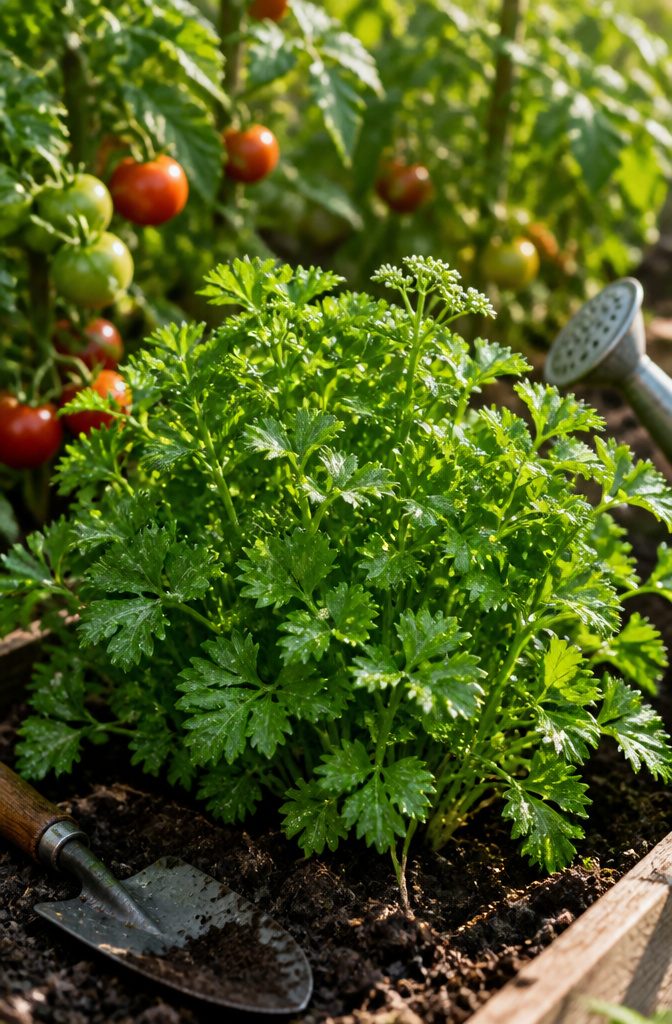
Parsley earns its spot in a herb companion planting guide mostly because of what happens after it flowers.
The tiny blooms draw hoverflies, parasitic wasps, ladybugs, and damselflies, all of which handle aphids and other pests so you don’t have to.
That insect traffic makes parsley unusually useful tucked beside plants that struggle with those same pests on their own.
Tomatoes and asparagus are the two pairings worth planting deliberately. Burpee’s companion chart from North Dakota State University lists parsley with both basil and tomato for asparagus beds.
The Old Farmer’s Almanac confirms the tomato connection and adds that parsley’s insect draw helps protect the whole neighborhood. For tomatoes specifically, parsley sits among the herbs that work, though basil still gets top billing.
Roses show up in some charts as a parsley companion for the same hoverfly benefit, and corn makes a few lists too.
I skip both: roses aren’t in my vegetable beds, and corn’s height shades parsley into legginess before the season ends.
The pairing that surprised me was the rosebush connection, until I realized it is the same insect logic applied somewhere else.
Keep lettuce well away.
Parsley can push lettuce toward early bolting, which wastes a crop you planted for leaves, not flowers. Mint also belongs at the other end of the garden, though that is more about mint’s general aggression than any specific parsley problem.


Genovese basil is a sweet basil that grows best in warm conditions. Grows well both indoors and outdoors, so when it gets too cold outside it makes for a good kitchen herb garden.

Beautiful - Variety Pack: Five large individual packets of family favorite tomato varieties: Cherokee Purple, Beefsteak, Large Red Cherry, Marglobe, and Roma. Enjoy these classic, productive tomatoes in your garden this season.
Rosemary
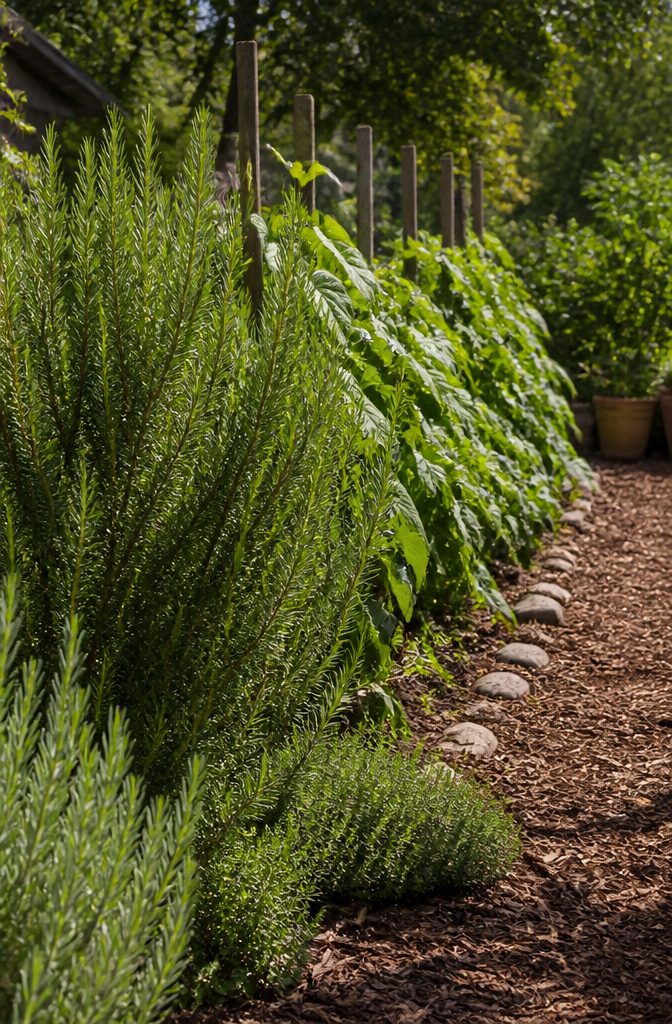
Rosemary earns its keep in a companion planting setup through scent alone. The oils in its needles release a strong pine-and-lemon aroma that cabbage moths, bean beetles, and carrot flies want nothing to do with.
I plant it as a living hedge around rows of beans and cabbage so the wind carries that smell across the crop rather than away from it.
The herb also plays well with its own kind. Sage, thyme, lavender, oregano, and marjoram share rosemary’s preference for sun and soil that drains fast, so a single raised bed can hold the whole Mediterranean set without anyone sulking.
Parsley and chives manage despite wanting more moisture; I keep them on the slightly shadier edge of the rosemary’s root zone and both sides seem fine with the arrangement.
Rosemary repels the evil cabbage moth and the bean beetle. It’s also the arch nemesis of slugs and snails.
That last part matters more than the others if your garden sits where mornings stay damp. Slugs and snails do their worst damage after rain, and rosemary planted thick enough to touch at the shoulders makes that commute less appealing.
One caution: keep it well away from potatoes. The same chemistry that confuses pests can slow tuber growth, so I maintain at least a couple feet of clearance or use a different bed entirely.

PERFECT FOR SMALL SPACES – Grow juicy, bite-sized cherry tomatoes in the smallest of spaces! Tiny Tim thrives in containers, patios, and even sunny windowsills, making it the ideal choice for home gardeners who love fresh, homegrown flavor without a large garden.

15 Varieties of Premium Seeds: Includes a diverse selection of non-GMO heirloom varieties including tomatoes, peppers, lettuce, radish, watermelon, broccoli, beans, zucchini, carrot, cucumber, and marigolds. A complete set for your classic garden!

Beautiful - Large premium packet of Roma Tomato (Solanum lycopersicum) seeds. Growing on compact vines, this determinate variety guarantees prolific growth. These rich, juicy tomatoes are great for canning or eating fresh. Whether you're cultivating a bustling outdoor vegetable patch or a cozy kitchen garden space, this popular tomato is easy and fun to grow! Minimum of 100 mg per packet (about 45 seeds).
Sage
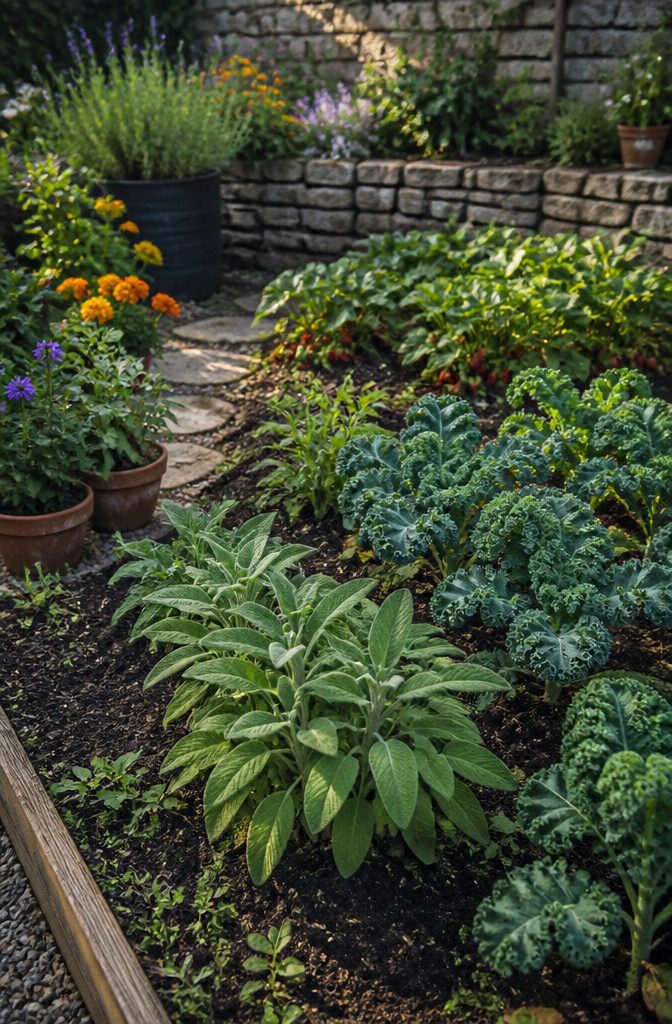
Sage earns its spot near brassicas for one solid reason: the leaves repel cabbage moths, the ones that turn your kale into lace.
The strong scent confuses them before they lay eggs, and the same quality makes sage worth tucking beside carrots to discourage carrot fly.
Strawberries also handle the company well; the pairing shows up in enough garden plans that I stopped questioning it and just tried it myself.
The herb’s earthy, bold flavor in the kitchen carries over into how it behaves in soil.
It grows well with lavender, oregano, rosemary, and thyme, which all like the same dry feet and full sun. That makes planning easier if you are already running a Mediterranean corner of the bed.
Two plants do not belong near it.
Cucumbers and onions both suffer; sage inhibits their growth rather than helping it. I learned that the hard way one season when my onion bulbs stayed the size of golf balls.
The fix was simple the next year: keep sage on the opposite end of the raised bed, give it its own terracotta pot, or at least a 12-inch buffer of neutral ground.

High Germination Rate: Quality seeds with excellent viability for a lush dill crop (Lab-tested for purity and germination) packed in premium waterproof packaging to protect seeds from moisture, ensuring long-term viability.

Cabbage Seeds for Planting – includes 1 packet of 200 copenhagen cabbage Seeds. The plant produces medium sized, green heads that can liven up any dish.
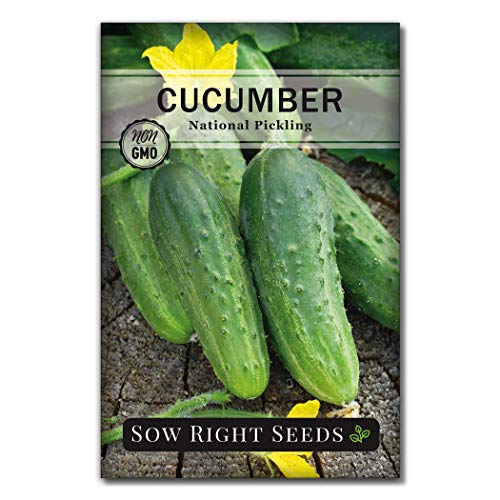
Beautiful - Full-color packet of National Pickling Cucumber seeds (Cucumis Sativus), a heavy producing self-pollinating variety that is burpless and wonderful for pickles or eating fresh. Sweet skins do not need to be peeled. Minimum of 1g per packet (about 39 seeds).
Thyme
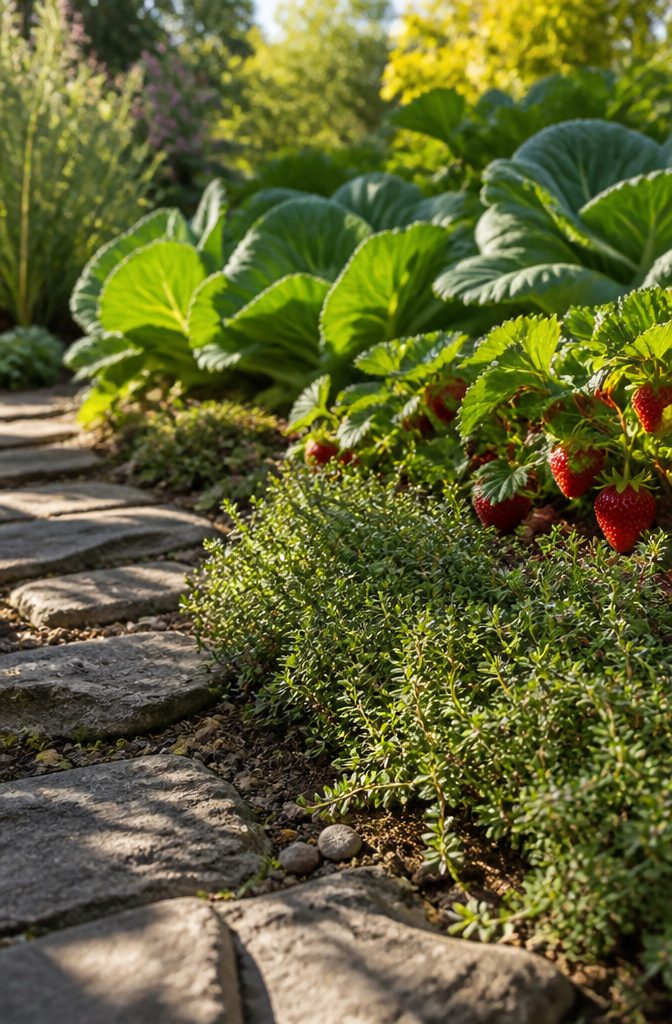
Thyme earns its spot in a working garden by doing jobs that are hard to fake with sprays or fences.
The plant’s strong scent masks brassicas from pests, and the University of Minnesota Extension specifically credits it with repelling cabbage moths.
I have seen this work in practice: a thyme border around my kale and broccoli cut the cabbage worm damage enough that I stopped checking leaves with dread. Plant thyme near cabbage, strawberries, or potatoes for the clearest results.
The strawberry pairing is less about defense and more about flavor. Sources note that thyme improves the berry’s taste, which matches what I have noticed in my own beds, though I would not call the difference dramatic.
The potato pairing sits in the same practical zone: thyme does not fight potato pests directly, but it fills ground that would otherwise host nothing useful.
Thyme also draws honeybees if you let it bloom, which is worth remembering if you garden for pollinators as well as harvest.
On the other hand, keep it away from corn; the two compete hard for soil nutrients and neither thrives.
Thyme spreads low and slow, so it will not take over the way mint does, but it still needs that buffer from hungry feeders.

Huge Value -18 Most Popular Culinary Herbs non-GMO Heirloom Seeds - LESS THAN $1.30 PER SEED VARIETY - 10180 herbs seeds including: Basil, Catnip, Chervil, Chives, Cilantro (Coriander), Dill, Fennel, Thyme, Lavender, Lemon Balm, Oregano, Marjoram, Mountain Mint, Parsley, Rosemary, Sage, Summer Savory, Tarragon

The Best Value - Organo Republic Holy Basil Seeds Pack contains 0.5 g or 1,400 of Non-GMO heirloom basil seeds. Holy Basil (Ocimum tenuiflorum) is known for its spicy taste and is the perfect addition to fresh vegetable salad or culinary creations.

ITALIAN HERB SEED COLLECTION - Plant basil (Ocimum basilicum), oregano (Origanum vulgare), thyme (Thymus vulgaris), sage (Salvia officinalis), and flat leaf parsley (Petroselinum crispum)
Tarragon
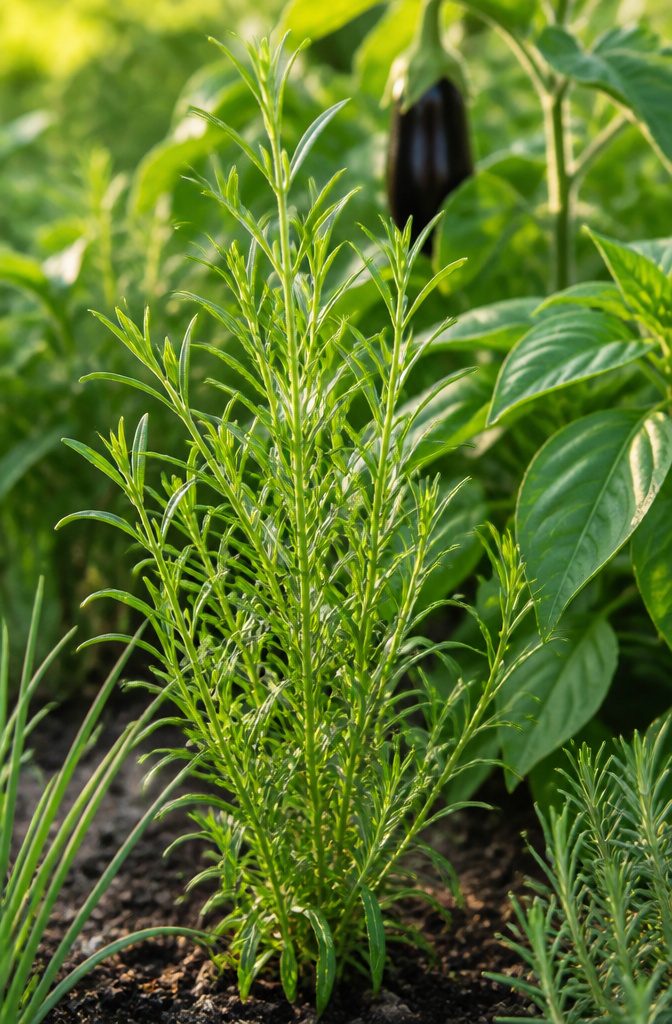
Tarragon is the outlier in this guide: it is the only herb here primarily valued for flavor enhancement rather than pest control.
Most companion herbs earn their keep by repelling aphids, moths, or beetles, but tarragon’s main gift to neighboring plants is subtler and, in some ways, harder to replace.
French tarragon, the variety worth growing, pairs especially well with eggplant and peppers.
The warm, slightly anise notes do not just sit well with these vegetables on the plate; in the garden, the proximity is said to intensify their flavor in ways that basil or chives, for all their virtues, do not replicate.
I have seen the difference described as a rounding-out, a depth that pepper and eggplant can otherwise lack when grown in isolation.
The plant itself is easy company. It grows well alongside chives, lemon balm, lemon thyme, parsley, rosemary, and sage, so it slots into an herb bed without demanding its own territory.
That matters on a weekend timeline and a few hundred dollars of materials: space is limited, and a plant that cooperates with its neighbors earns its soil.
Russian tarragon, the more common seed-grown type, has little of the French variety’s flavor.
If you are planting for the kitchen, buy a transplant or root division. Seed is a false economy.

Grow a Delicate “Fern-Like” Beauty: Cultivate the elegant Asparagus Plumosus Nanus plant, prized for its fine, plume-like foliage that resembles soft, green lace. It’s a classic and graceful addition to any plant collection (note: it’s botanically an asparagus, not a true fern).

HIGH GERMINATION: These seeds are sourced from reliable producers to ensure high quality, promising robust germination and exceptional yields. Ideal for those looking to cultivate a lush garden.

10,000+ Seeds Big-Value Pack: Fill baskets, beds, and borders with a high-count petunia mix—ideal for mass planting and bold seasonal color.
What Companion Planting Does
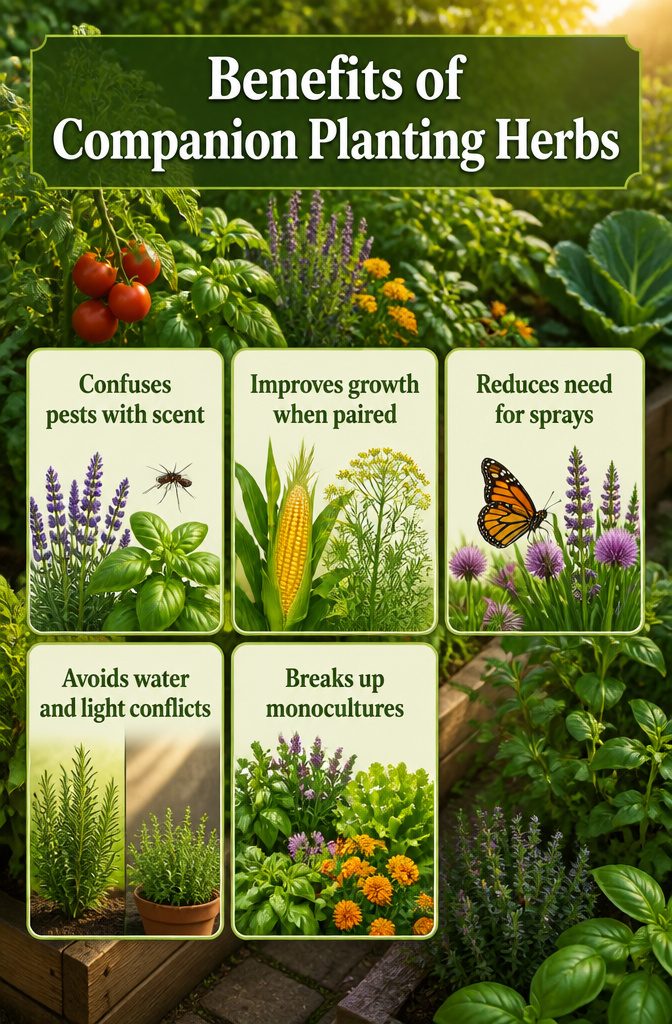
Companion planting works because herbs do more than sit pretty in a bed. Strong-scented herbs confuse pests that hunt by smell, making it harder for them to lock onto the vegetables they want.
Basil near tomatoes, for instance, repels flies and mosquitoes while drawing in pollinators that set fruit. The same plant pulls double duty.
Some pairings improve growth directly. Dill planted with corn helps produce bigger ears, while tall herbs or vegetables can shade neighbors that wilt in afternoon sun.
Soil matters too: herbs with similar water and light needs grouped together avoid the classic mistake of drowning a drought-lover beside something thirsty.
The real result is reducing the need for sprays. When chives deter aphids from roses or thyme keeps cabbage moths away, the garden becomes its own pest management system.
Beneficial insects show up for the herbs, then stay to eat the problems. A container on a balcony or a raised bed in the backyard both gain from this, and neither requires a chemistry set to maintain.
Interplanting also breaks up monocultures. Large blocks of one vegetable read like a billboard to pests; mixed herbs and flowers disrupt the pattern.
The scent and color variation alone throws off search behavior. For a weekend project with a $50 tray of starts, that is a lot of return on spacing decisions made before anything goes in the ground.
Herbs That Fight Each Other
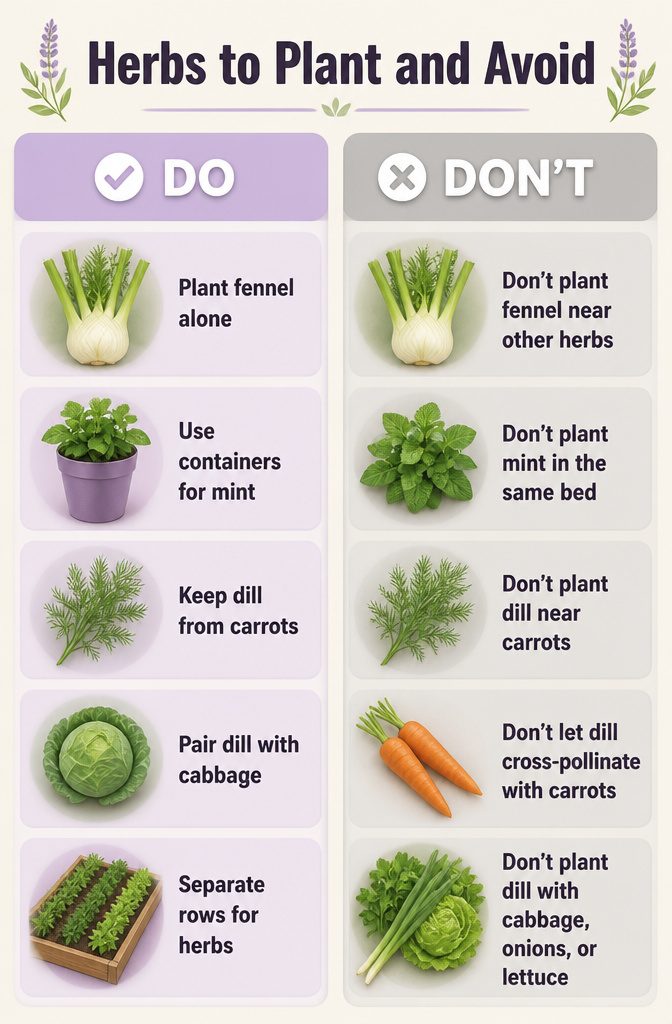
Fennel is the herb most gardeners regret planting in the wrong spot. It belongs alone, or at least far enough from anything else you care about, because it releases compounds that stunt the growth of most neighboring herbs and vegetables.
I learned this the hard way after watching a row of cilantro wilt and stall within a few feet of a thriving fennel clump; the fennel itself looked healthy, but everything around it struggled until I pulled it out.
Mint carries a different threat.
Its roots spread aggressively underground, choking out slower-growing neighbors like parsley if they share the same bed. Containers are the safer bet for mint, or a dedicated corner where its runners can’t escape.
Dill near carrots is another pairing to skip.
The two are related enough that dill can cross-pollinate with carrots or inhibit their growth once it matures, and neither plant benefits from the confusion. Keep them in separate rows and save the dill for cabbage, onions, or lettuce instead.
Growing Herbs in Pots
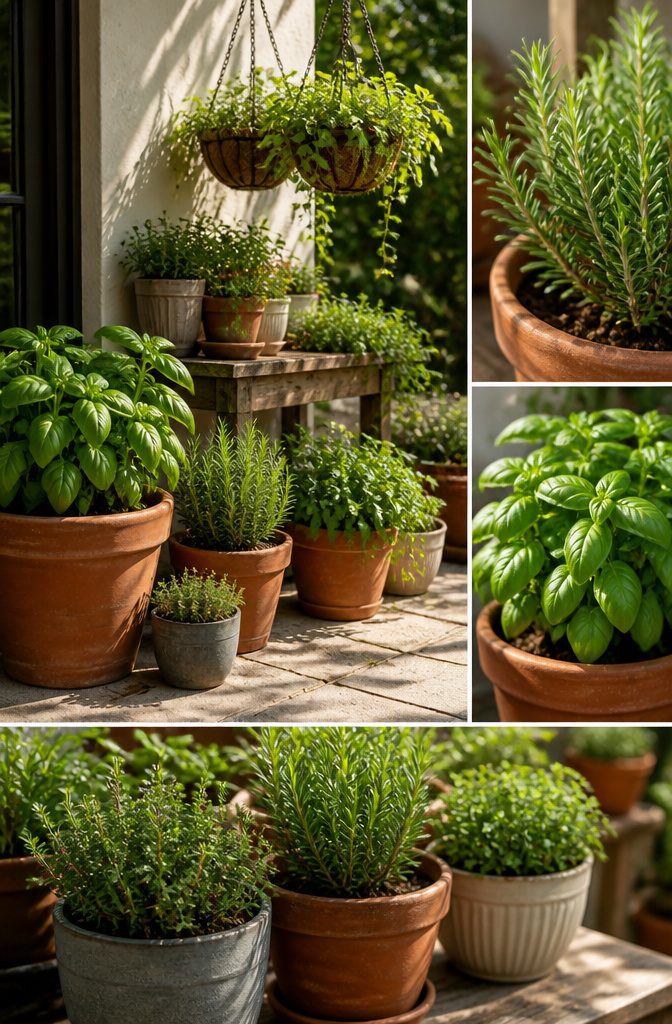
A 12-inch pot holds three to five annual herbs if their mature heights stay close together, but perennial herbs in the mint family need their own pot, minimum 12 inches across.
I learned that the hard way after watching peppermint strangle a thyme seedling in a shared container one summer.
Drainage material belongs in the bottom before the soil goes in, especially since moisture-loving basil and cilantro share nothing in common with drought-tolerant rosemary and oregano.
Thyme, sage, marjoram, and lavender all prefer that drier soil, so they pair naturally in the same pot. Rosemary even shields neighboring parsley and chives from pests, though their water needs differ.
Aggressive spreaders like oregano eventually demand 18 to 24 inches or more.
For non-invasive herbs, I plan roughly one plant per 6 inches of pot diameter, which puts two or three in an 18-inch container. The mistake most people make is treating all herbs as interchangeable tenants.
They are not. Match light, match water, then match root ambition, or you will be repotting the bully by August.
Annual and Perennial Herbs
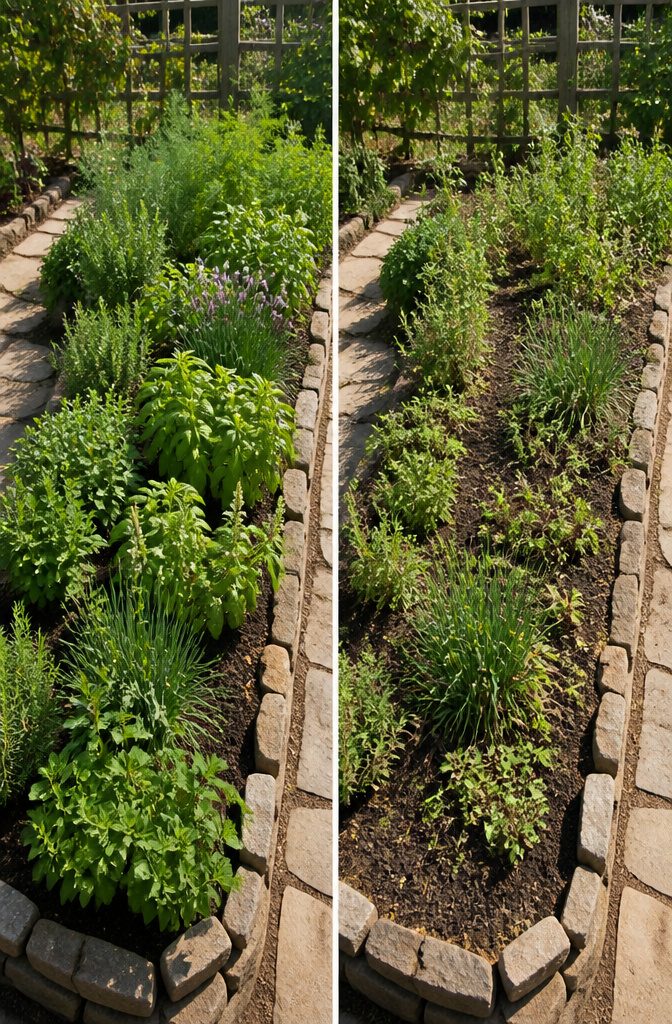
Annual herbs like basil, dill, and cilantro live one season and die with the frost.
Perennial herbs such as chives, mint, oregano, sage, rosemary, and thyme survive winter and return each year, though hardiness varies by zone: chives and mint handle zone 3, while oregano, sage, and thyme make it to zone 5.
Perennials are the ones that demand forward planning, because an herb that looks manageable in April can own the container by August two years later.
The real compatibility issue is not annual versus perennial but perennial versus perennial. Oregano spreads underground and will choke slower growers like sage; mint does the same to anything in reach.
Annuals, by contrast, make excellent short-term neighbors for young perennials. They fill space the first season while the perennial establishes, then vacate it when they die, leaving room for the perennial to expand.
Treat marginally hardy perennials as annuals if your zone kills them.
Marjoram dies back in zone 7, so it works tucked between sturdier perennials for one summer, then replanted. The mistake is treating every perennial as polite background planting.
Some are; some are future invaders. Know which before you set them in the same pot.
Frequently Asked Questions
What herbs grow well together?
Mediterranean herbs like basil, oregano, thyme, rosemary, sage, and marjoram grow well together because they all prefer full sun and well-drained soil.
Oregano is especially compatible, pairing with basil, chives, parsley, rosemary, sage, savory, and thyme without causing problems for any of them. Tarragon also slots easily into herb beds alongside chives, lemon balm, lemon thyme, parsley, rosemary, and sage.
Which herbs should not be planted together?
Fennel belongs alone or far from other plants because it releases growth-stunting compounds that harm most neighbors. Rue and sage both inhibit basil, so give those their own space.
Dill and carrots cross-pollinate and stunt each other, while chives stunt beans and peas. Mint should stay in its own pot or it will choke slower growers like parsley.
What herbs grow well with tomatoes?
Basil is the classic tomato companion, repelling flies, mosquitoes, aphids, and spider mites while improving growth and flavor.
Chives also pair well with tomatoes by deterring aphids. Parsley draws beneficial insects that protect tomato plants, though basil still gets top billing for this pairing.
Can you plant multiple herbs in one container?
Yes, if they share similar light and water needs. Rosemary, thyme, and oregano grow well together in one pot because they all prefer drier soil.
Thyme, sage, marjoram, and lavender also pair naturally. Avoid mixing moisture-loving basil or cilantro with drought-tolerant herbs, and always give mint its own container minimum 12 inches across.
Which herbs to plant together chart?
A chart would group basil with tomatoes, peppers, oregano, and asparagus; chives with carrots, tomatoes, broccoli, and sunflowers; dill with cabbage, cucumbers, onions, and lettuce; oregano with nearly all vegetables and herbs; parsley with tomatoes and asparagus; rosemary with beans, cabbage, sage, thyme, and lavender; sage with brassicas, carrots, and strawberries; thyme with cabbage, strawberries, and potatoes; and tarragon with eggplant and peppers.
Keep fennel separate, mint contained, and check each pairing against the incompatibilities listed above.