The 20 pool deck ideas below run from a painted concrete weekend project to multi-level builds that need engineered plans, with most falling somewhere on the timber-and-pebble middle ground that fits a Saturday-and-Sunday budget.
What decides which one is yours is whether you are covering an existing surface or building from bare yard, since that changes whether paint, pavers, or poured concrete are even in play.
A sun shelf with submerged chaises turns part of the water itself into furniture, something I first saw at a hotel in Palm Springs and have wanted at home ever since.
[link-whisper-related-posts]1. Moody Maximalist Pool Deck with Velvet Textures
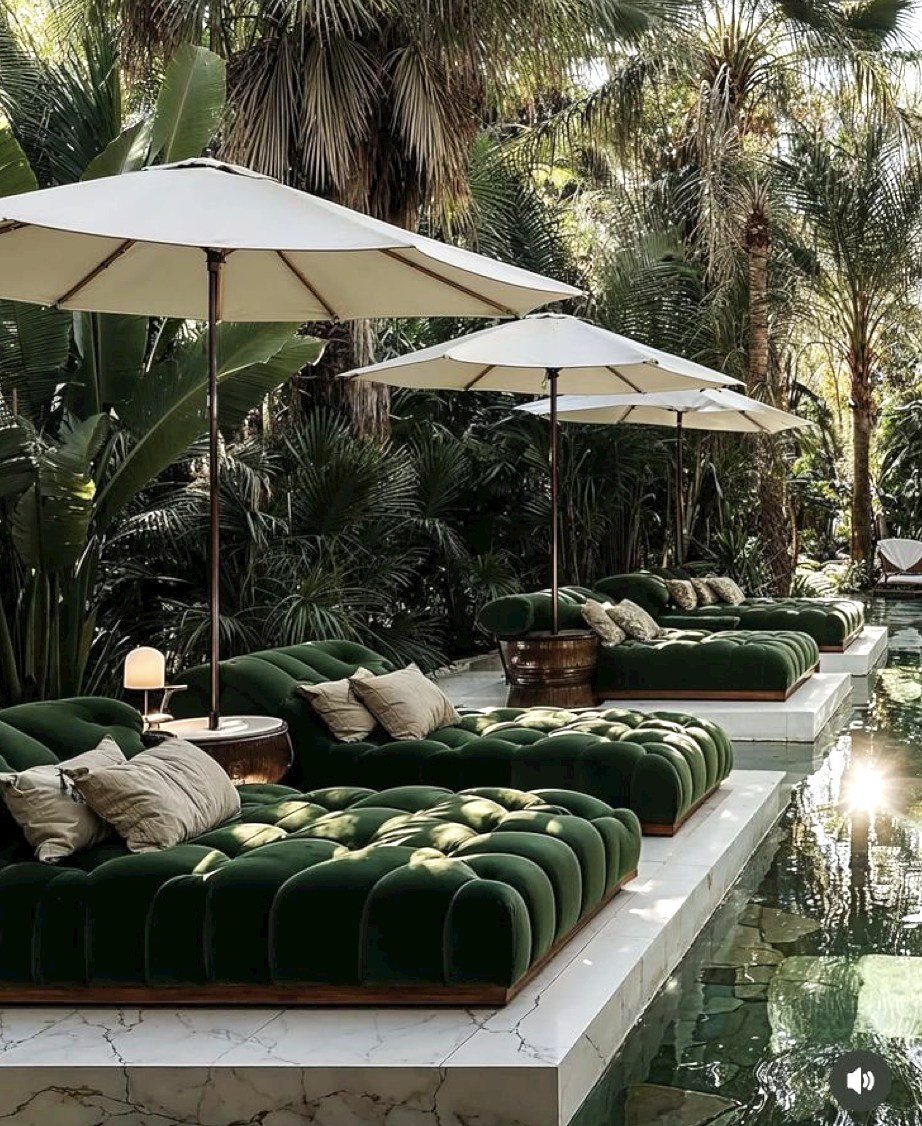
Jewel-toned velvet daybeds turn a pool deck into something closer to a private hotel lounge than a backyard.
The brass accents and deep greens, sapphires, and amethysts read expensive because velvet and brass are expensive; the trick for a smaller budget is choosing one velvet piece as the anchor and building around it with weather-resistant cushions in similar tones.
I would start with a single daybed or oversized chaise in emerald rather than buying a matched set.
Stamped concrete in a light gray achieves the same cooling effect against dark furniture and fabrics for a fraction of the cost of white marble decking.
Dense planting is doing as much work here as the furniture; tropical varieties that handle humidity around pools include bird of paradise and elephant ear, both of which spread fast enough to look established within a single season.
2. Minimalist Pool Deck with Modular Light-Wood Sectional
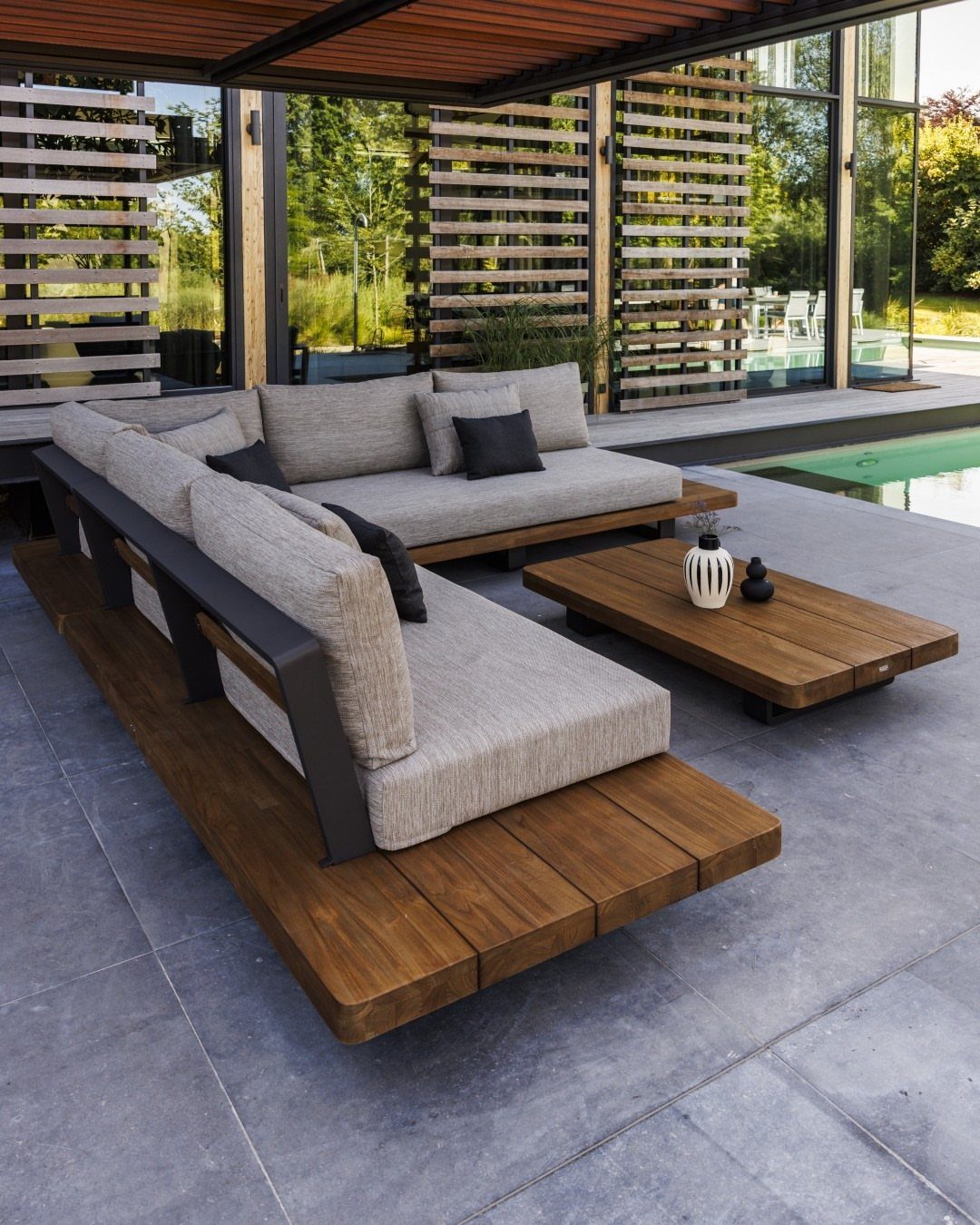
A modular light-wood sectional lets you rearrange seating as the party changes shape, which matters more poolside than in a living room where furniture mostly stays put.
The soft neutrals, cream, taupe, and warm gray, reflect heat rather than absorbing it, a practical choice I did not appreciate until I sat on a dark cushion in July.
Hidden storage built into the sectional or tucked beneath the coffee table keeps towels and sunscreen from becoming deck clutter.
Simple planters in tapered silhouettes, repeated at the corners, finish the look without adding visual weight. This suits renters particularly well; the pieces read as investment furniture but move with you.
3. Emerald Oasis with Timber Pergola
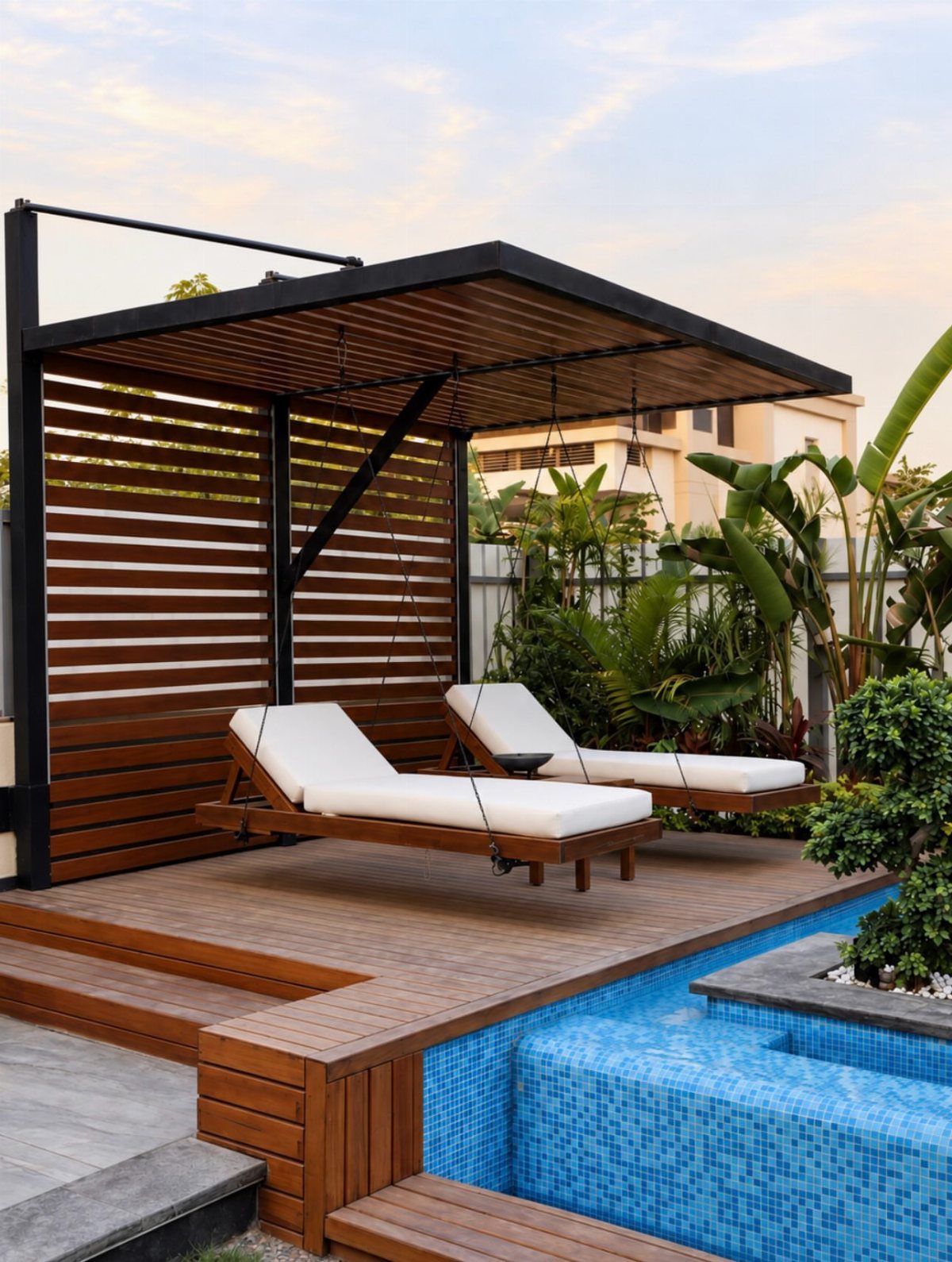
A timber pergola with slatted wood details creates filtered shade without blocking breeze, which is the balance I look for in any poolside structure.
Forest greens and honeyed wood tones work best when they come from the planting and the pergola finish together rather than from a single dominant color.
The cushioned lounge swing beds suspended beneath the pergola turn a standard deck into something worth napping on. I would check the hardware weight rating before installing swings; most pergola beams need reinforcement for anything beyond a single chair.
Lush tropical plants at the perimeter, ferns, philodendron, and palms, complete the secluded resort mood. The blue pool tile visible beneath the waterline is a detail worth copying; it reads as water color rather than as a separate design choice.
4. Terracotta Pool Deck with Low-Slung Furniture
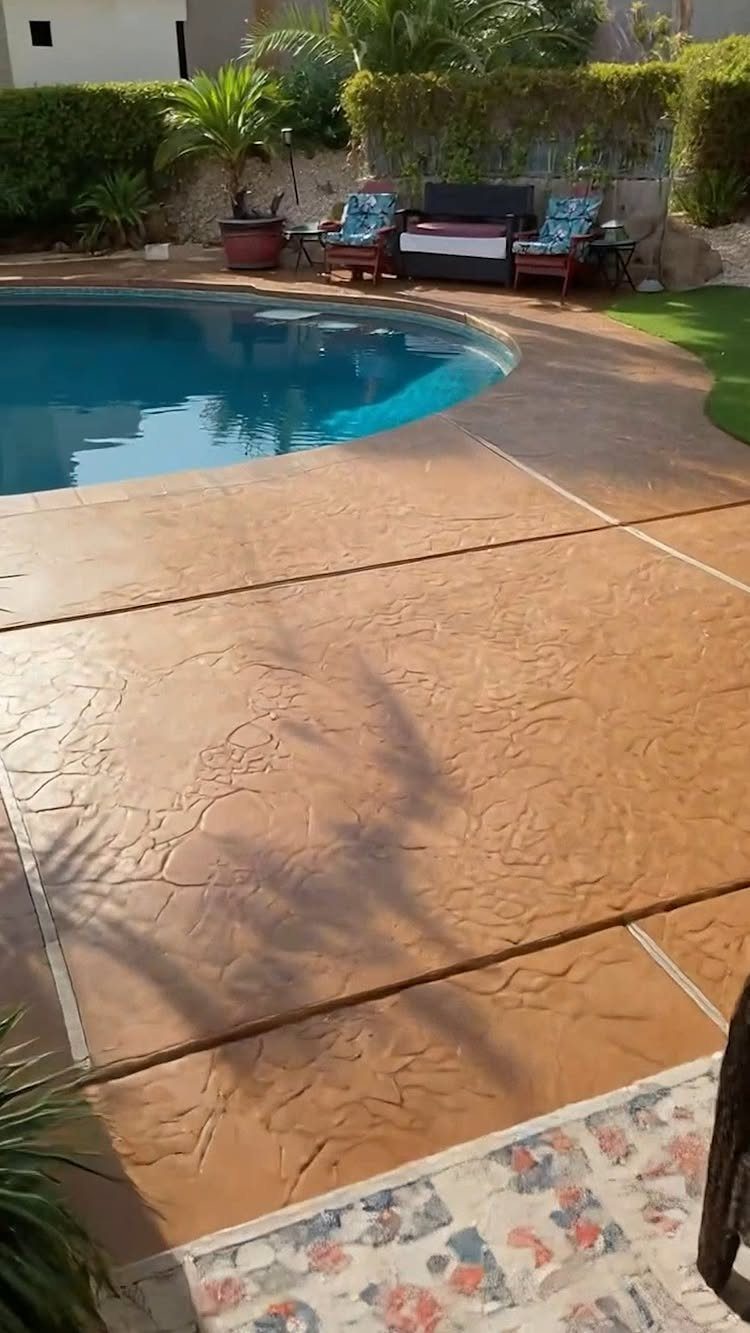
Stamped concrete in terracotta tones solves 2 problems at once: it costs less than stone or tile and it hides the dust and pollen that pool decks collect constantly.
Low-slung furniture at a height that feels relaxed rather than collapsed is more comfortable for long afternoons than deep loungers that are hard to climb out of.
Warm neutrals and textured textiles carry the desert resort feeling through the hottest part of the day. The curved pool shape helps the terracotta read as organic rather than as a flat color wash.
Patterned cushions add interest without requiring additional furniture; this is where I would put my budget, since they swap out cheaply when the look tires.
5. Statement Canopy Cabana Deck
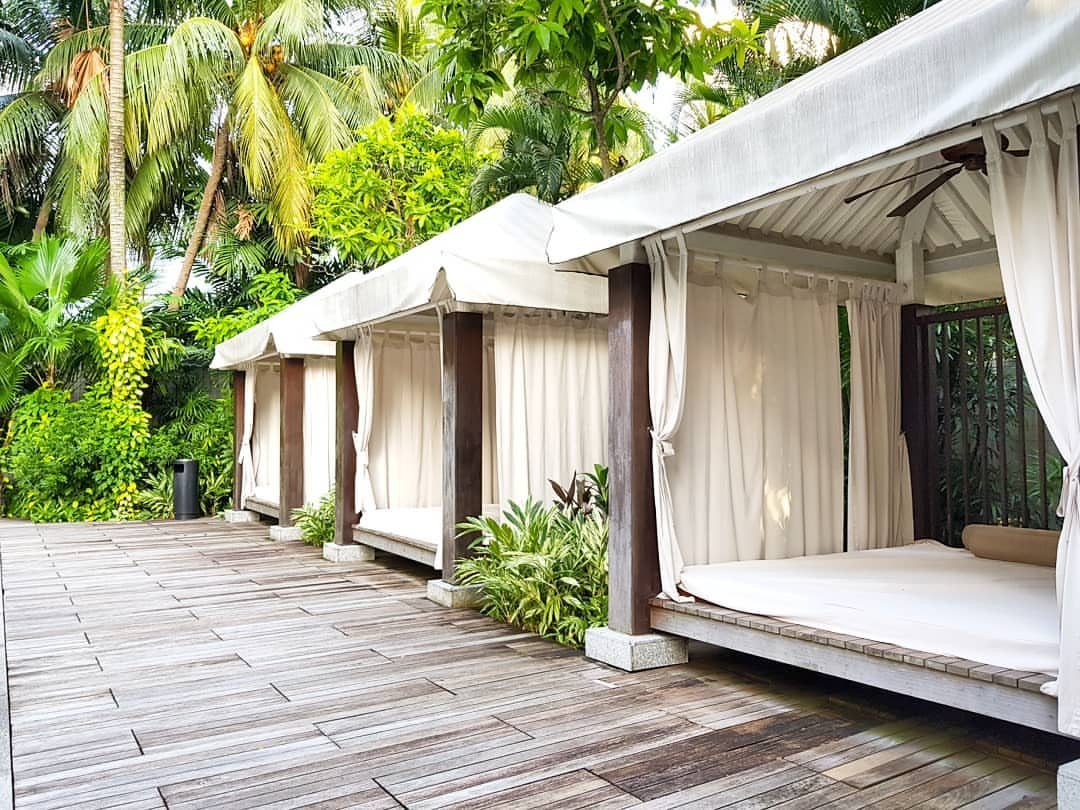
White canopy cabanas with flowing curtains create private rooms on an open deck, which matters when guests want shade, naps, or conversation away from the main group.
Wooden frames give structure to fabric that would otherwise look temporary; teak or cedar offer rot resistance and will gray naturally without stain.
Neutral lounge furniture inside each cabana keeps the focus on the canopy itself. The conversational layout, cabanas facing each other across a shared space, works better for groups than a single row facing the pool.
Curtains should be outdoor-rated fabric with some weight to them; lightweight sheers tangle and tear in wind. This idea scales down to 2 cabanas on a modest deck without losing the vacation effect.
6. Ultra-Modern Glass-Walled Lounge
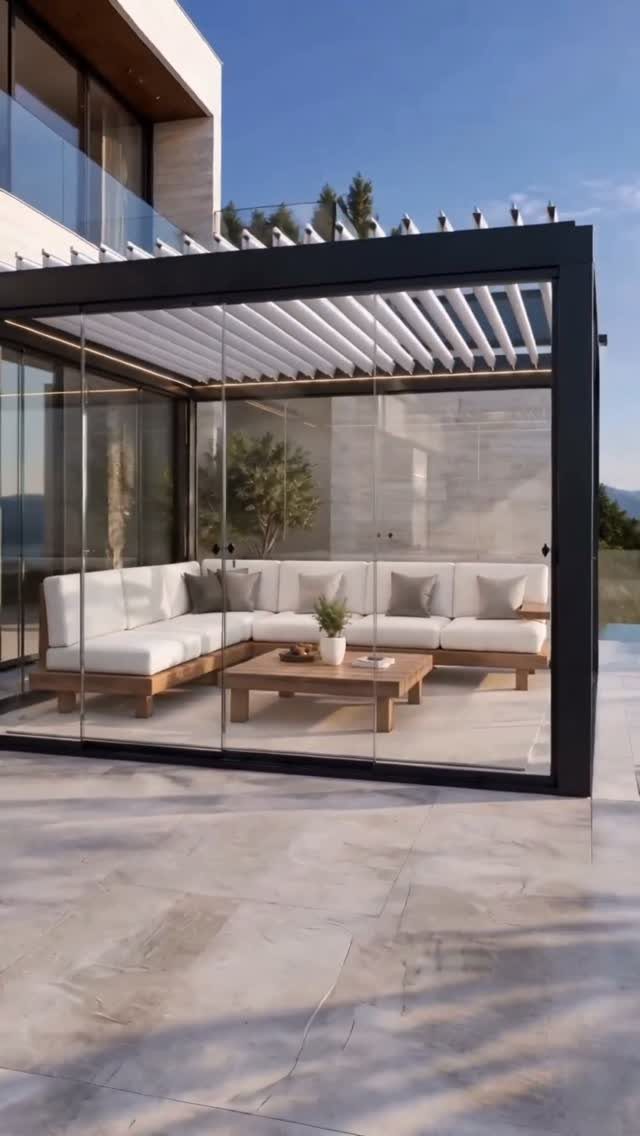
Sliding glass walls make this outdoor living room feel like an extension of the house rather than an afterthought, and they keep the pool visible from every seat.
A louvered roof that controls sun and rain mechanically needs a good motor and weather sensor in the budget, since a manual system you forget to close is expensive furniture ruined.
Glass walls need cleaning, both sides, more often than I would have guessed; the pool becomes the centerpiece only if the glass stays clear.
This suits properties with a view worth framing and homeowners who use the pool area after dark, when the glass reflects interior lighting back into the space.
7. Rustic Natural Wood Pool Deck
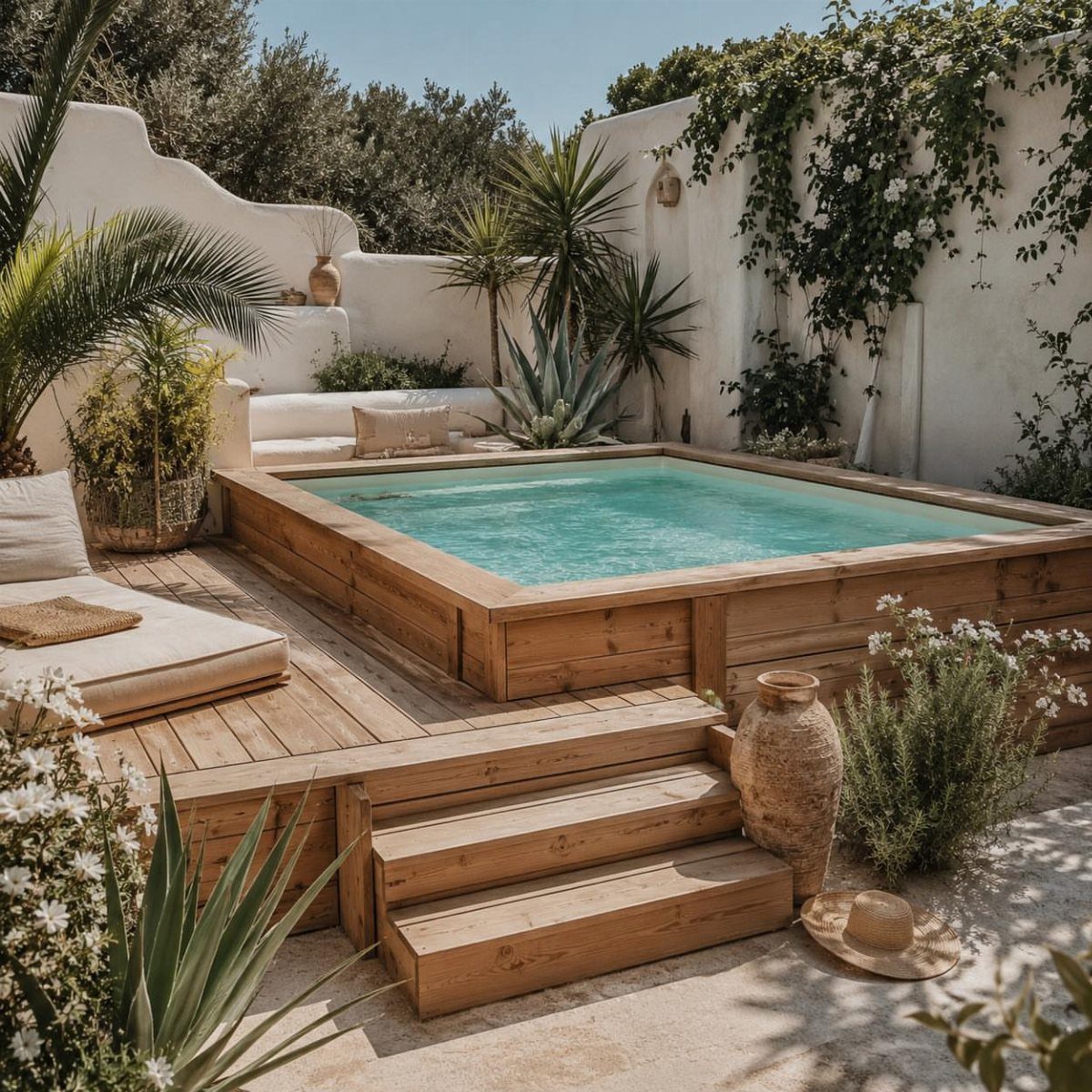
Light natural wood decking around a small above-ground pool reads as a courtyard rather than a yard with a pool dropped into it.
The warmth comes from the wood tone itself; I would skip stains and sealers with color, since weathered cedar or pine gains character faster than it loses it.
Textiles do the cozy work here. Weather-resistant throws and cushions in oatmeal, rust, or deep green turn a basic deck into something that invites fireside hours even without a fire pit.
The Mediterranean white stucco visible behind the deck helps the wood feel intentional rather than temporary. For renters, a freestanding wood platform around an above-ground pool moves with you if the pieces are bolted, not built-in.

Sturdy Solid Cedar Construction: The entire patio pergola with sturdy and corrosion-resistant frame, is constructed from solid nature cedar wood. Due to its moisture-resistant qualities, the pergola can withstand kinds of weather conditions. Moreover, it is strongly advised to use extra water-based staining, which can not only improve better protection but also prolong the lifespan of the pergolas
8. Botanical Terrace with Vertical Gardens
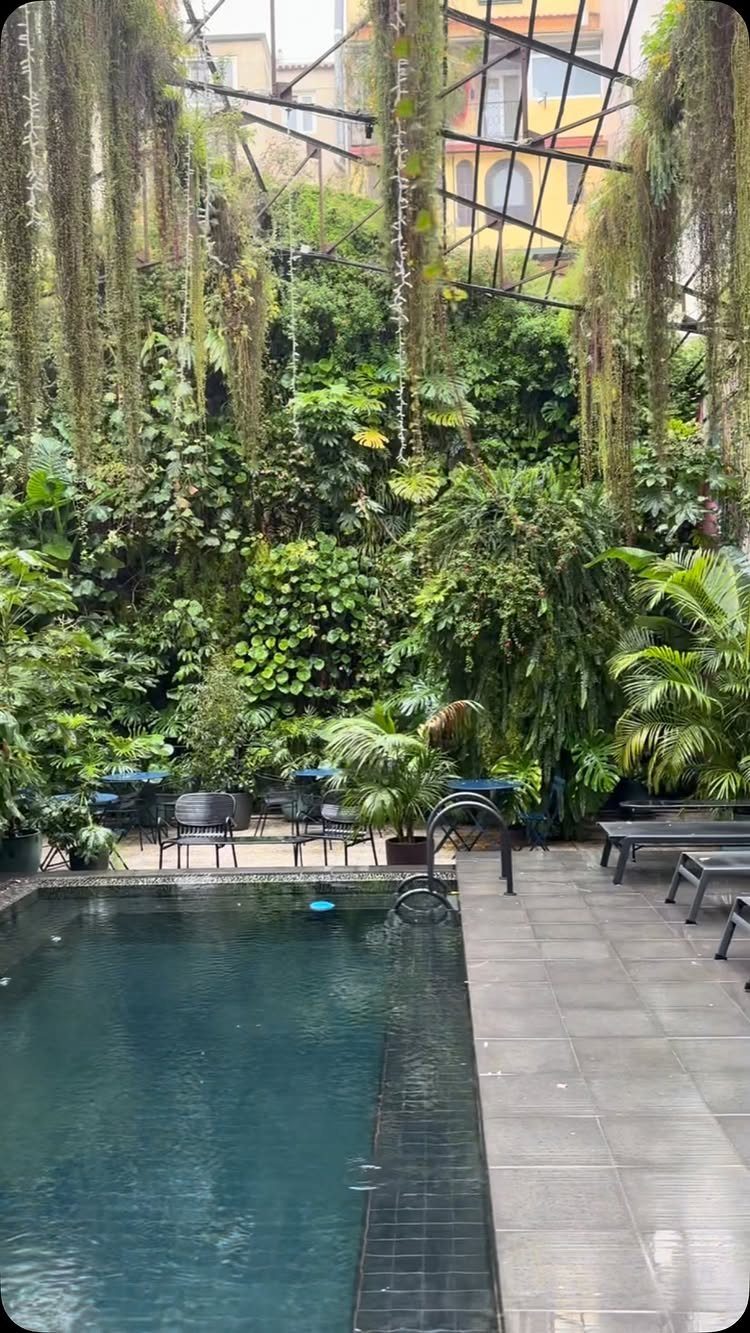
Vertical gardens solve the problem most pool decks face: enough green to feel private, not enough ground space to plant it.
A living wall at the pool’s edge blocks sightlines without blocking light, and the humidity that pools create actually helps ferns and trailing vines establish faster than they would in dry garden beds.
The overhead frame with hanging vines extends the green upward, which matters on a terrace where floor space is already claimed by loungers and walkways.
Irrigation is the part I would plan first; hand-watering a vertical garden in full sun becomes a daily chore that most people abandon by August.
A simple drip line timed to early morning keeps the wall alive without adding to the pool’s evaporation. Stone or tile decking beneath the greenery stays cooler than concrete and handles the runoff.

FIT & SCENE READY: Designed for patios, poolsides, balconies and gardens. This chaise lounge outdoor supports sunbathing, reading or napping, ideal as outdoor patio lounger, patio daybed or outdoor bed lounger.

✔ 【Premium Waterproof & Fade Resistant Fabric】: Crafted from high-density, weather-resistant fabric, this outdoor cushion is waterproof and UV-protected to maintain its vibrant color through sun and rain. Cleaning is effortless with just soap and water.

FIT & SCENE READY: Designed for patios, poolsides, balconies and gardens. This chaise lounge outdoor supports sunbathing, reading or napping, ideal as outdoor patio lounger, patio daybed or outdoor bed lounger.
9. Checkerboard Pavers with Grass Insets
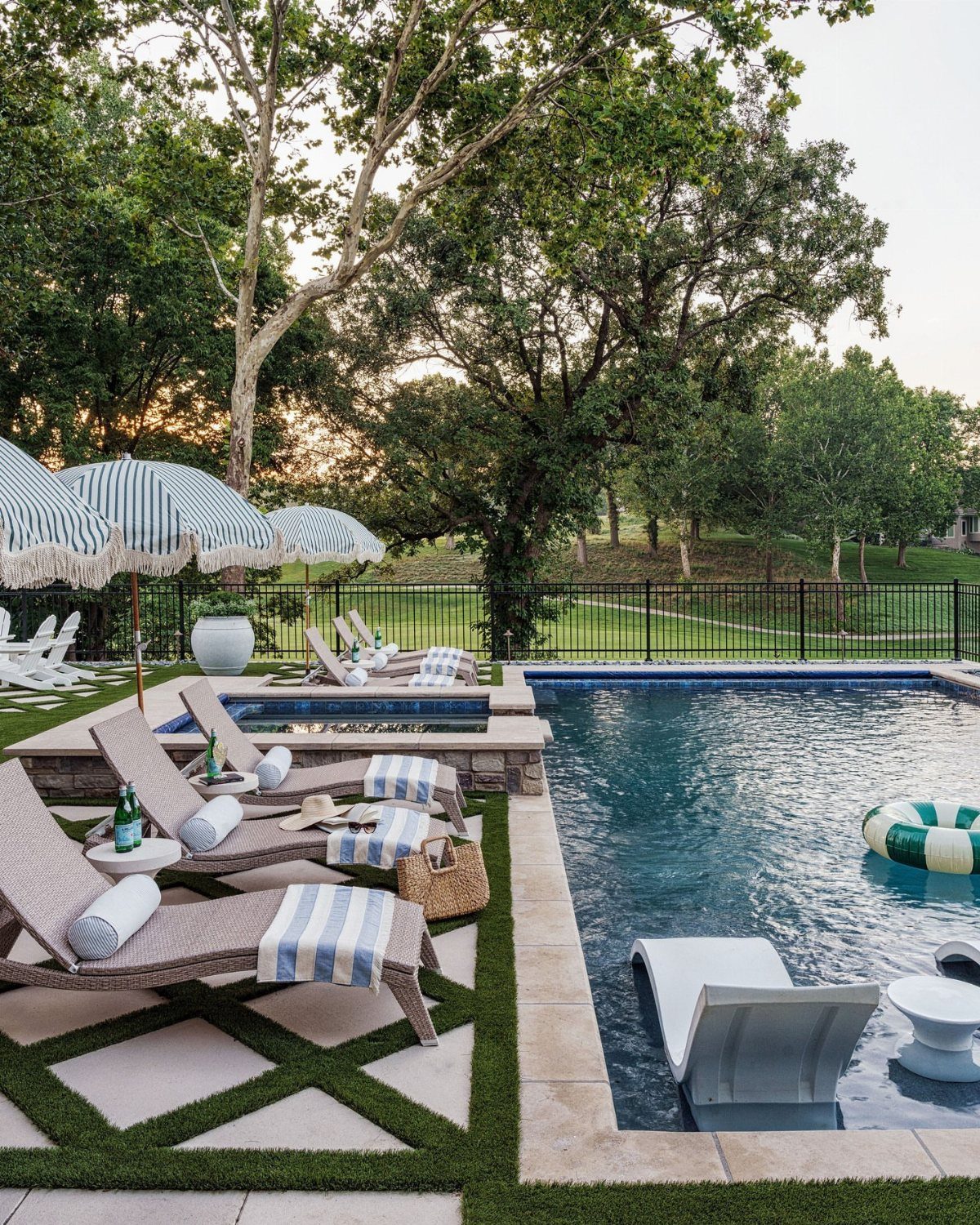
Square pavers separated by grass strips soften the hardscape without giving up the clean geometry that reads as designed rather than accidental.
The grass needs to be a variety that tolerates both foot traffic and pool chemicals; Kentucky bluegrass struggles, while tall fescue or zoysia handle the mix better.
Drainage is the check before you start.
Water that pools between pavers breeds mosquitoes and kills the grass from below. A slight pitch away from the pool keeps both the deck and the planting healthy; too flat and water pools, too steep and soil washes out.
This pattern works best where the deck sits mostly in sun; shaded grass insets thin out fast and look patchy by late summer.

ELEGANT VINTAGE APPEAL: Featuring an antique country white finish and 3D weathered stone texture, these tall planters bring a touch of vintage charm. It can instantly elevate the style of your front porch, patio or living room.

THREE SIZES INCLUDED: Dimensions: Small: 11 in. D x 11. 1 in. H / Medium: 14. 2 in. D x 14. 7 in. H / Large: 17. 2 in. D x 17. 4 in. H

🦩【Flamingo Planter】Our flamingo garden bird planters come as a set of two. Big size:H27.5 x 16.5W. Small size: H21x13W, Transform your garden into a whimsical paradise with our Flamingo Planter!
10. Geometric Pattern Painted Deck
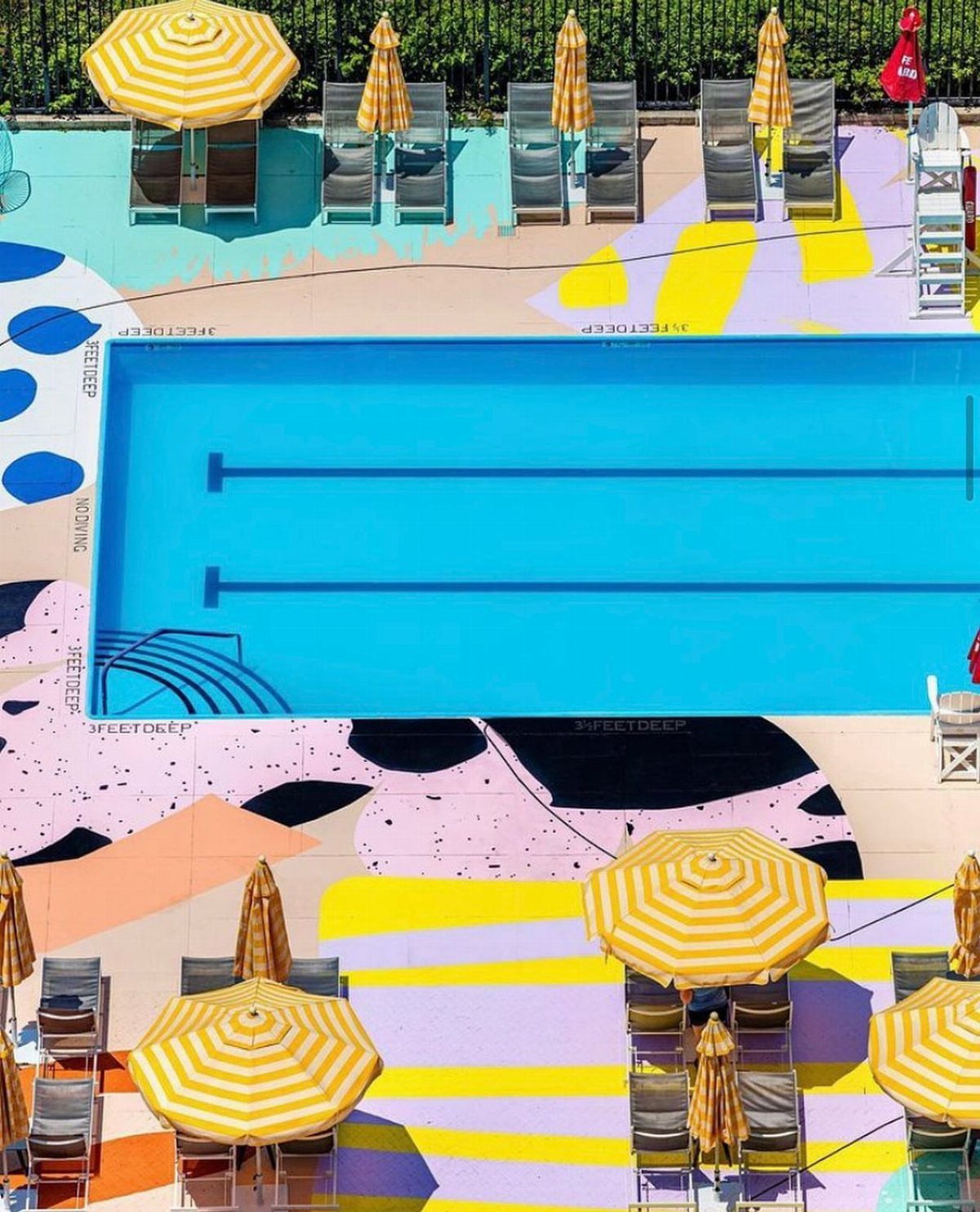
Painted concrete turns a standard pool deck into something that reads as art-directed, which matters when the rest of the yard is basic.
The pastel geometry visible overhead works because the colors stay muted; bright primaries would read as playground rather than terrace.
Pool deck paint needs to be the epoxy or acrylic formula rated for submerged and wet areas, not standard exterior porch paint.
The slip resistance is the detail I would verify on the label, since a decorative deck that sends someone into the water is worse than an ugly one.
Stenciling or taping the pattern takes patience; the depth-marking lettering suggests a hand-painted approach that accepts imperfection as charm. A clear sealer over the top extends the life from one season to three.

Premium Acacia Wood: Solid hardwood with a linseed oil finish for a smooth, barefoot-friendly surface; each tile measures 12 x 12 inches and 0.9 inches thick for a refined look and feel

Concrete Texture Rollers - The"Original" Medium Italian Slate Concrete Texture Roller - Fits Standard Size Roller Handle (Not Included) For GREAT Results, EXPERIENCE OR KNOWLEDGE of Working With Concrete Mixes IS Necessary!

JUST ADD WATER: Mix this concentrated formula with water to prepare the amount needed for your project. The water-based pigment penetrates clean, porous concrete instead of sitting like opaque paint, supporting semi-transparent color on an indoor floor or outdoor surface.
11. Submerged Pool Deck Sun Shelf
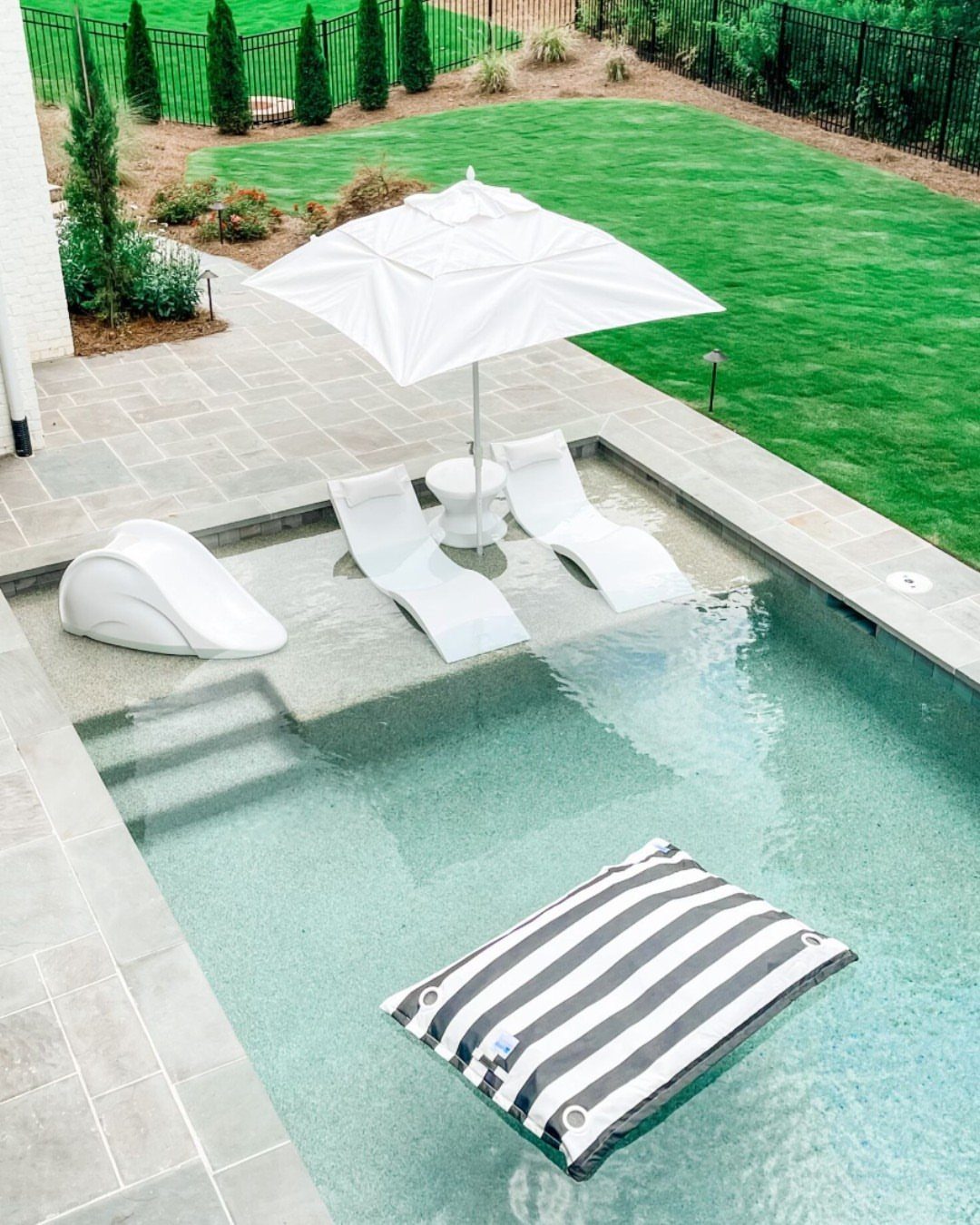
A sun shelf, that shallow ledge where water reaches only to your calves, turns part of the pool into furniture.
The submerged chaises let you recline at pool temperature without committing to full immersion, which suits anyone who wants to read, snack, or supervise kids without leaving the water.
The shelf needs to be wide enough for the chairs plus passage; anything narrower than a standard lounge plus knee room feels cramped rather than functional.
The umbrella base must sit on the shelf itself or be weighted specifically for submerged use; a standard patio umbrella holder on the pool floor is a tip-over risk.
I would check that the chaises are rated for pool chemicals, since standard outdoor furniture finishes degrade faster in chlorinated water.
The small slide visible nearby suggests this setup works for households with children, though the shelf is deep enough that adult lounging does not feel like borrowing a kids’ space.
12. Frameless Glass Pool Deck Fencing
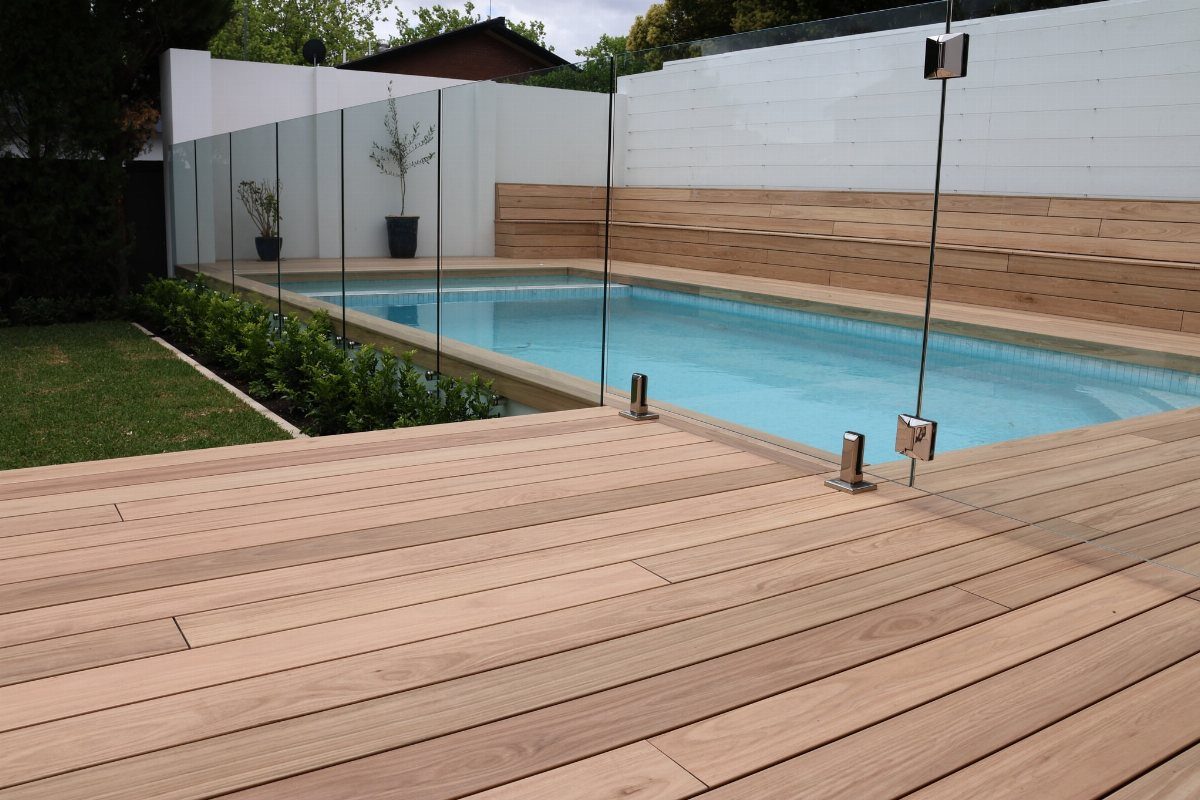
Frameless glass fencing disappears in a way that metal or timber never does; the pool stays visible from the lawn, the house, and the deck itself without interruption.
The spigot mounts visible at the base are stainless steel, which handles the chlorine atmosphere better than powder-coated aluminum.
Cleaning is the trade.
Glass shows every water spot and every paw print, and the outside needs attention as often as the inside. A squeegee kept poolside makes the job faster than waiting for a full wash.
This suits decks where the view beyond the pool is worth preserving, and where the deck sits level with the lawn; on a raised deck, the glass reads as a transparent guardrail rather than as open air.
The light timber visible here pairs well because the glass does not compete with the wood grain the way a solid fence would.
13. Desert-Style Concrete Pool Deck
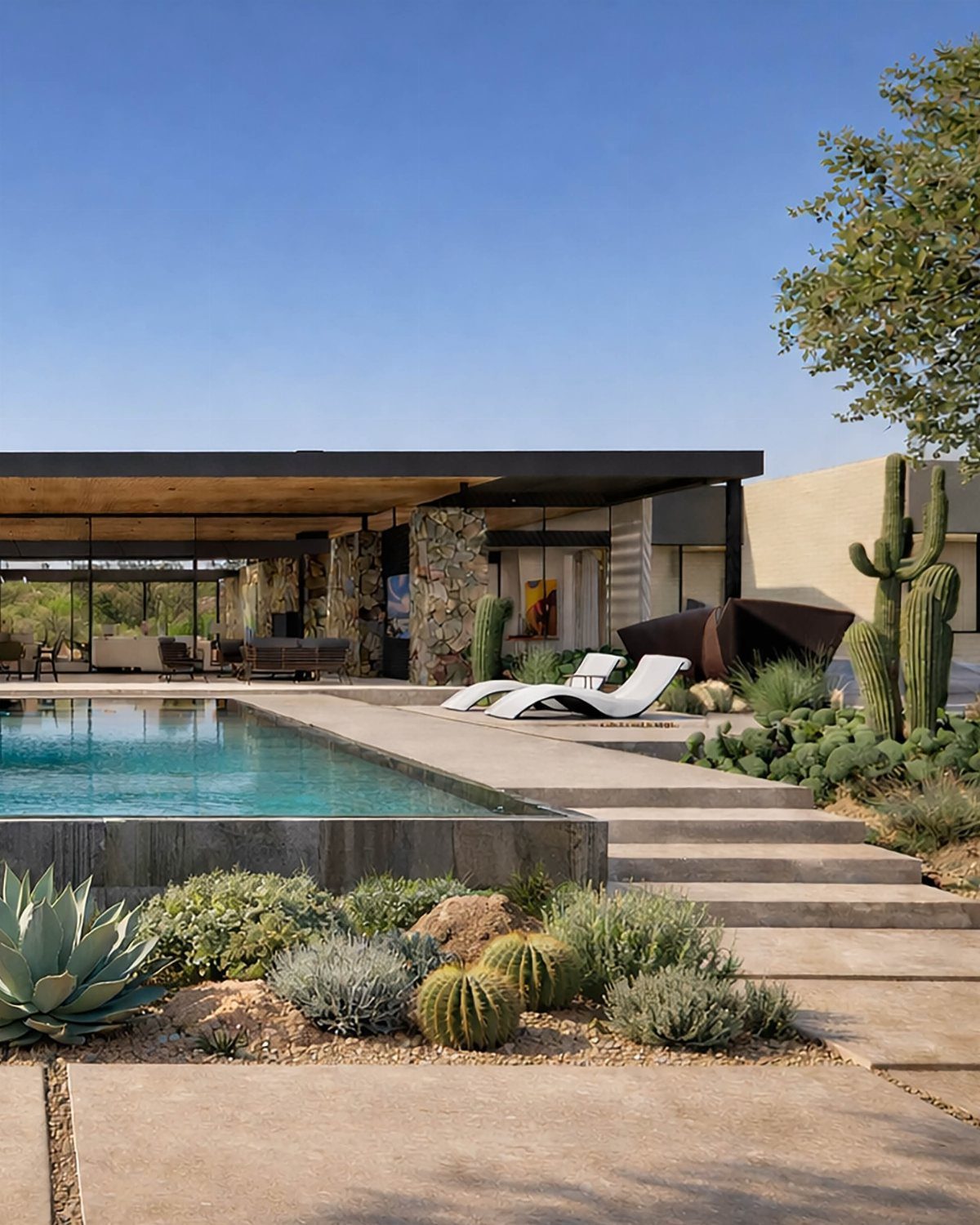
Smooth light concrete stays cooler than dark pavers under bare feet, which matters more in Arizona than in Maine. The pale surface reflects heat upward rather than storing it, and a smooth finish leaves nowhere for pool grit to collect.
White chaises against concrete read as intentional minimalism; colored cushions would fight the desert planting.
Cacti and agaves need the drainage that concrete’s slight pitch provides, and they handle the reflected light without burning. The look asks for restraint in furniture count; one or two pieces suffice where a lush deck needs more.
14. Artificial Turf Pool Deck
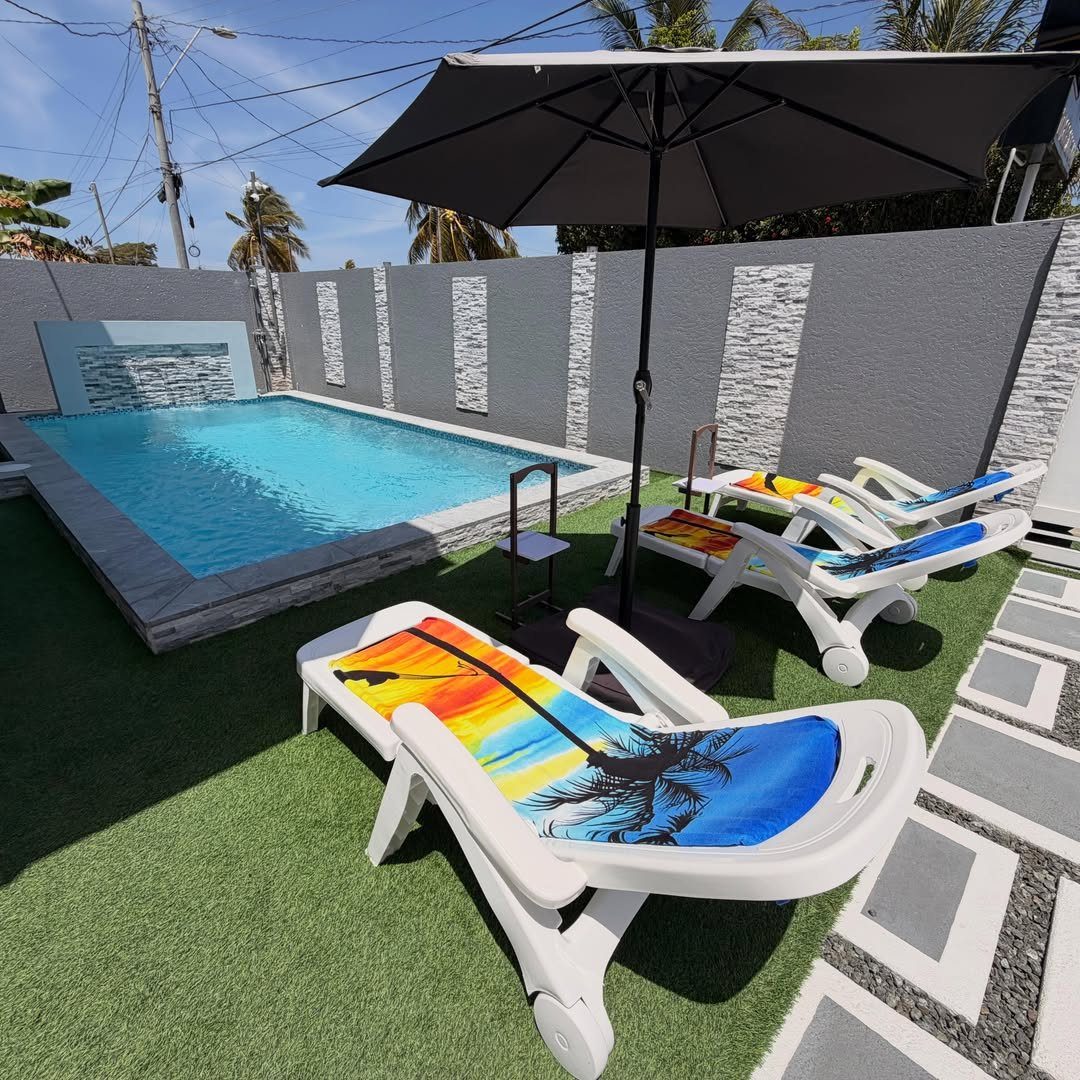
Artificial turf around a pool solves the mud and grass-clippings problem that real lawn creates, though it trades the cool of natural grass for surface heat.
The gray privacy wall with stone accents gives the green something to work against; without a vertical element, turf alone reads as sports field.
I would check that the turf is permeable-backed, since pool water and rain need somewhere to drain.
The white plastic loungers shown are a practical choice; metal frames heat up on synthetic surfaces more than on real grass. This suits renters who cannot plant and homeowners tired of reseeding shade-thinning grass every spring.
15. White Tiled Pool Surround
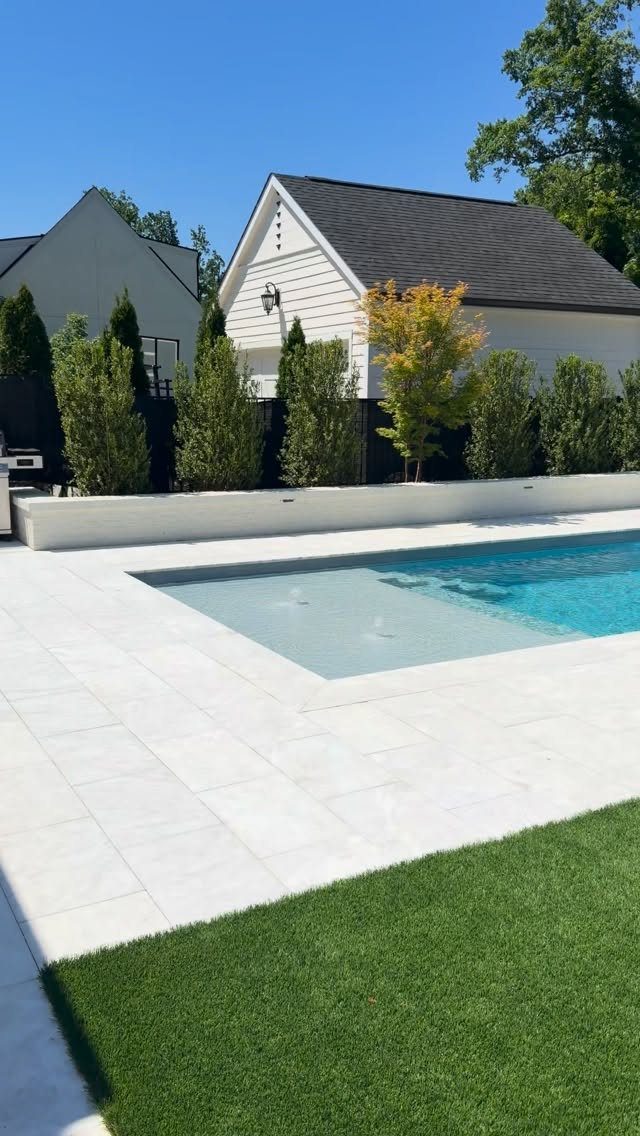
White tile pavers reflect light in a way that makes pool water read bluer, a trick I noticed first in Mediterranean hotel photos.
The sun shelf visible here needs the same tile for visual continuity; a different material at the water’s edge breaks the calm.
Grout selection matters more than with indoor tile. A light gray hides the film that pool chemicals leave better than pure white, and epoxy grout resists the moisture that standard grout absorbs.
The low retaining wall doubles as seating when parties overflow the loungers; its height should match a standard dining chair for comfort.
This look needs the lawn visible beyond to stay green; brown patches against white tile read as neglect, not contrast.
16. Natural Stone Pool Deck
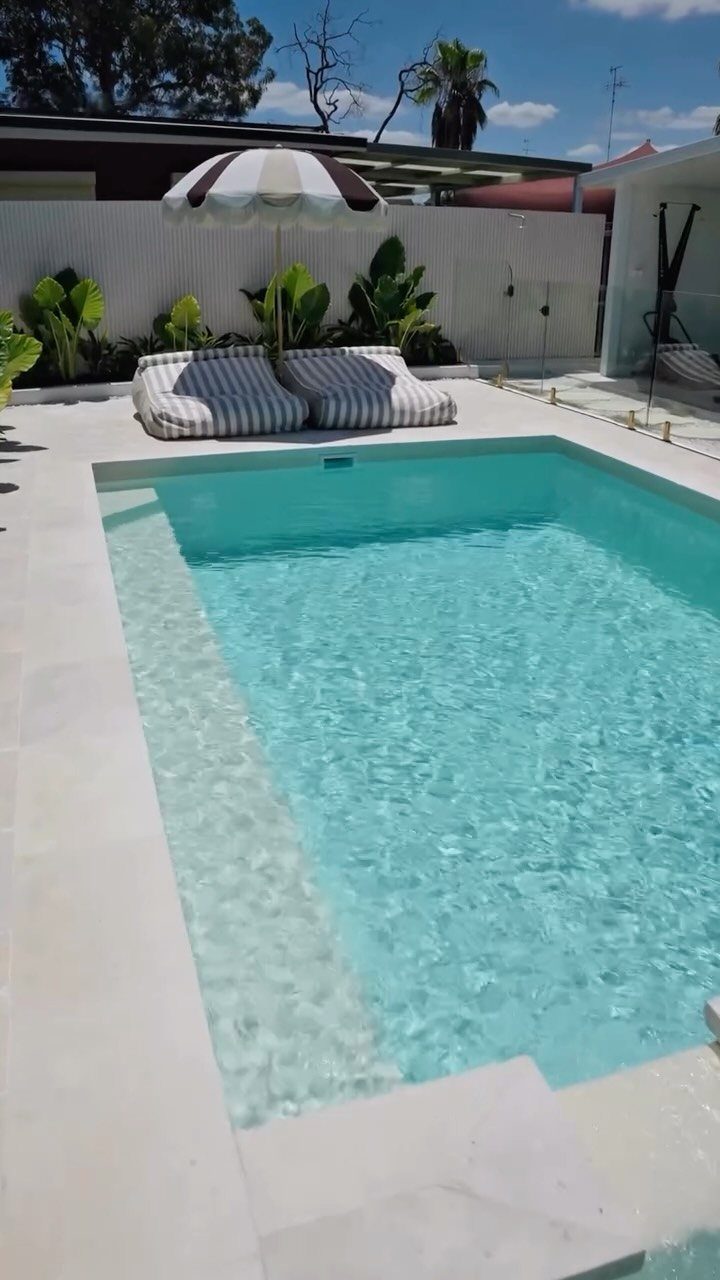
Light stone decking around turquoise water works because the stone’s variation hides the water spots and leaf litter that pool decks collect hourly. The striped loungers and parasol add pattern that the stone’s natural movement supports rather than fights.
Stone coping at the pool edge needs to be the slip-resistant finish, not the polished version meant for interior floors.
I would seal it annually; the chlorine and sun that make the water appealing degrade unsealed stone faster than garden paving.
Natural stone pool decking suits climates where real stone is locally available; imported travertine adds freight costs that change the budget category.
17. Raised Plinth Pool Deck
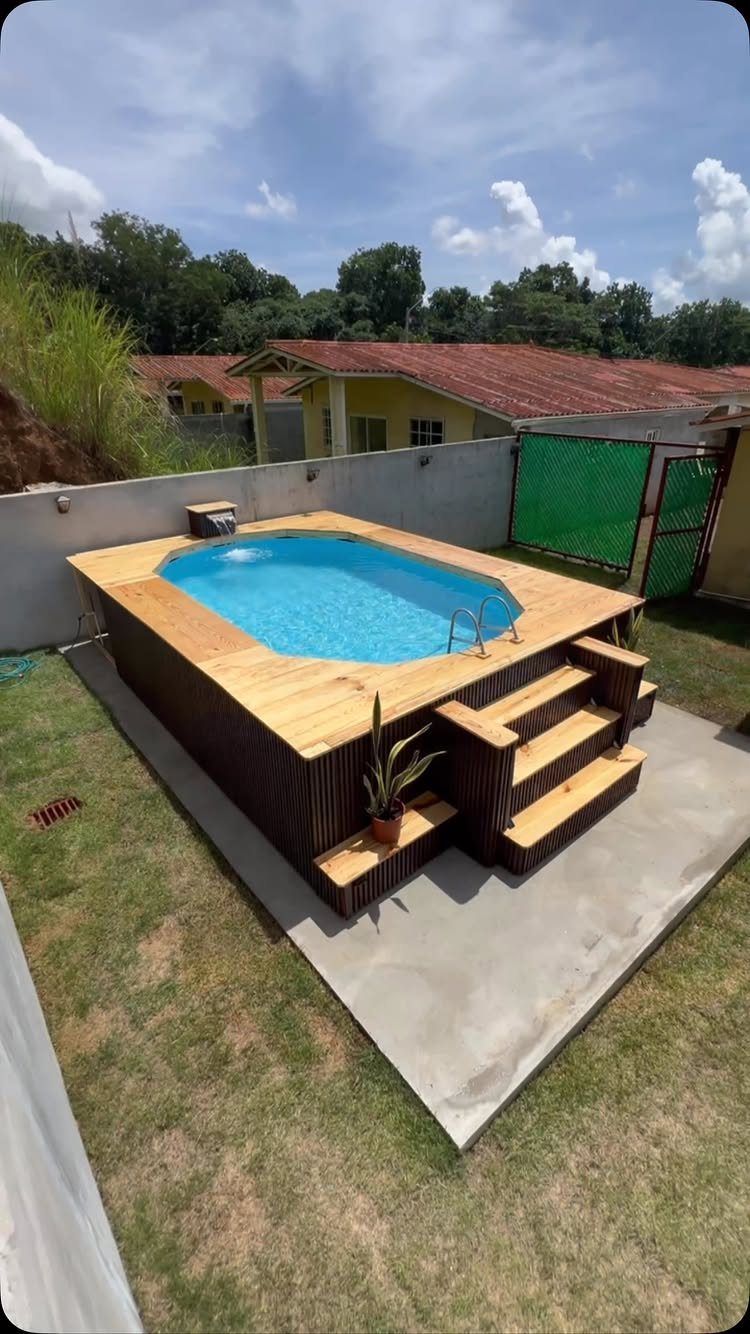
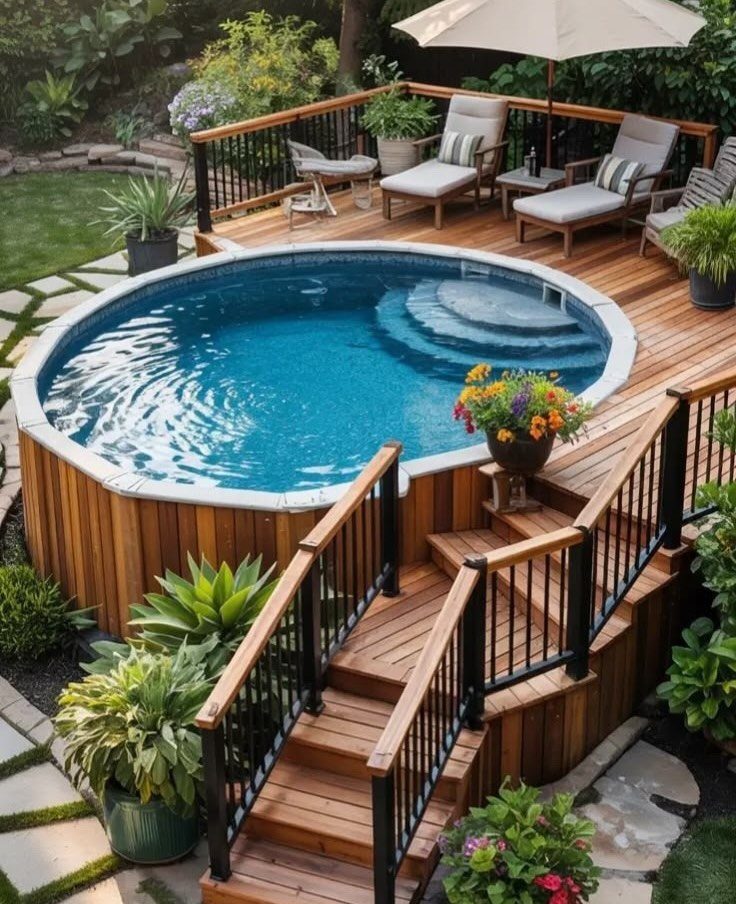
A raised wooden platform turns an above-ground pool into something that reads as built-in, which matters for resale and for how you feel about the yard.
The integrated steps visible here replace the ladder that screams temporary; their depth and rise should match standard deck stairs for safety.
Dark vertical slats on the pool exterior hide the metal frame and give the structure a furniture-like quality.
I would use cedar or a composite rated for ground contact; pine rots where splash and soil meet. The concrete pad at the base handles the drip line and gives a level spot for a towel bin or small table.
This suits small yards where the pool must sit close to the house; the raised deck creates a usable surface right to the edge.
18. Wood Deck with White Pebble Border
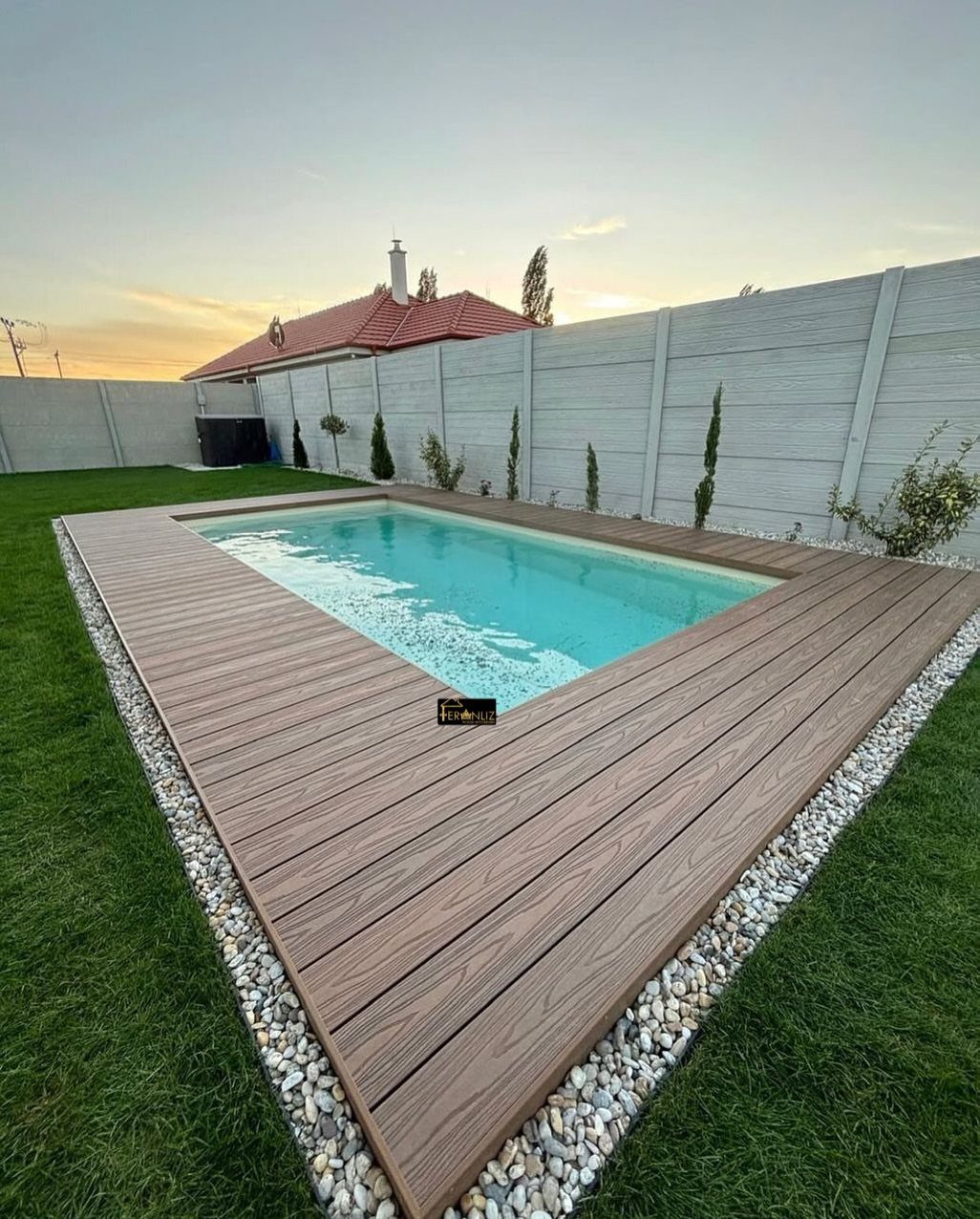
A white pebble border between wood deck and lawn creates a maintenance strip that catches the splashed water and chlorine that kills grass at pool edges.
The pebbles need a liner or compacted base; without it, they migrate into the lawn and the mower throws them back.
Composite decking resists the moisture that warps natural wood in this application; a wood deck would need annual sealing at minimum.
The concrete fence beyond suggests this is a narrow yard where privacy matters more than view. I would check local codes on fence height before building; most limit backyard fences, and a pool enclosure may need separate permitting.
The pebble strip is wide enough to walk on for cleaning but not so wide it becomes a second design element.
19. Breeze Block Feature Wall Deck
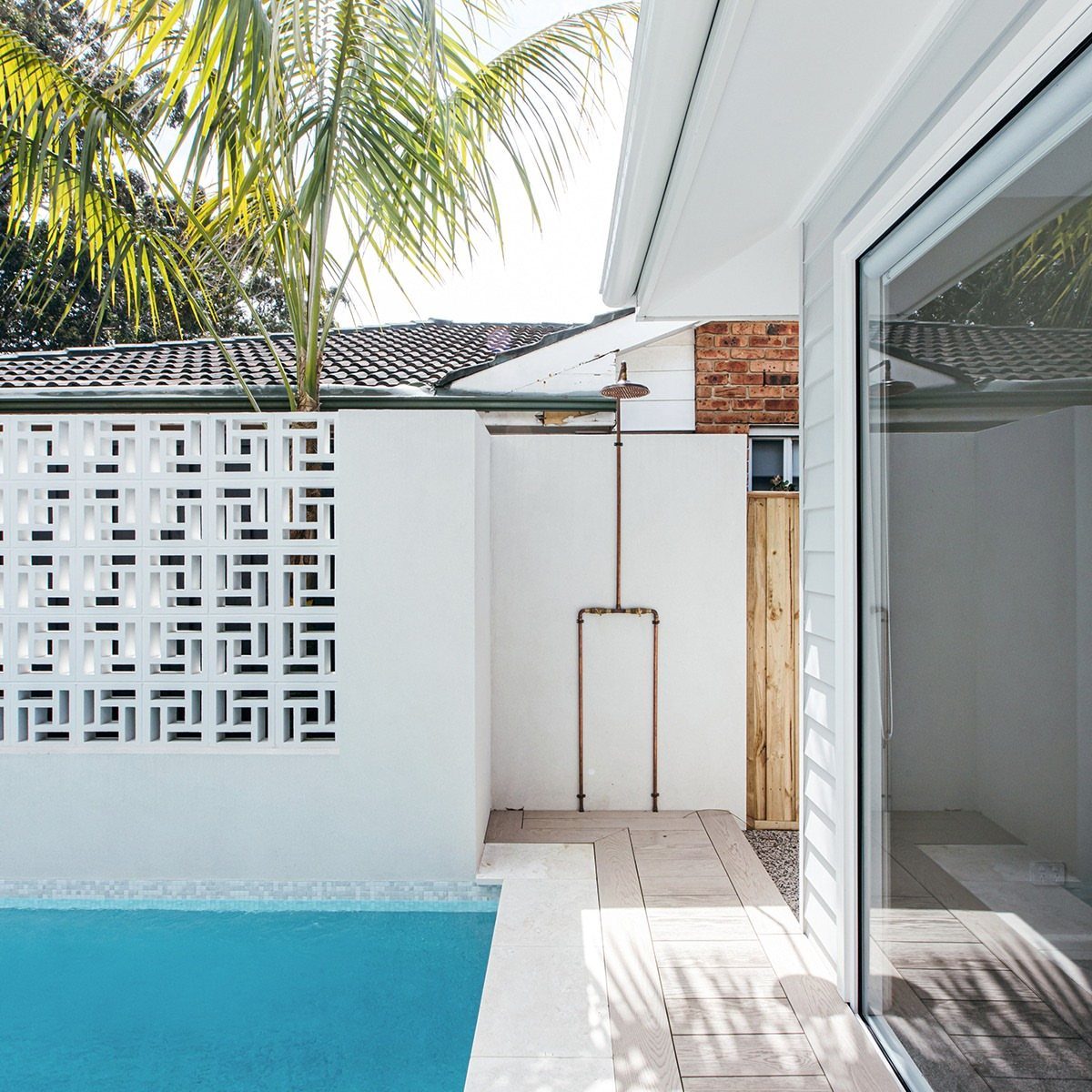
Breeze blocks filter afternoon light into shadow patterns that move across the deck as the sun shifts, which turns a plain privacy wall into something that changes through the day.
The white blocks visible here read as mid-century rather than industrial because of the warm wood decking and the copper shower fixture nearby.
I would check that local codes allow open-block walls for pool enclosures; some jurisdictions do not count them as non-climbable barriers because the openings can work as footholds.
The blocks need to be the architectural grade rated for exterior use, not the cheaper structural variety that spalls in freeze-thaw cycles.
A copper shower patinas to the green-brown that complements the wood; powder-coated steel would chip and rust where pool water hits it daily.
20. Multi-Level Mountain-View Deck
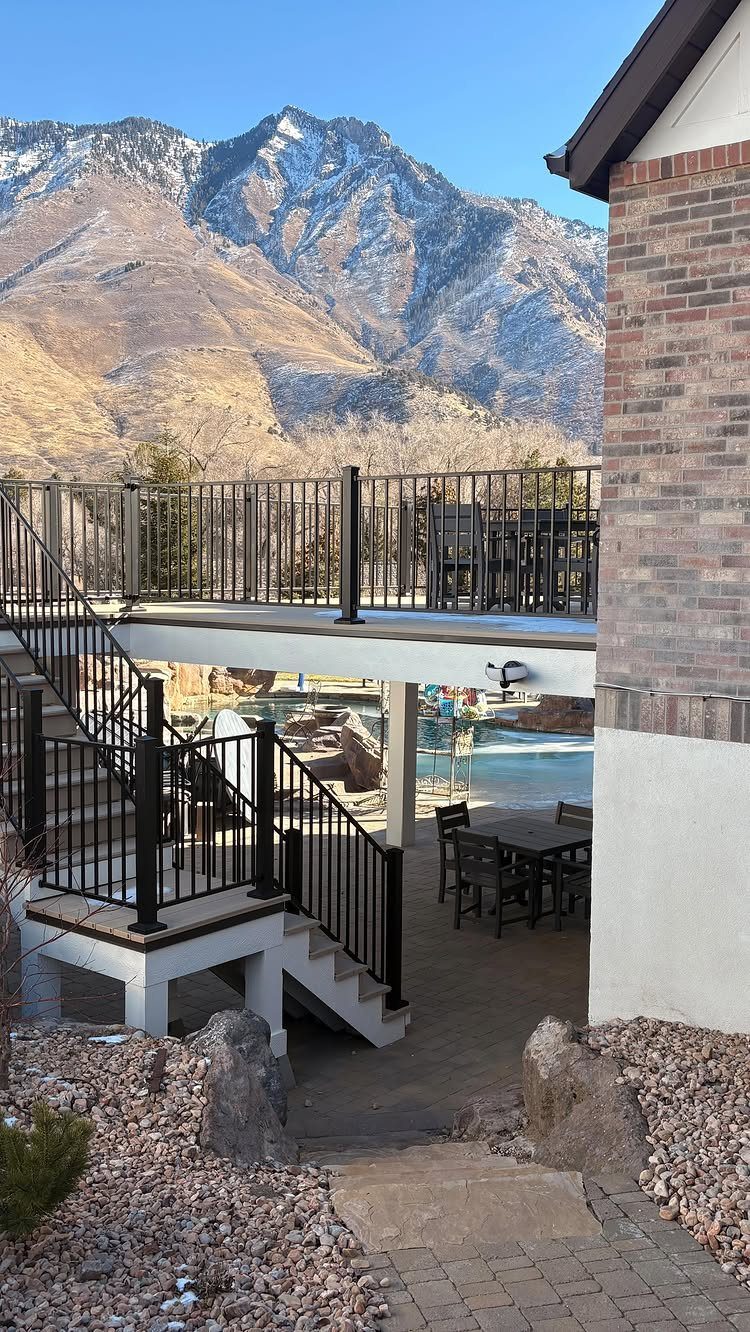
A tiered deck steps the eye down from house level to pool level, which matters when the yard slopes and a single flat deck would leave you staring at railing instead of water.
The black metal railings visible here disappear visually against shadow and read as thin lines against the mountain backdrop; white or wood would compete with the view.
Composite decking handles the snow load and sun exposure that mountain climates alternate between; wood would check and split within a few seasons at this altitude.
The stair rise and run should match interior standards, since guests carrying drinks or towels at dusk misstep on uneven rises.
A lower dining level separate from the lounging deck keeps the food away from splashing kids without isolating the cook.
Frequently Asked Questions
What is the cheapest way to build a pool deck?
Stamped concrete in terracotta or light gray runs cheaper than stone or tile, and the texture does the daily work of hiding dust and pollen that lighter colors would show.
For above-ground pools, a freestanding wood platform using bolted pieces you can take with you beats built-in construction.
Painted concrete with stenciled patterns runs even less, though you need epoxy or acrylic paint rated for wet areas and a slip-resistant finish.
What are some cool deck options for my pool?
A sun shelf with submerged chaises lets you recline at pool temperature without full immersion.
Frameless glass fencing disappears visually while preserving views from every angle. A timber pergola with suspended lounge swing beds turns a standard deck into a napping destination.
Breeze block feature walls create patterned shade and ventilation. Sliding glass walls with a louvered roof blur the line between inside and poolside so the two spaces read as one continuous room.