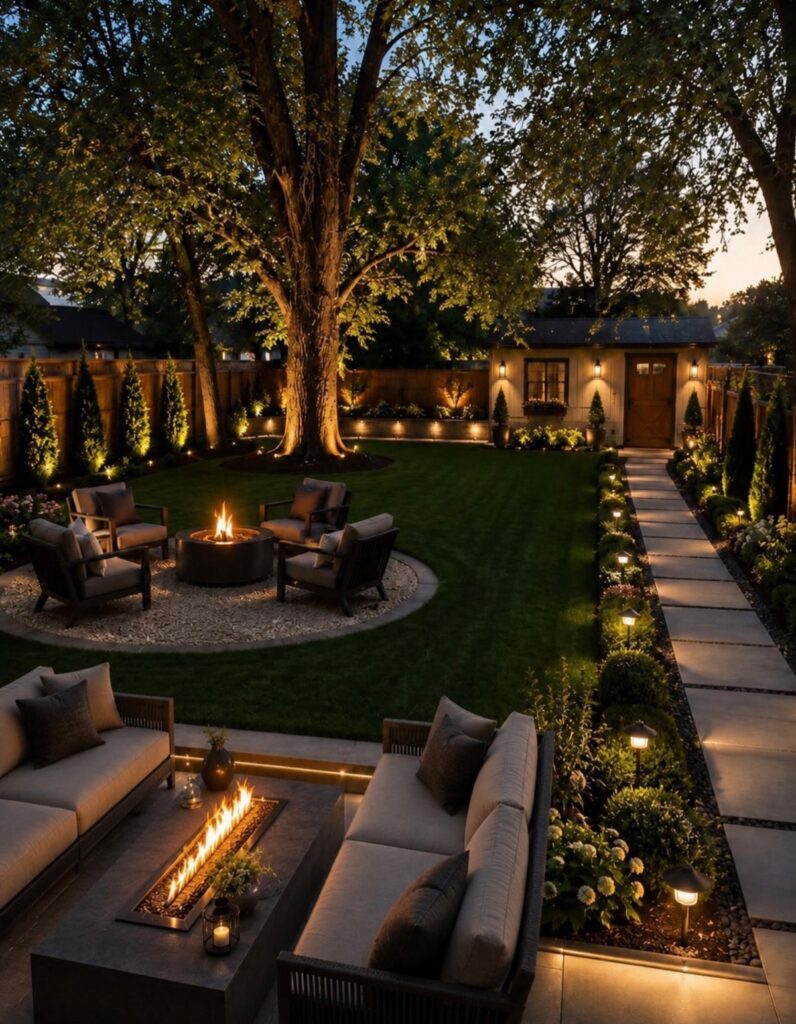
These ideas run from free tire paths pulled from a neighbor’s yard to natural pools that take pros and a season to establish, and the one that fits you depends on whether you own or rent, have a weekend or a month, and need structure now or structure later.
A wall fountain needs power, a basin sized to catch splash, and stone that can carry saturated weight through winter; your back yard probably has room for that, or for string lights you already own, or for nothing at all until you know what you want.
[link-whisper-related-posts]1. Raised Beds for Vegetables and Herbs
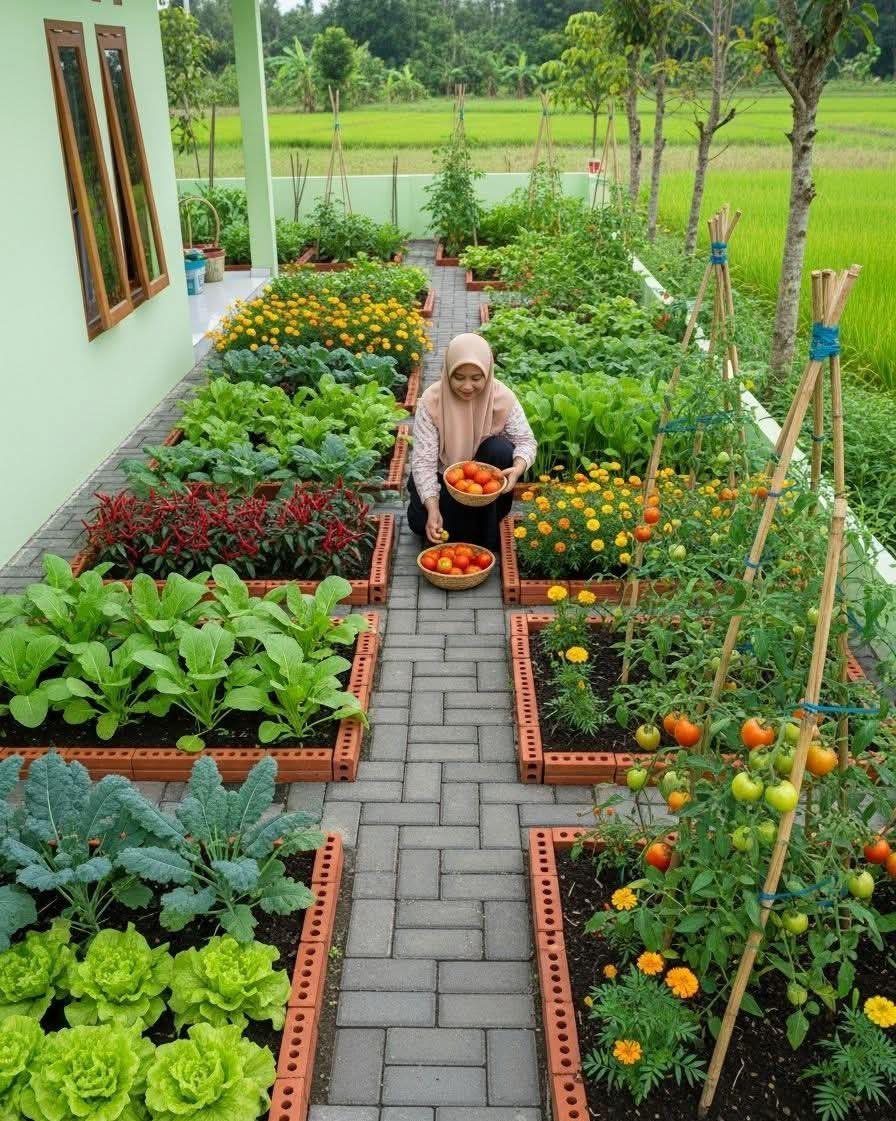
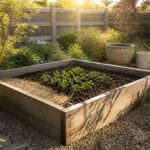
Raised beds turn a flat yard into something you walk through instead of past. Brick walls hold soil above grade, which warms faster in spring and drains better than ground-level clay.
I like them along a property edge, spaced a few inches apart so you have room to kneel between them. Gravel or pavers underfoot keep mud down and make the harvest path feel finished.
Tomatoes on bamboo stakes, lettuce in the front row, and you have a working garden that looks like part of the yard’s structure rather than an afterthought.
Start with two beds if your time is tight; one bed is a chore, two start to feel like a garden.
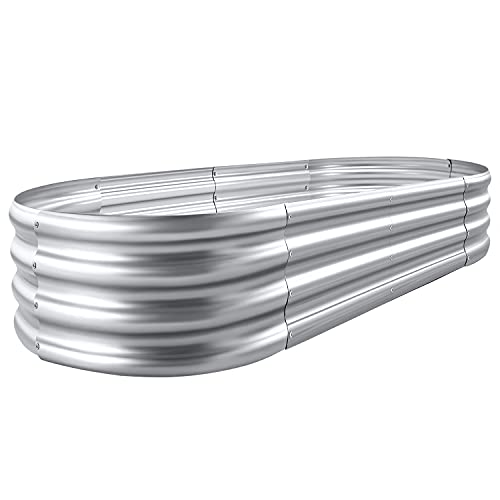
Each raised metal garden bed size: 4×2×1ft ,7.14Cu

More suitable raised garden bed size and Volume:67"L x 20"W x10"H, 7 Cu. Ft. You can cultivate plants, like vegetables, flowers, herbs in your patio, yard, garden, and greenhouse.
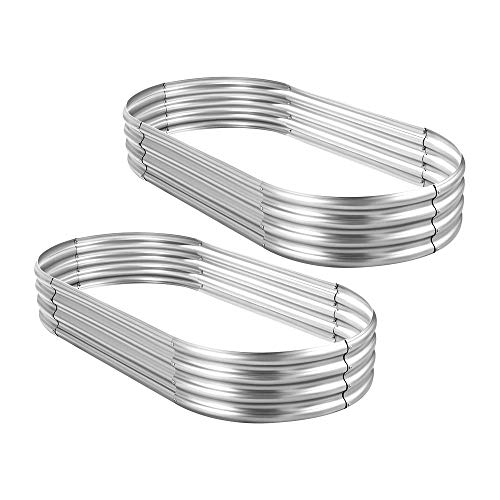
Each raised metal garden bed size: 4×2×1ft , 7Cu
2. Vibrant Flowers and Foliage
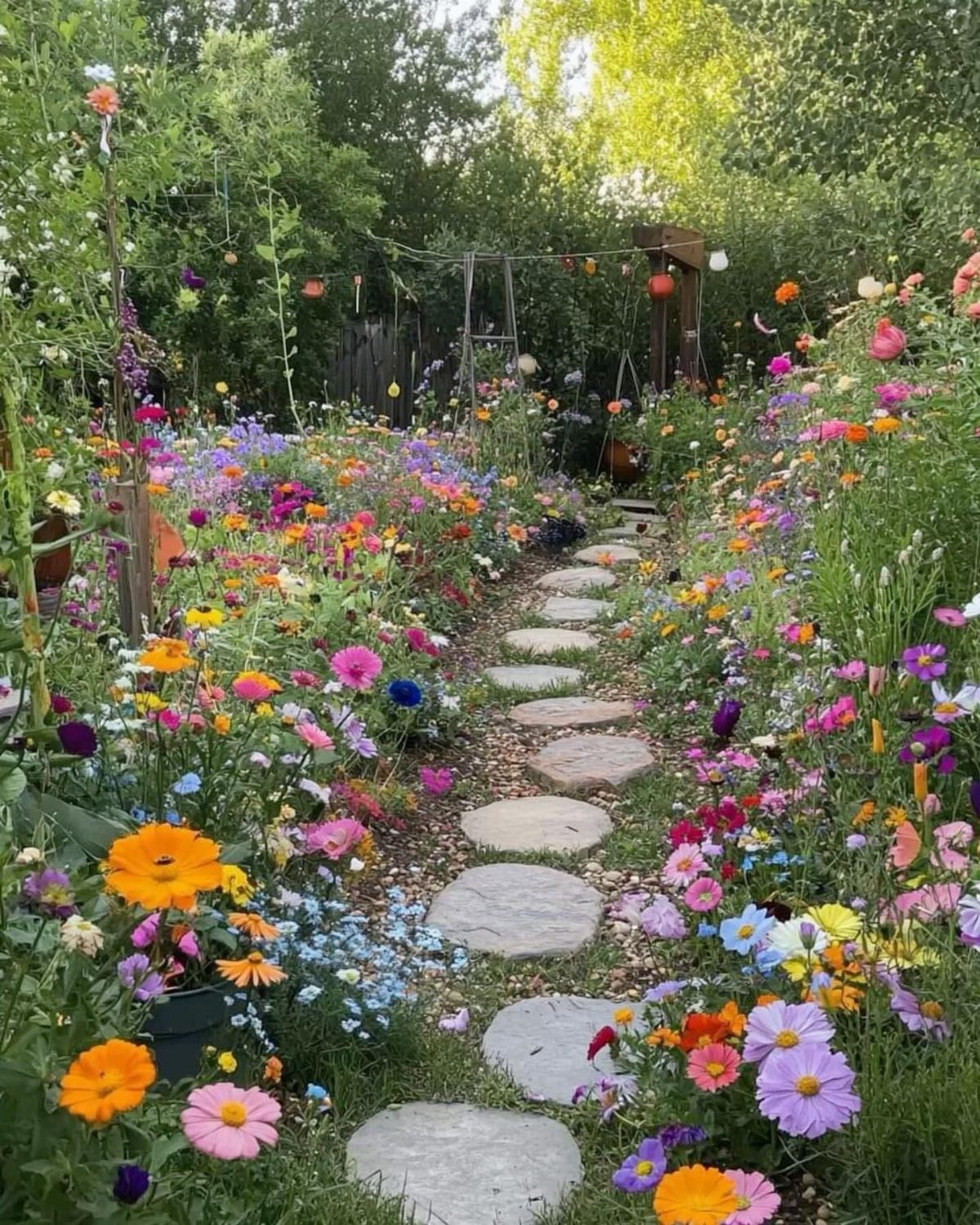
Color in a backyard works best when something is blooming at every point in the season, not all at once. Wildflowers along a stone path give that shifting palette without the fuss of replacing annuals every month.
The soil underneath a lawn is usually compacted and short on nutrients. Test before you plant, then amend with compost so roots can actually spread.
Choose for your light; shade-tolerant plants under trees, sun-lovers where the house does not cast afternoon shadow. Trees and shrubs at the back give structure, perennials in the middle, groundcovers at the front.
Pollinators come with the flowers, and they help any vegetables you have nearby set more fruit.

14,000 QUALITY SEEDS: Loaded with 14,000 fresh, wildflower seeds specially selected to thrive in areas with limited sunlight.

3-in-1 Plant Food & Wildflower Seed Mix: Brighten your landscape with a burst of brilliant, colorful flowers. This all-in-one formula from Earth Science contains natural wildflower seed, mulch, plant food, and soil conditioners. Everything you need to grow glorious flowers in one convenient bag. This all-in-one formula from Earth Science contains natural wildflower seed, mulch, plant food, and soil conditioners—everything you need to grow glorious flowers in one convenient bag.

Premium 23 Wildflower Seeds Annual & Perennial Mix - Special Garden Flower Seeds Blend designed for planting indoor and outdoors across North America. With over 23 varieties and 25,000 wildflower seeds, this mix is the best solution to attract pollinators - bees, butterflies & birds are essential for garden plants health.
3. Vertical Garden
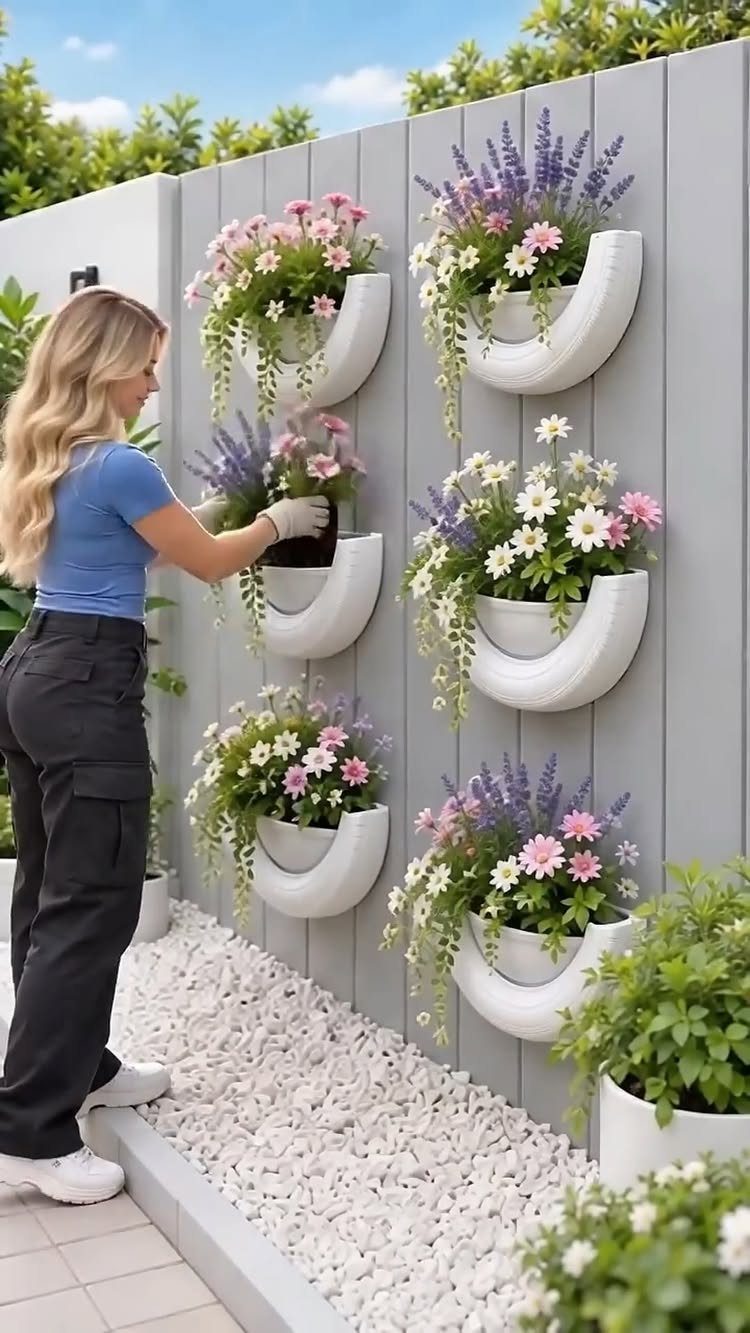
A fence or exterior wall is dead space until you hang something living on it. Crescent-shaped planters mounted in a row turn that surface into herb garden or flower display without taking a square foot from the ground.
Trellises work the same way; tomatoes up a vine, beans on netting, or espaliered fruit against brick.
In a small yard this is how you get lush without crowded. The vertical plane catches more light than the floor beneath it, so plants often grow faster there.
Water drains differently in wall planters; check the holes before you mount them, and expect to water more often than ground-level beds.
Herbs are forgiving if you forget a day. Flowers less so.

3 Tiered Hanging Herb Garden Set: the package includes 1 piece of 3 tiered hanging vertical planter shelf, suitable for decorating kitchens, living rooms, offices, balconies and other places, and 12 pieces of plants pots, ideal for growing herbs, cacti, and so on; Please note that we provide you with non marking nails and hooks for easy hanging

Material: wall planter is made of galvanized metal and antique finish, Size: Total height is 5.5 inches, 7" in Top Diameter, 5.5" in Bottom Diameter.

【Automatic Watering System】: This vertical garden planter has an automatic watering pot that will automatically water the plants every few days, saving you the hassle of daily watering and saving time. Also a thoughtful gift for busy people or working moms.
4. Install a Fire Pit
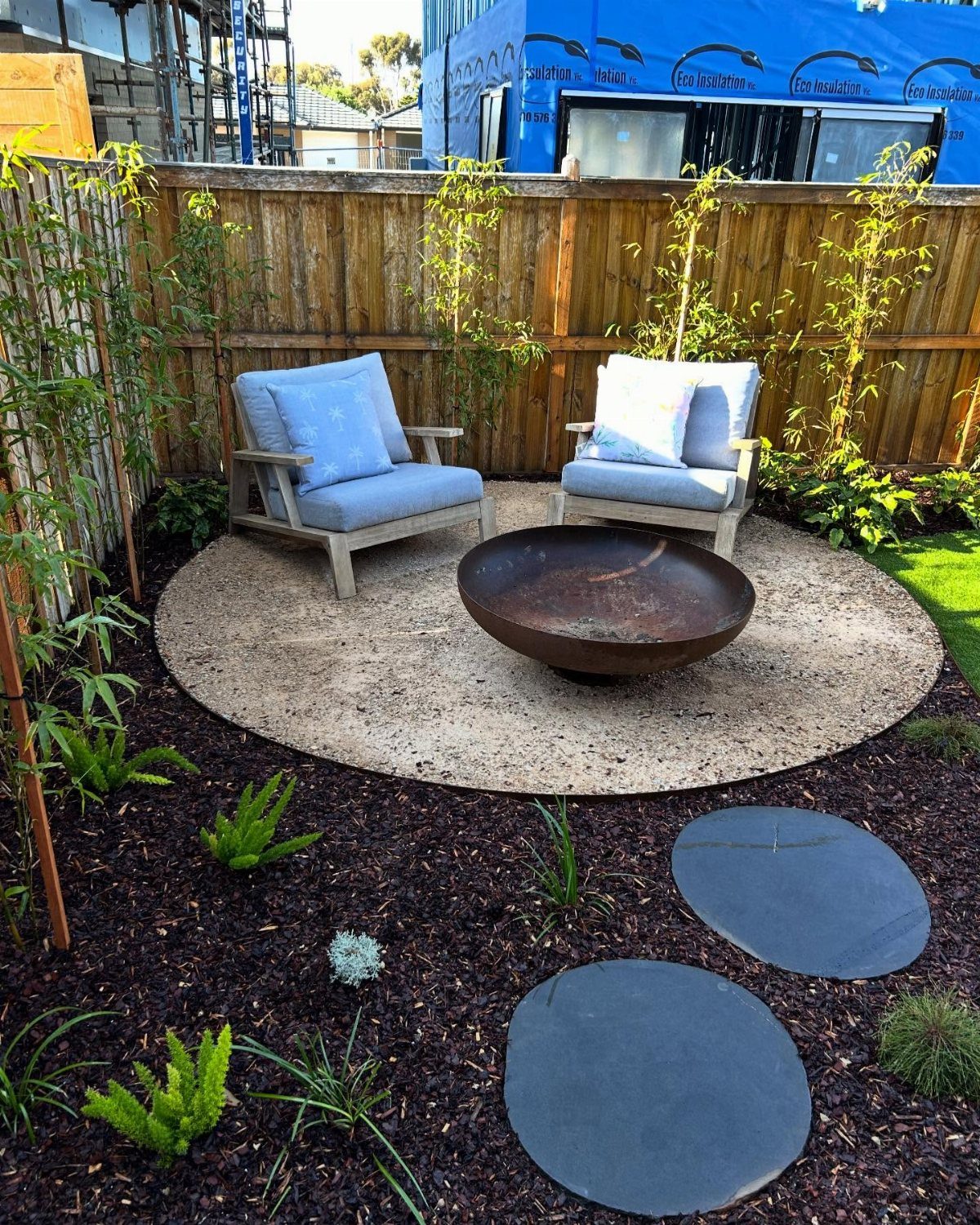
A fire pit is the one addition that gives you more hours outside for the least money. Metal bowl on gravel, ring of chairs, and you have a place people actually stay after dinner.
Pea gravel around the base is cheap and keeps sparks from hitting lawn or mulch.
Arrange seating close enough to feel the heat without having to lean forward; close enough that the warmth reaches you where you sit is about right. Cool fall nights extend your season by months.
The compact models suit renters or anyone who might move. If you own and dig, a boulder fire pit looks built-in and lasts as long as the stone.
Either way, build the rest of the yard around this point; it is where people will gather, so make the path lead there naturally.
Nothing screams summer more than the sound of a crackling campfire. Firepits make perfect focal points in a backyard, so if you want one, consider planning the rest of your landscaping around it.
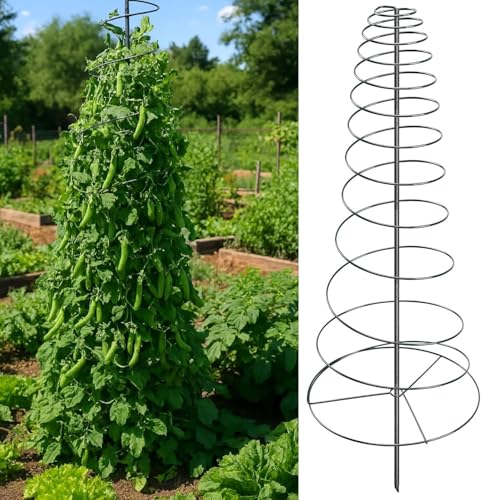
Heavy-Duty Metal Trellis: Rock-Solid Support for Climbing Plants - Made with 0.6mm thick stainless steel and a 0.63-inch reinforced center pole, this garden trellises stands firm through wind and rain. Perfect for pole beans, snap peas, tomatoes, cucumbers, and flowering vines like bougainvillea and morning glory, it provides season-long stability and prevents your plants from falling or bending.

【New generation Plant Support Cage】Different from other tomato trellis, LOMNYIY tomato support cage have the newest plug-in connection, and unique double-layer metal tube built-in interface design to stay together tighter and more stable. And the poles are very hard with a metal core, yet are coated entirely in plastic to keep them from rusting, and the heat dissipation is good. It means strong durable performance can hold up in the wind with heavy tomato plants in them.

Simple Elegant Garden Obelisk Trellis: This 67 inch garden obelisk trelliscreates vertical growing space for climbing plants outdoor, flower vines, peas,beans, cucumbers, and tomatoes. The teepee trellis shape works as a tomatocage trellis and decorative plant support for raised beds, planters, pots,patios, and garden beds.
5. Pathway Lights, Lanterns
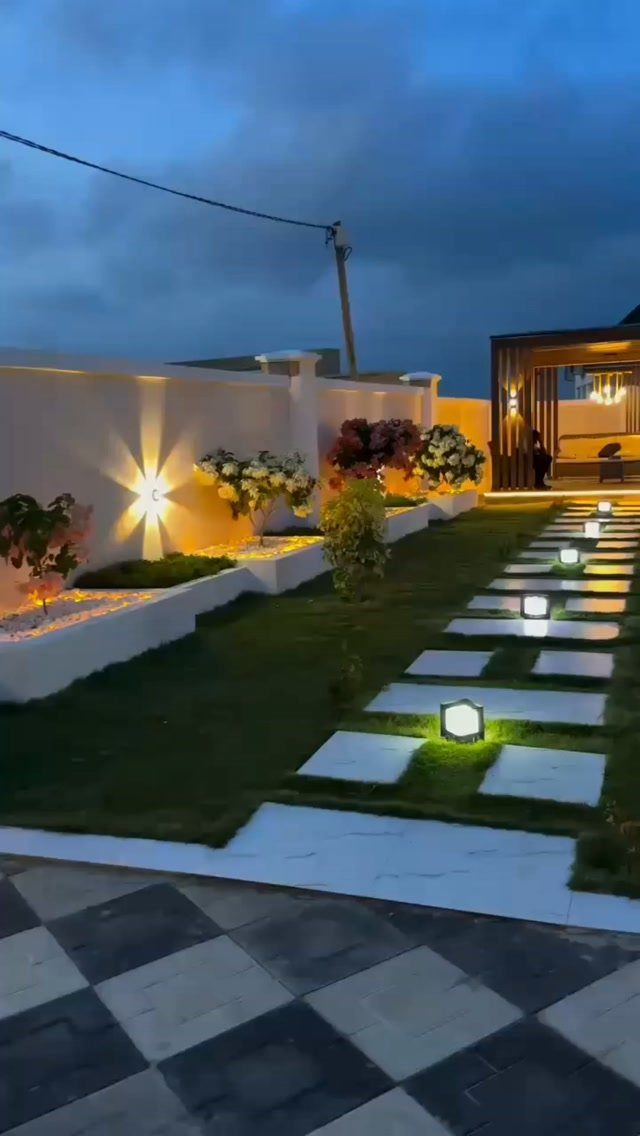
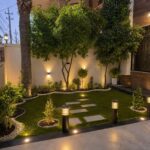
Light changes a backyard from a space you look at into one you use. Pathway lanterns at dusk mark where to walk and give enough glow to keep conversation going after sunset.
I start with the path, then add uplight on anything worth seeing from the house: a tree trunk, a stone wall, the edge of a bed.
LED strips under steps or along a wall cost more but remove the tripping hazard entirely. In a small yard, light makes the space feel larger after dark by defining edges you would otherwise lose.
Solar lanterns are easy to move until you find the right spacing. Wired fixtures stay where you put them and shine brighter, though you will need to trench or run conduit to get them there.

🍧【HEAVY DUTY】Our outdoor backless benches for fire pits are made of heavy-duty iron with a smooth, non-toxic coating. The T-shaped structure makes the fire pit benches more sturdy, with a maximum weight capacity of up to 300 lbs.

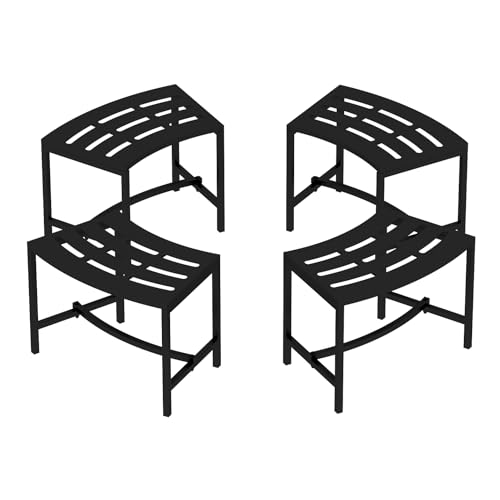
🍧【HEAVY DUTY】Our outdoor backless benches for fire pits are made of heavy-duty iron with a smooth, non-toxic coating. The T-shaped structure makes the fire pit benches more sturdy, with a maximum weight capacity of up to 300 lbs.
6. Provide Shade
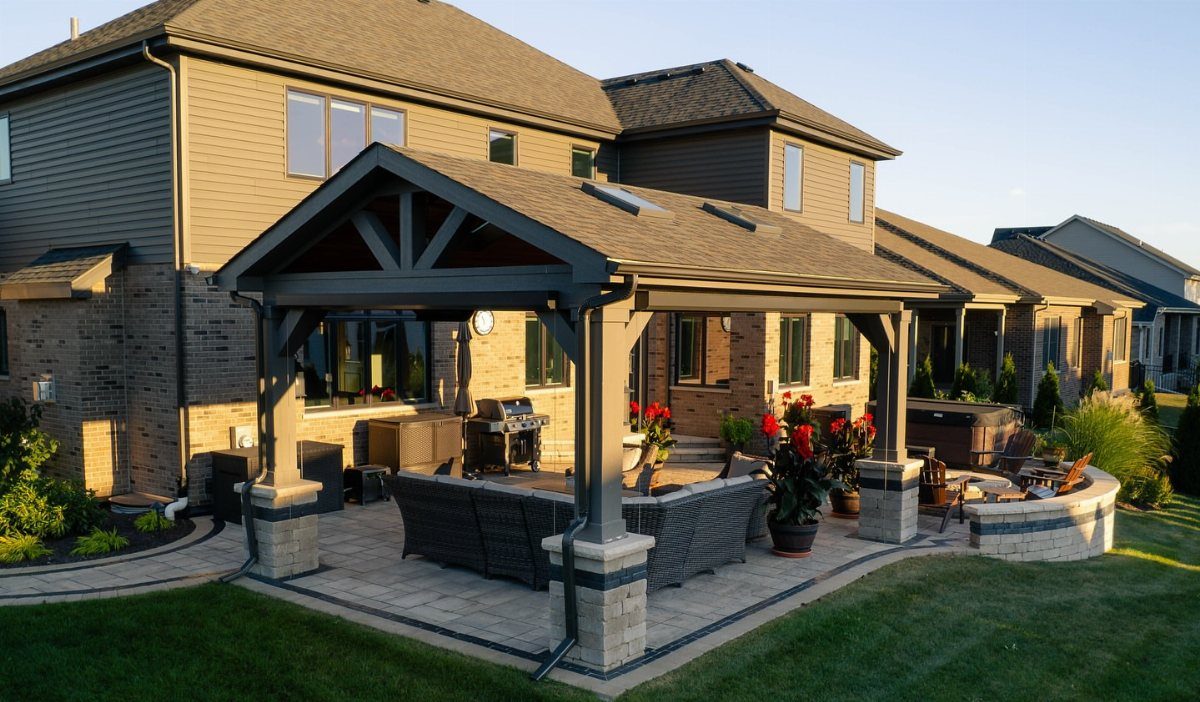
Shade is what makes a patio usable when the sun is highest and hottest in midsummer. A detached pavilion with a solid roof blocks sun and light rain; a pergola filters it through slats and casts moving shadow.
Umbrellas move with the sun, which matters if your yard faces west and the hot hours shift across the space. Shade sails hang from anchor points and cost less than structure, though they need replacing every few years.
Trees are my preference where there is room and time; pick for your space, not for the mature oak you saw in a magazine, or you will be pruning every summer.
Stone pillars and a paver floor give a pavilion weight so it does not look dropped onto the yard. Match the materials to what the house already uses.

SIZE: 47.24"L x 23.62"W x 11.81"H, this oval raised garden bed provides practical growing space for vegetables, flowers, herbs and other outdoor plants

Raised Garden Bed - Add a new level of convenience to your gardening experience with the Galvanized Raised Garden Bed. Enjoy expanded yield and a more assembled garden layout with this garden accessory, each sized at 120 cm X 60 cm x 30 cm.

7. Native Plants
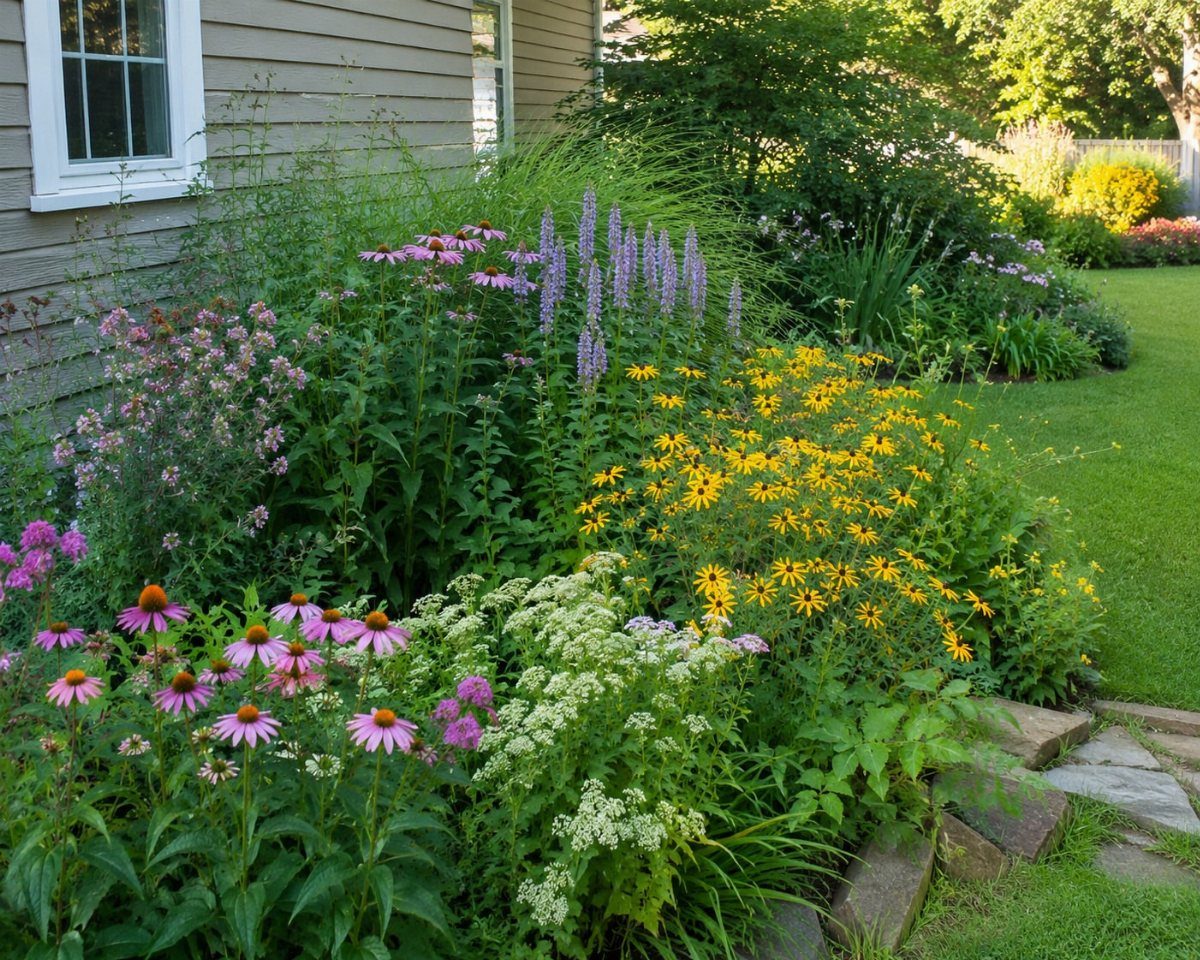
Native roots run deep enough to handle summer dry spells without the sprinkler schedule that keeps lawns alive.
Check your county extension office for lists suited to your soil and light.
Match the plant to the spot, not the other way around; shade lovers scorch in afternoon sun, and prairie plants get leggy and weak in too much shade.
Group by water need so you are not drowning one while another thirsts.
Dwarf varieties and compact shrubs keep the border neat without shearing. Once established, most need cutting back once a year and little else.

TURN YOUR YARD INTO A POLLINATOR PARADISE. One pouch of wildflower seeds, 47 varieties of annual and perennial flowers, and your yard becomes a habitat for bees, butterflies, and hummingbirds from spring through fall. Not 15 varieties like most wildflower seed mixes. 47. More color, more pollinators, more surprises every time you walk outside.


Premium Seed Content: Three ounces of pure wildflower seeds with no filler; Covers 250 square feet with vibrant blooms; Contains fifty percent more seeds than competing brands; Grow a beautiful flower garden with this diverse seed mix
8. Layered Landscape
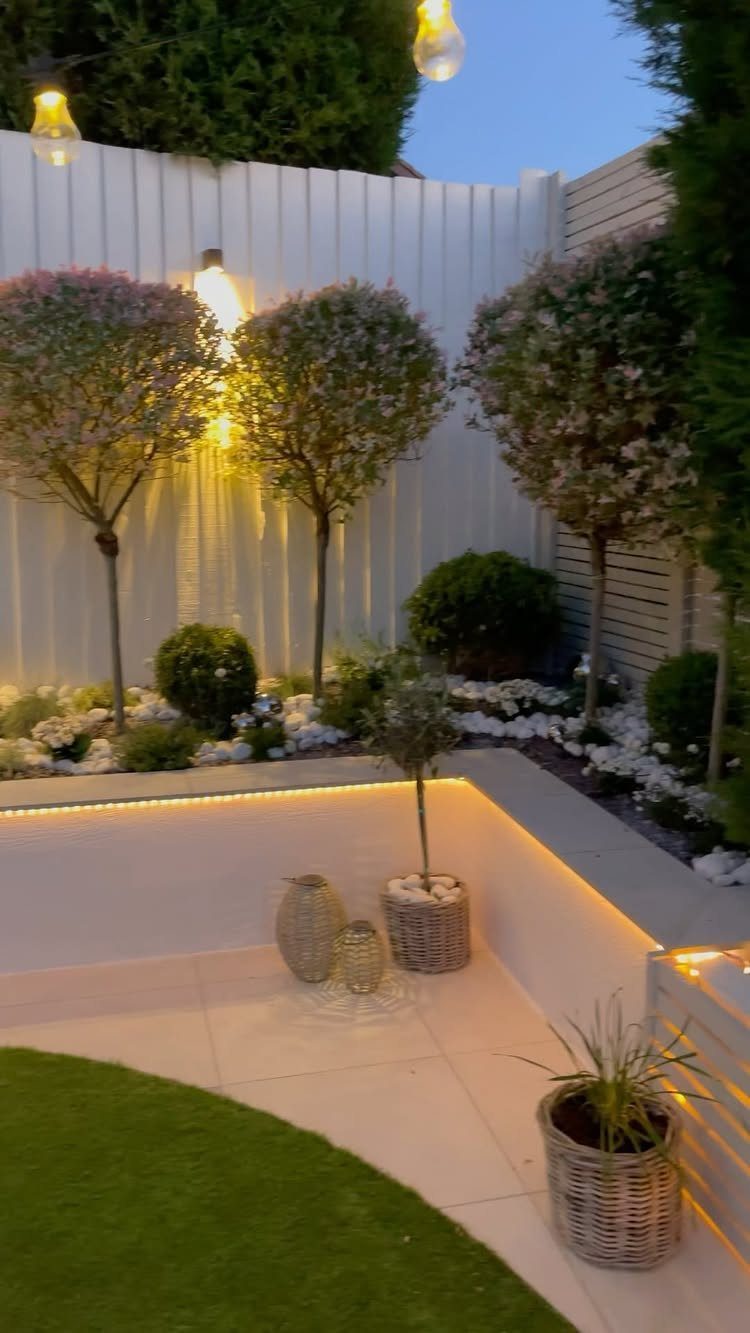
The eye travels up and back instead of stopping at the fence line.
White stones under seating reflect LED strips and keep the glow from feeling buried. Potted wicker planters move when you need them to, which matters in a corner that sees different use through the day.
Light at ground level does what the sun cannot after dark. Strip lighting under a bench or step edge defines the shape of the space and keeps you from misjudging where hardscape ends.

Space-Saving Greenwall Design: Maximize your space and create a stunning green wall with this self-watering wall planter. Perfect for freeing up floor and wall space, this planter keeps your plants within easy reach and adds a vibrant touch to your home or office. Perfect for creating a vertical green wall at home or the office.

Space-Saving Vertical Garden – Turn fences, balcony rails, patios, and indoor walls into a compact growing area.

3 TIER HANGING PLANTER: 1 set of metal wall hanging planter with 3 rectangular planters, ready to hang, no special assembly needed. Check and pick the right size for your plant to prevent unpleasant experience and potential wastage on resources, plants not included
9. Pathways and Seating Areas
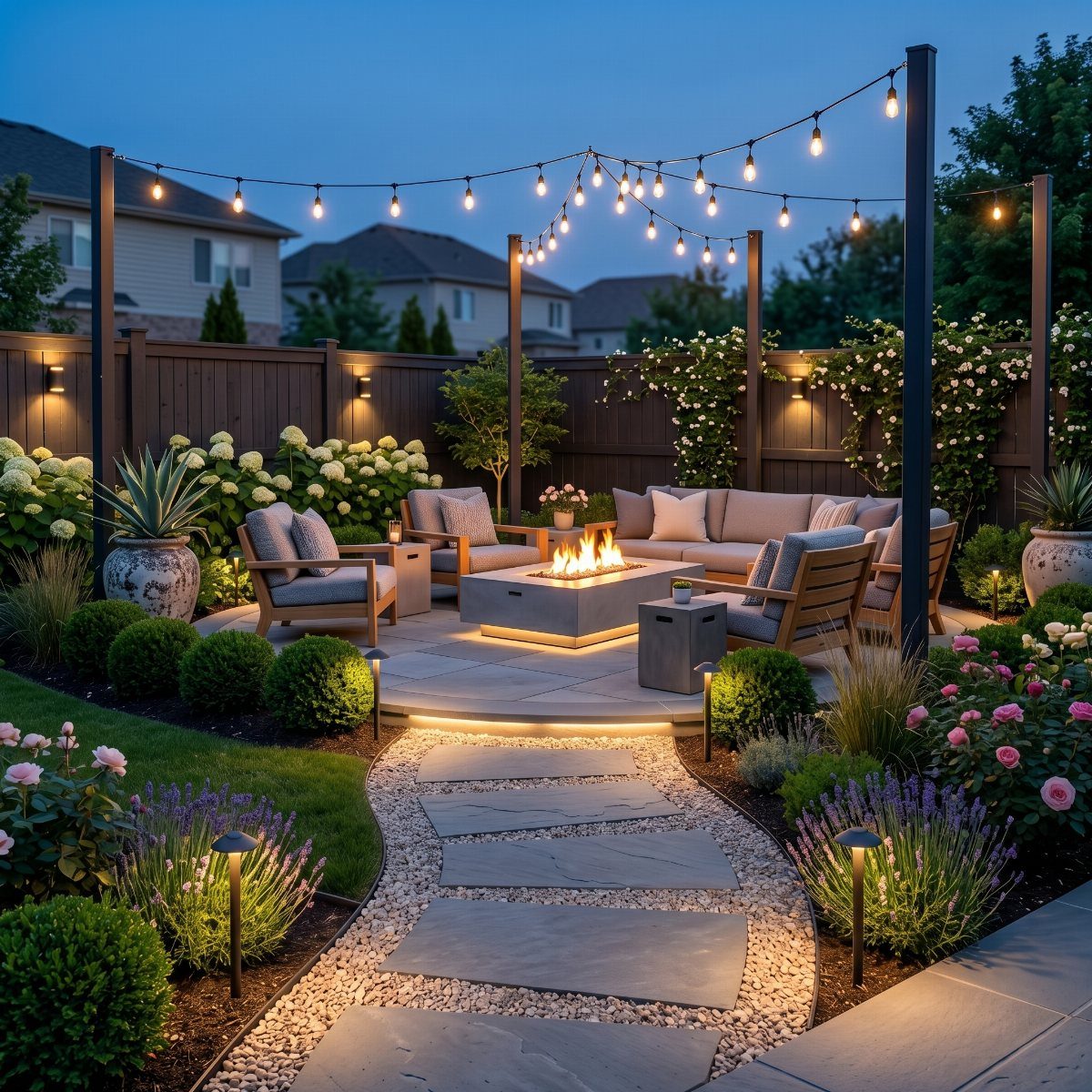
Gravel underfoot with stone pavers set into it gives a path that drains and stays level without the cost of full paving.
The circle at the end gathers people the way a room does; the fire pit in the middle gives it a reason.
Built-in seating around the perimeter tucks guests in without the bulk of moved chairs. Stone walls or wood benches with backs let you fit more people into the same footprint than freestanding furniture.
Walk the route yourself after dark before you set the lights. Where you slow or stumble is where the glow belongs, not evenly spaced along the edge.

Climbing Obelisk Trellis: Discover the secret to a thriving garden with CL Fun's garden trellise! These garden obelisks provide generous space for your plants to flourish. Adjust their height with ease as your greenery grows, thanks to the detachable design. Plus, our garden obelisk trellis set comes with bonus plant clips for effortless guidance, ensuring strong support while preserving their beauty. Bid farewell to chaotic vines
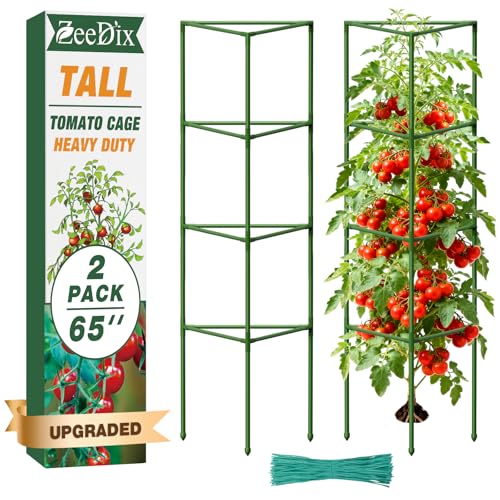
Upgraded package includes : 2 sets of 65" tomato Cage include 42 connecting rods, 6 pointed rods , 6 three-way connector, 18 four-way connector, one bundle of twist ties, and one installation manual.

Stable Triangular Support: Our Halatool heavy duty tomato cages are built with a reinforced triangular frame, providing reliable, all-around support to keep your growing plants upright
10. Paving Stone
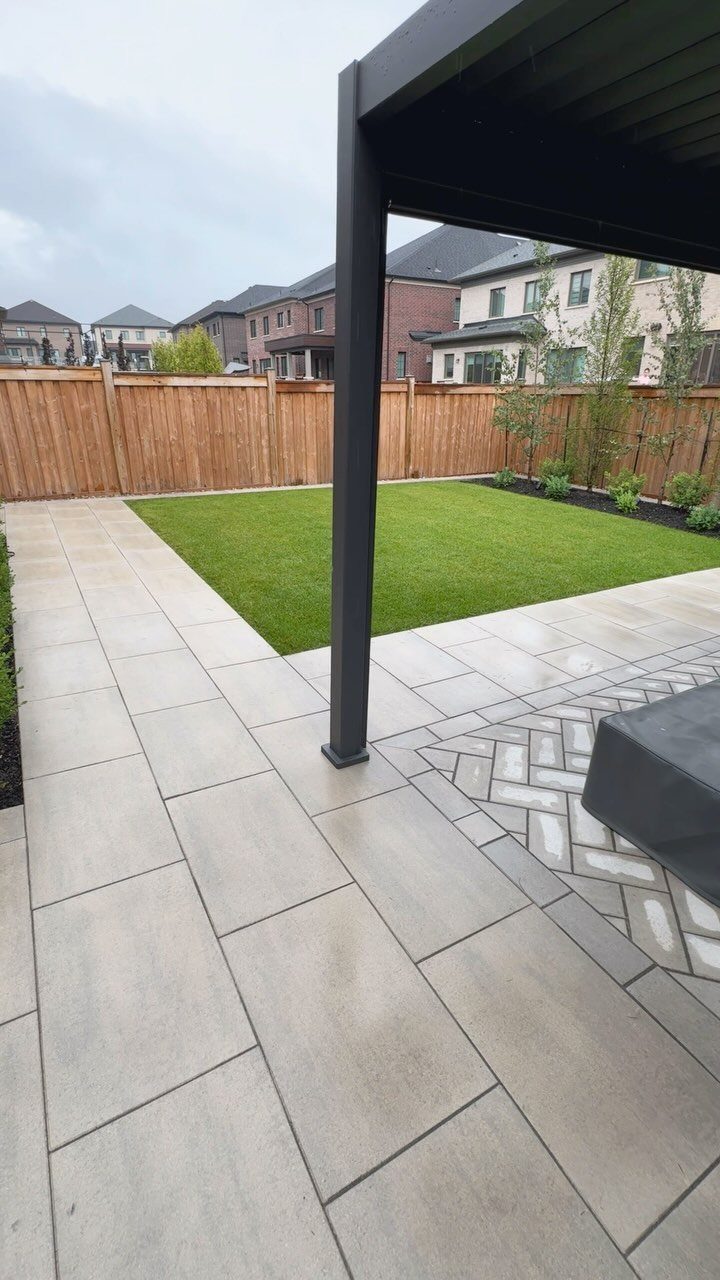
Herringbone under a pergola catches the eye and holds it; straight border stones around the lawn keep the edge crisp. Two patterns, one job each.
Curved paths read longer than straight ones, which helps a small yard feel like more than it is.
Set the pavers with low planting between and at the edges so the walk blends into the beds rather than cutting through them.
Light-colored stone stays cooler underfoot in summer and shows less dust than dark. Leave a gap for jointing sand or let groundcover fill it; the second takes longer to establish but softens the line.

Quality and Durable: delicate composite weaving with 3-stand all-weather HDPE wicker material handwoven over fully-welded powder-coated steel framing makes patio furniture with fire pit 7 PCS very durable and sturdy; breathable 250G polyester Anti-UV and water-repellent fabric are the complete performance standard, with long-lasting comfort, color retention, cleanability, and strength

Quality and Durable: delicate composite weaving with 3-stand all-weather HDPE wicker material handwoven over fully-welded powder-coated steel framing makes outdoor patio furniture fire table 6 PCS very durable and sturdy; breathable 250G polyester Anti-UV and water-repellent fabric are the complete performance standard, with long-lasting comfort, color retention, cleanability, strength

Elegant Ceramic Tabletop: Spacious enough for six people to gather, this 43″ fire pit table creates a cozy outdoor social hub. Its premium four-piece ceramic tabletop is beautiful, durable, and easy to wipe clean, with heat and moisture-resistance. The sleek stone pattern adds a touch of luxury, while the modern design fits seamlessly in your backyard, patio, deck, lawn, or poolside.
11. Fresh Mulch and Plants
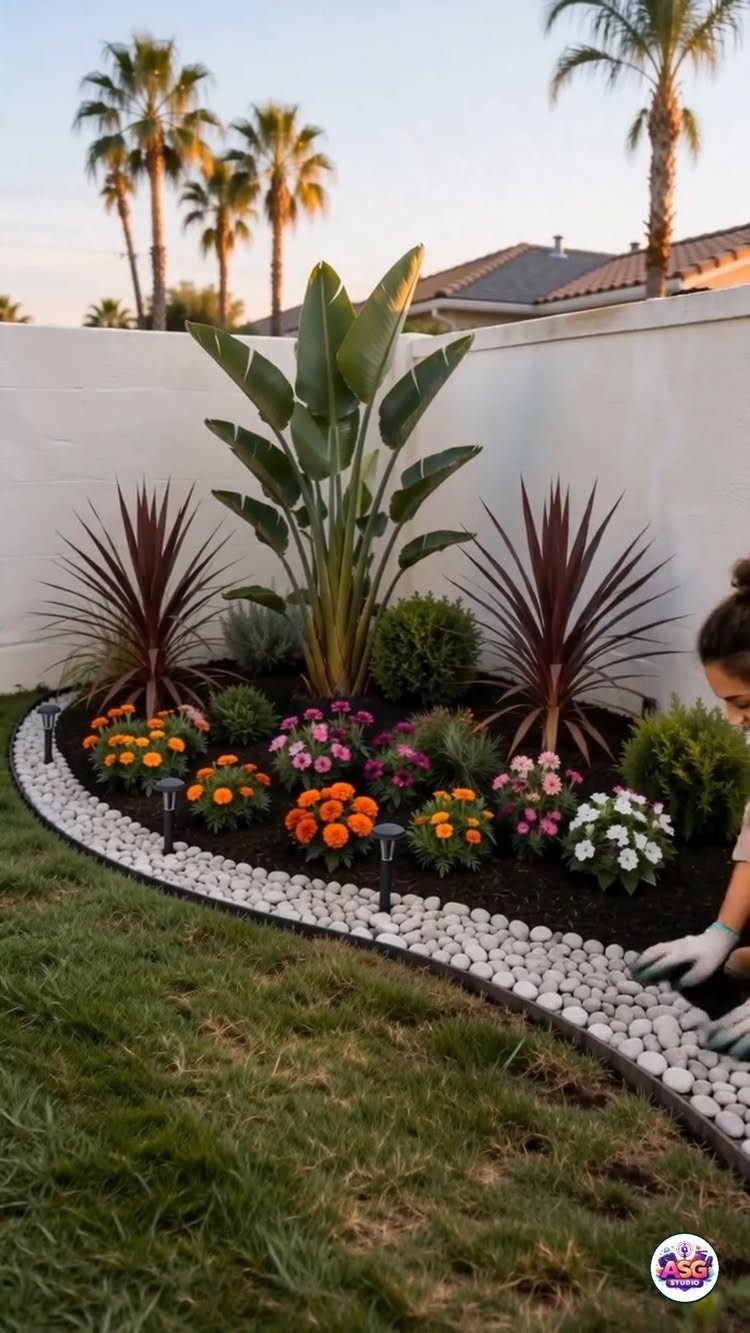
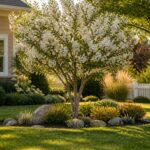
Dark mulch against white stone edging is a cheap trick that reads expensive. The contrast makes the planting look intentional, even when the plants are still small.
A fresh layer every spring costs a fraction of new hardscape and does more for the look than most additions.
Check depth; enough to suppress weeds without smothering roots. Leave a hand’s width clear around trunks so bark does not rot.
Tropical foliage gives a dense look fast, but native perennials fill in over time and stay without replanting. Start with what handles your winters, then add tender plants in pots you can move.
12. Natural Swimming Pool with Plants
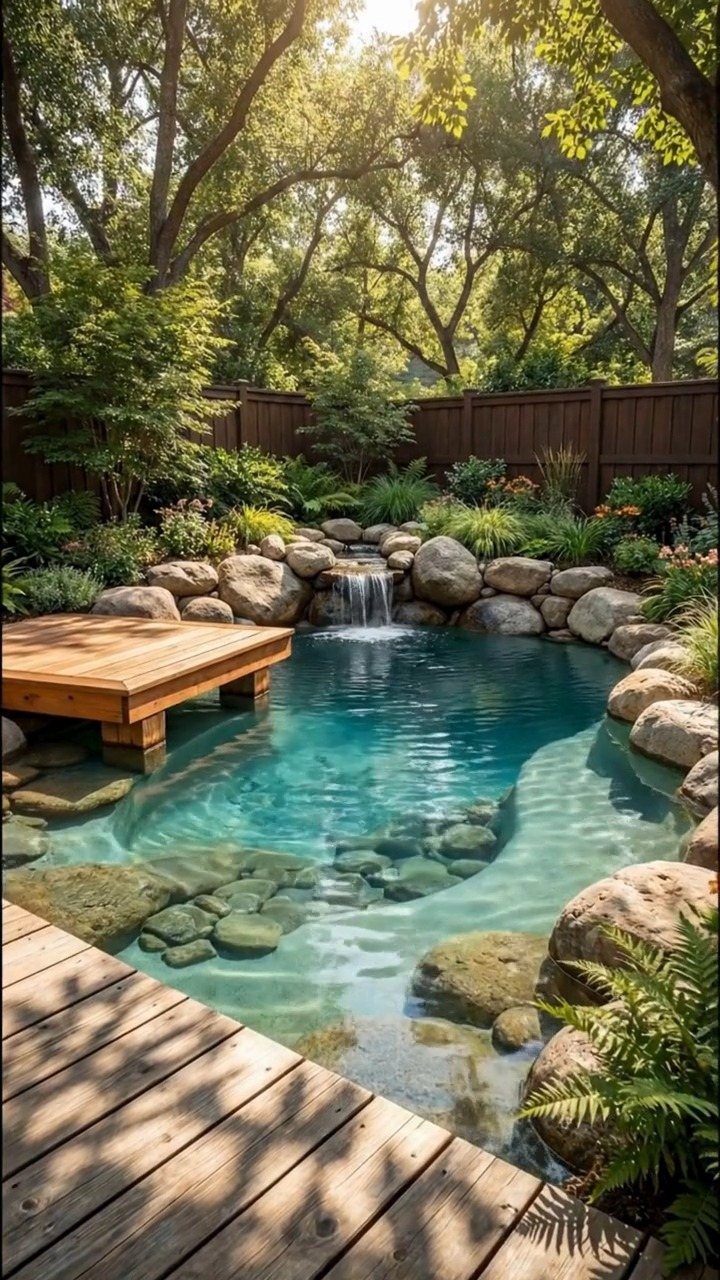
A natural pool uses rooted plants and a gravel bed where a conventional pool has chlorine and a filter pump. The water stays clear through biological balance, not chemistry you monitor weekly.
The construction is closer to pond than pool: a swimming zone with clean water, a regeneration zone planted with rushes and water irises where bacteria do the cleaning.
A divider keeps the soil out of your lane. Boulders and wood decking at the edges read as landscape rather than recreation equipment.
This is not a weekend project.
The excavation, liner, and plumbing need pros, and the plant zone takes a season to establish. Maintenance drops to leaf-skimming and an occasional cutback of overgrowth, plus water you can open your eyes in.
13. Modern Water Feature Wall
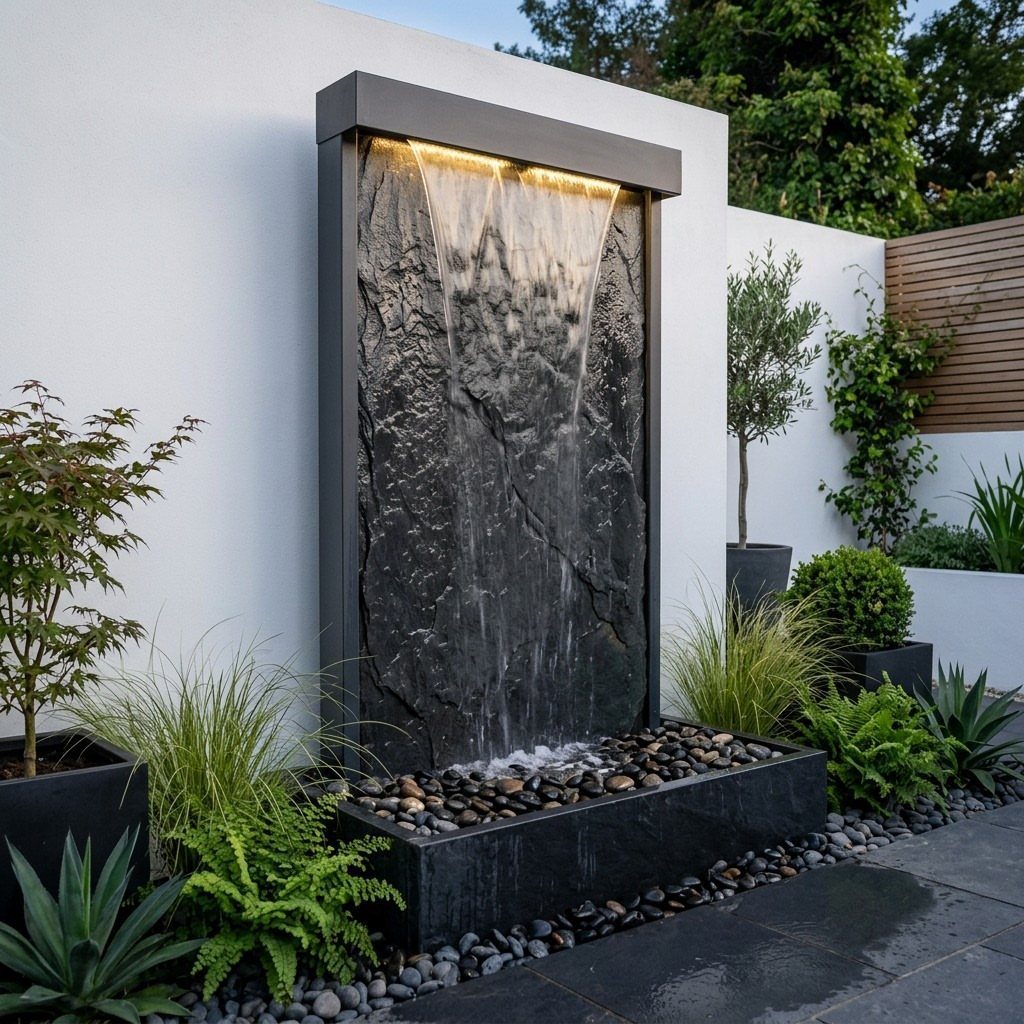
A vertical sheet of water turns a patio wall into something you hear before you see.
Black stone set behind a thin sheet of water catches overhead light and throws it back onto the surface, so the water still reads as texture after the sun goes down.
The pump sits behind the wall in a basin you line with river rock.
Size the basin to catch splash; overshooting the edge means wet feet and algae on paving. A textured stone face breaks the water into random patterns, which sounds softer than a smooth sheet.
This needs power for the pump and the lights, and the wall must carry the weight of saturated stone. Plan for winterizing or keep it running; stagnant water in a pump turns foul fast.
14. Outdoor Kitchen Under Pergola
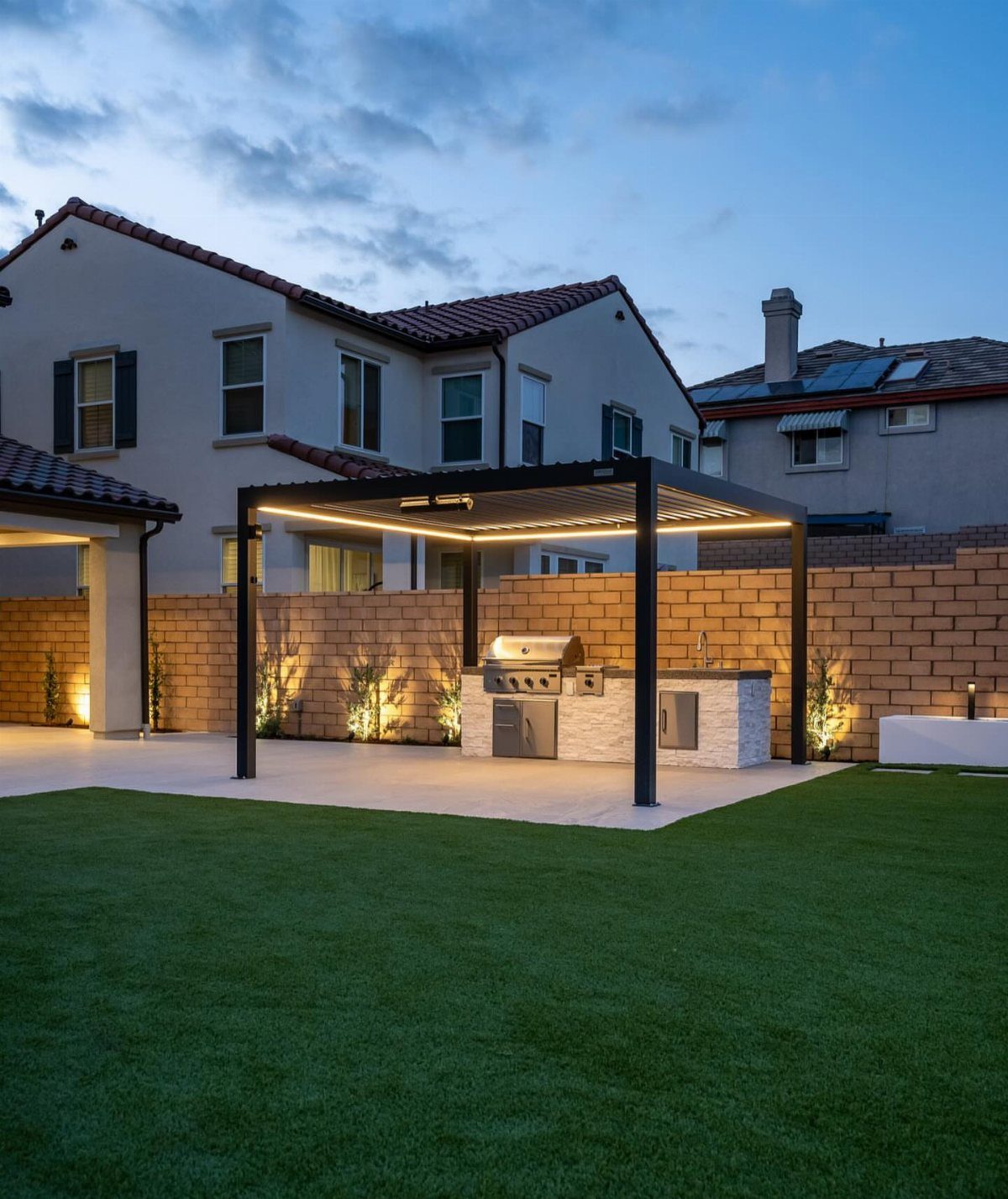
Cooking outside keeps heat out of the house and smoke out of the kitchen. A pergola overhead defines the space without enclosing it, and the slatted roof still lets you grill under cover.
Built-in counters need structure underneath; a freestanding island on pavers moves if you change the layout later.
Stone or concrete tops handle hot pans and weather better than tile, where grout stains and cracks. The grill is the fixed point; sink and prep space follow its sides in the working triangle you already use indoors.
Run gas and water before you build; retrofitting trenches through finished paving is slow work. LED strips on the pergola beams give enough light to cook by without attracting every moth in the zip code.
15. Stone-Lined Woodland Pond
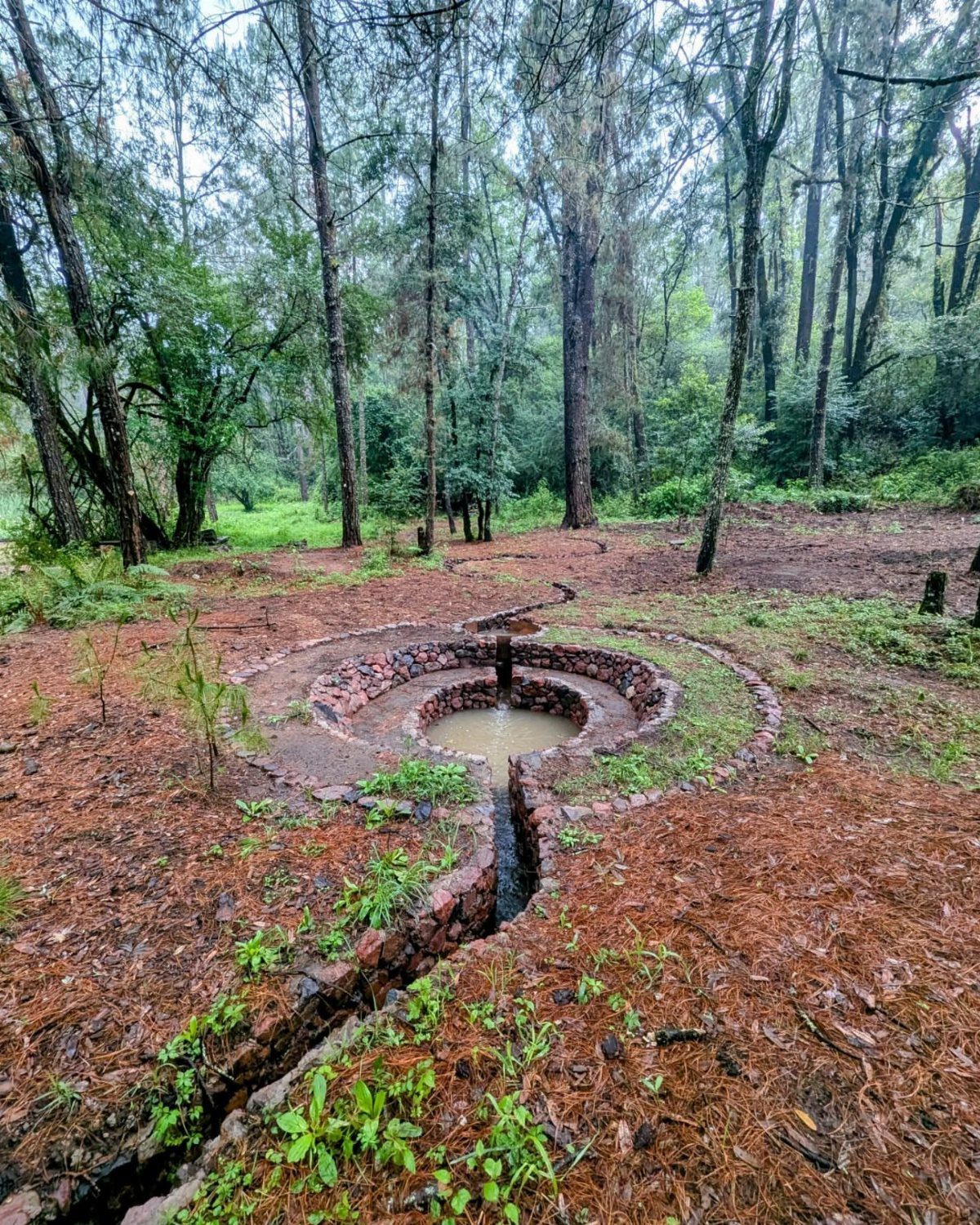
A small pond fits where a lawn would struggle; under pines, where needles acidify the soil and shade blocks most grass.
Stone channels move water in and out so it does not stagnate, and the surrounding needle duff keeps maintenance low.
Check the water source first.
A channel fed by rainfall runs dry in August; a small pump recirculating from the pond itself needs power and cleaning. The stone must sit below the frost line or heave every spring.
This suits yards that already feel like forest, not ones you are trying to make feel that way. The trees are the feature; the water adds sound and reflection.
16. Ceramic Urn Fountain
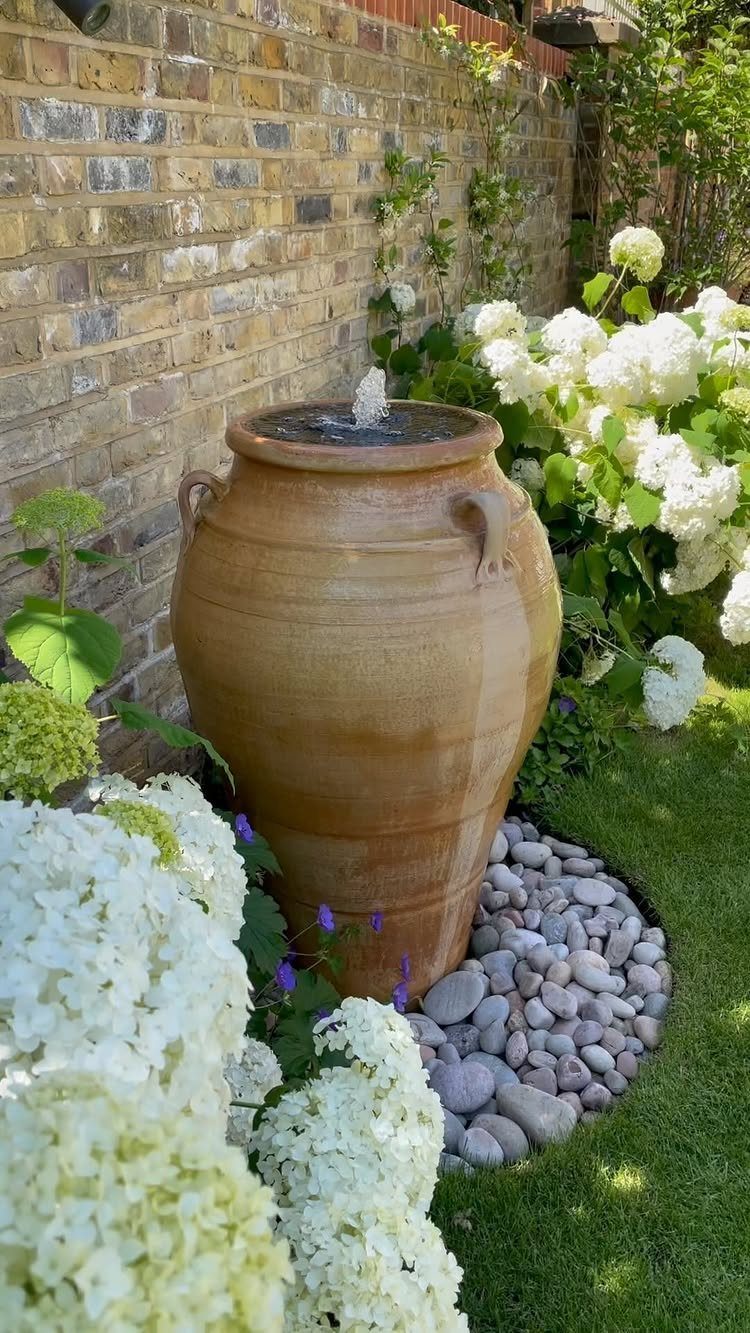
A single urn bubbling from its top is the smallest water feature that still reads as one. The terracotta color sits warm against brick and green, and the sound covers traffic noise without the space a pond needs.
The pump hides in the urn base; the cord runs through the drainage hole or over the back, hidden by planting.
River stones around the base catch splash and keep soil from splattering the urn. White hydrangeas behind it like the same steady moisture the fountain provides.
Weight matters. A large ceramic urn filled with water is heavy; set it on compacted gravel, not directly on lawn, or it tilts by fall.
17. Overhead Backyard String Lights
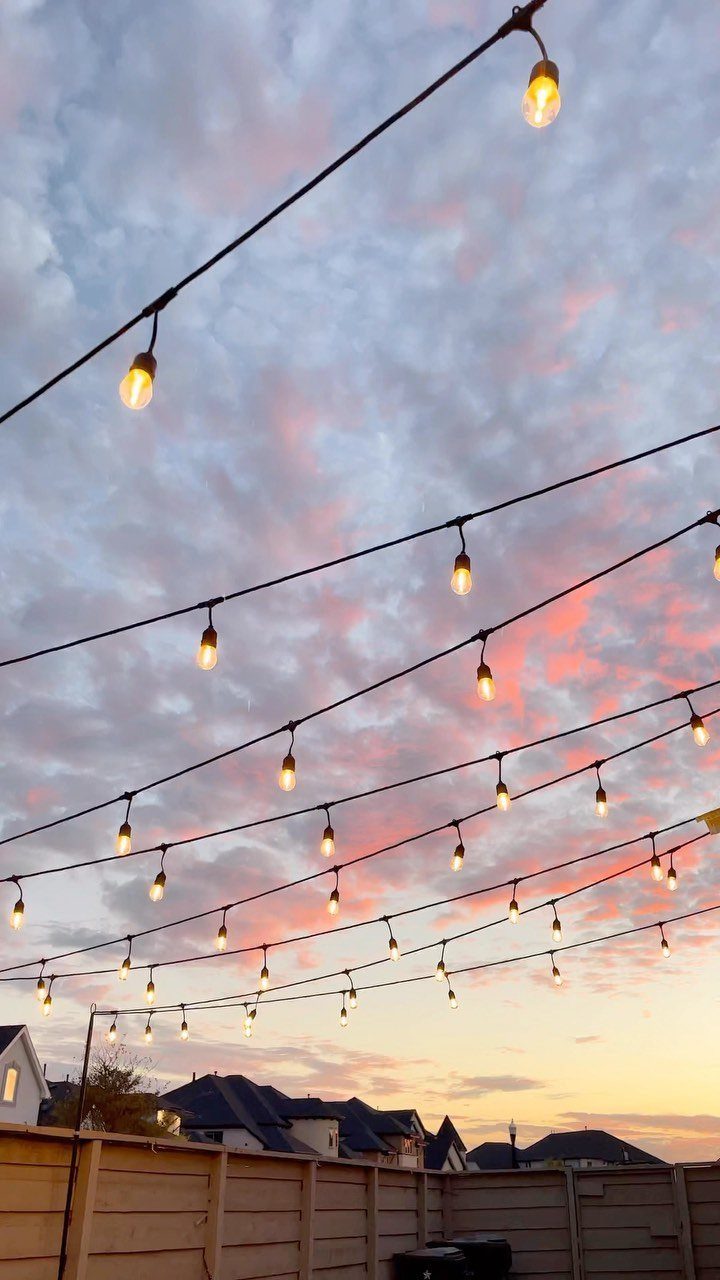
Parallel strands of bulb light overhead turn a plain yard into a room after sunset. The bulbs face down, so the glow lands where people sit rather than scattering upward.
Span matters more than wattage.
Sag between posts looks sloppy and catches wind; use a steel cable to carry the weight and hang the cord from it. Posts can be fence posts, house walls, or poles set in concrete buckets you hide behind planters.
LED bulbs last longer and run cooler than filament, though the warm tone is what sells the look. A dimmer lets you drop from dinner brightness to something softer as the night goes on.
18. Manicured Topiary Border Garden
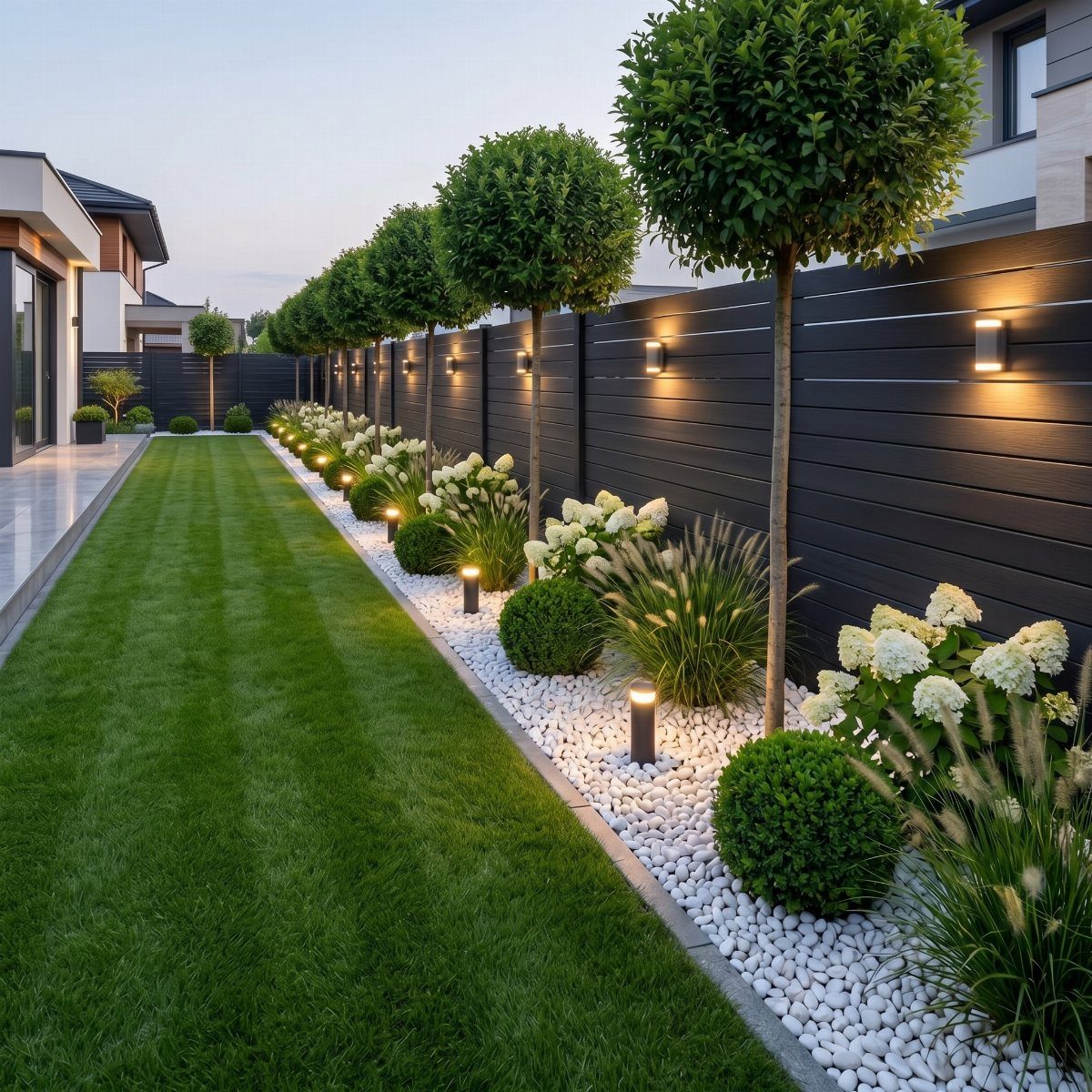
Round shrubs in a row against a dark fence give a backyard the structure that lawn alone lacks. The spheres read as deliberate; the white hydrangeas between them soften the geometry.
This is maintenance you commit to, not weekend work.
Topiary needs shearing twice a season to keep its shape, and the pebble mulch underneath must be weeded or sprayed. White stones show every leaf and twig; dark ones hide more.
The fence color sets the whole tone.
Dark paint or stain makes green foliage pop and the white flowers read brighter. A light fence washes everything out and shows grime.
19. Upcycled Tire Stepping Stones
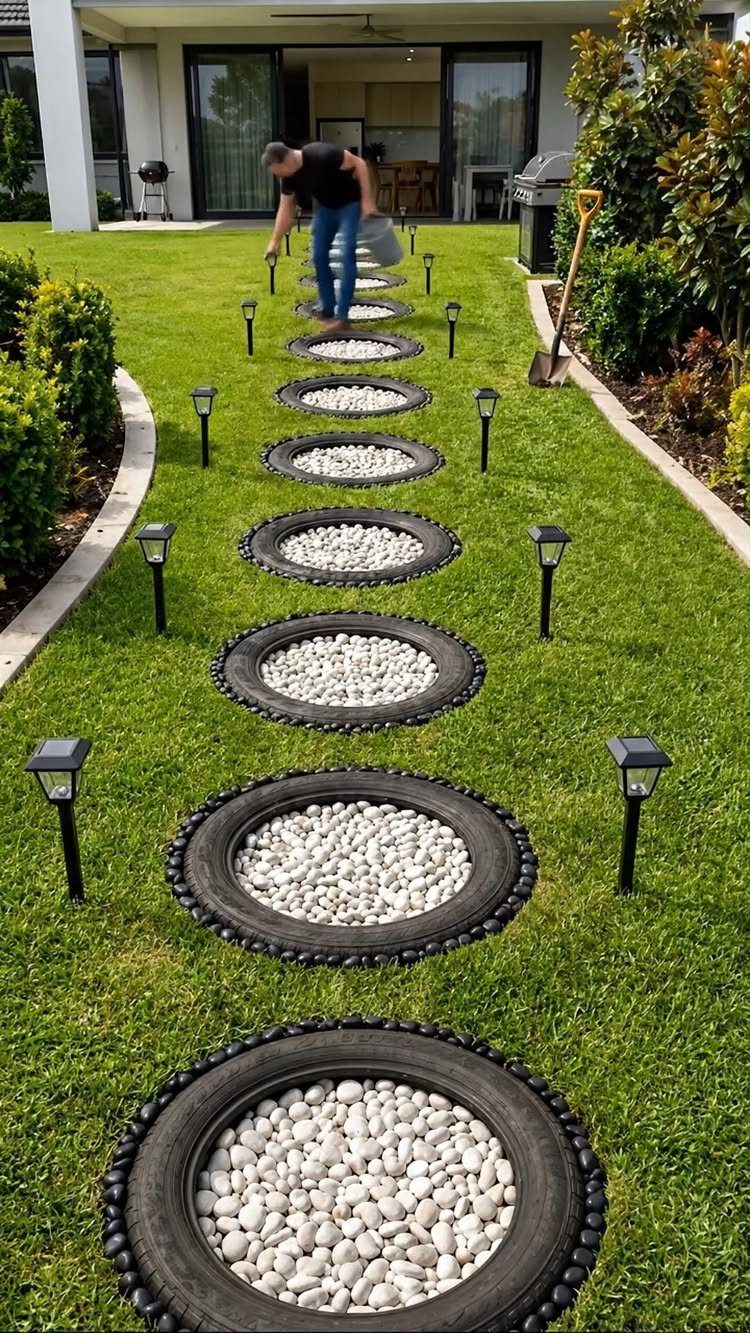
Old tires filled with white stone make a path that costs nearly nothing and reads as deliberate design rather than salvage. The black rubber frames each step and keeps the stone from scattering into the lawn.
Check the tires for steel belting that can rust and split the rubber after a season or two.
Car tires work; tractor tires give a wider step but need more fill. Bury them half deep so the lawn meets the rim and you are not tripping on the edge.
Solar lights at the sides do what the white stone does: catch the eye at dusk and mark the route. This suits flat ground; on a slope the stone shifts and the tires collect water.
Planning Your Backyard
Start with what you actually do out there, not what looks good in a photo. Eating dinner, throwing a ball, growing tomatoes, sitting with a drink: rank them, because ground space fills fast and something will get cut.
The house sets the style whether you plan for it or not.
A sleek water wall against a low ranch house reads as off as a stone pond against stucco; the backyard is an extension of what is already there, not a blank slate.
Walk the existing lines and materials first; the backyard should extend them, not argue.
Light changes through the day and season.
Map where afternoon sun hits hardest in July, where pines cast permanent shade, where the house shadow falls by 4 p.m. That map decides where vegetables go, where shade structure matters, where you can actually sit without squinting.
Slope and drainage are harder to fix than planting. Water pooling after rain belongs in your plan before you dig, not after the first storm fills your fire pit.
Maintenance Considerations
Drought-tolerant plants suited to your region cut watering to occasional deep soaks once established.
Hardscape buys structure for time. Gravel paths, stone patios, concrete planters: none need shearing, deadheading, or replanting.
Artificial turf and no-mow grasses still need brushing, rinsing, and weed patrol; the swap is real, but so is the work, and it pays to match the choice to how you actually live outside.
Drip lines and smart controllers handle the watering I would otherwise forget after a long Tuesday. Limit the plant palette and repeat boldly; fewer species means fewer care routines to remember, and the repetition reads as intentional design.
Sustainable practice and low maintenance overlap heavily. Xeriscaping, native plants, reduced lawn: the same choices serve both goals.
Design Principles
Clean lines need restraint, not emptiness. Unifying decor colors and simplifying elements makes a small yard read as tidy and open; every extra material or hue competes for attention you do not have space to give.
Without layers you stop at the fence line.
Focal points give the eye somewhere to land.
A fire pit, a water wall, a specimen tree: one strong point anchors the rest. Scatter several and none read as important.
The simpler the space, the more each element matters.
In a large yard a misaligned path disappears; in a small one it is half the view. Edit until what remains carries the weight you need it to.
Frequently Asked Questions
What is the cheapest way to landscape a backyard?
A fresh layer of mulch runs about $3–$5 per bag and still beats most hardscape upgrades for instant curb appeal.
Native perennials come back on their own once established, and old tires painted or left raw, filled with white stone, make path borders that cost pocket change.
Pressure-wash what you already have; clean patio or deck feels refreshed without spending at all.
What are some basic landscaping ideas for my backyard?
Raised beds for vegetables turn a flat yard into something you walk through, and a fire pit on gravel with a ring of chairs gives you more hours outside for the least money.
Start with what you actually do out there; eating dinner, growing tomatoes, or sitting with a drink.